
Unbiased headlines. Facts, not spin.
Unbiased Headlines is an independently owned news organization. We bring you the facts, not opinions, written fresh from 110+ named sources. Sources linked so you can verify it yourself.
 energy
Major Story (7/10)
Event date: November 13, 2026 ·
Europe Enters Winter With Gas Storage Near 70% Full as Polar Vortex Breaks Down Early
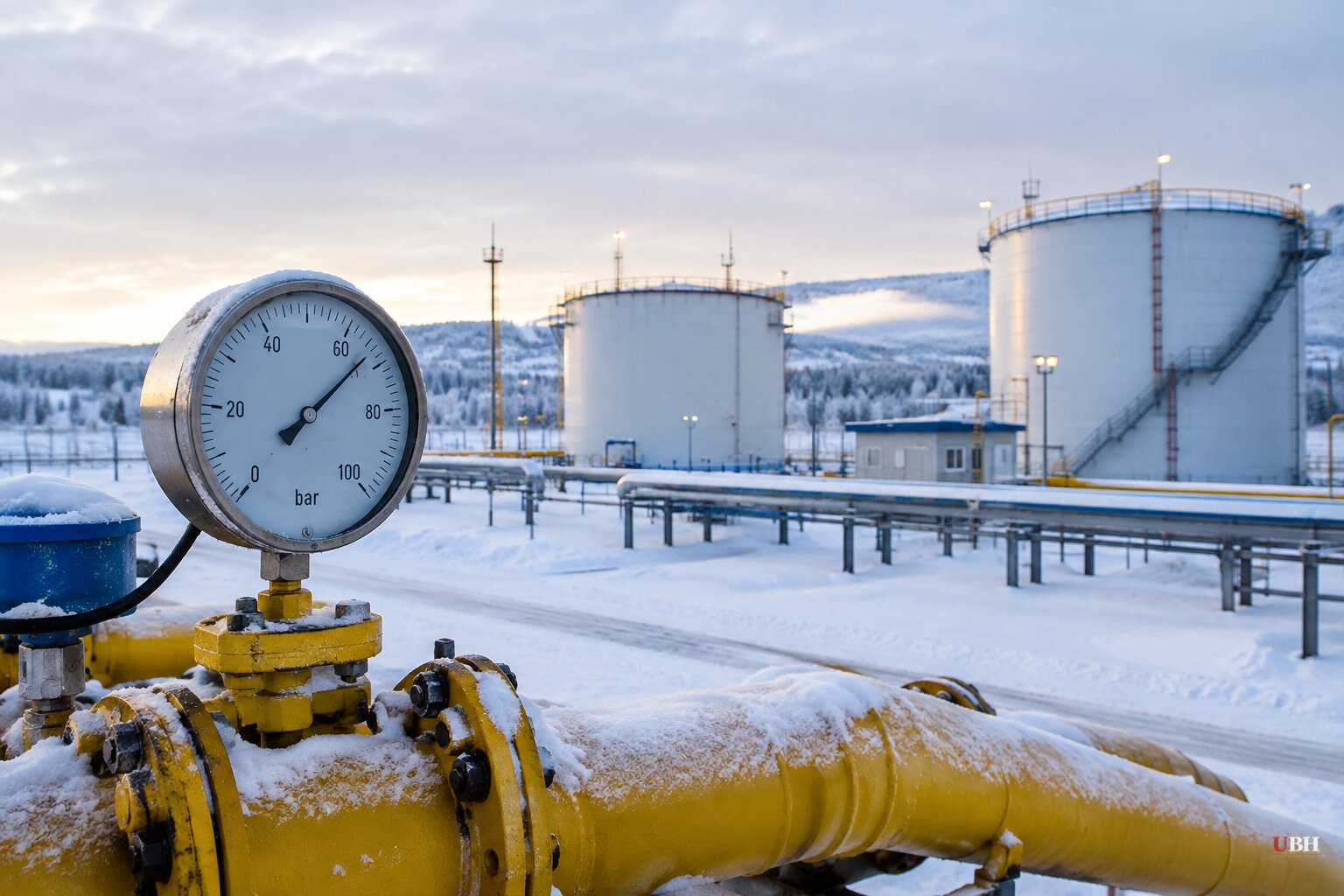
Europe is heading into winter with the thinnest gas cushion in more than a decade, and the atmosphere is adding uncertainty.
EU storage stood at 69.8% full on November 19, compared with 81.2% a year earlier, according to the latest market data. Another reading put it at 70.15%, against 81.9% at the same point last year. The five-year seasonal average is roughly 89%.
Germany is in the tightest spot. Its reserves were below 58% of capacity this week. Earlier in November, Germany's storage sat at 61.4% against a five-year average of 88.7%, which meant it had already missed its own winter target of 70%. More gas was coming out of German storage than going in.
What the polar vortex is doing
The stratospheric polar vortex, the ring of westerly winds that keeps Arctic air locked over the pole, is breaking down earlier than at any point on record.
Jeff Knight, lead climate scientist at the UK Met Office, told the BBC it "would appear to be the earliest on record looking back over the 75 years we've been observing." Simon Lee, an atmospheric science lecturer at the University of St Andrews, called the timing "extremely rare." Forecasters had expected a disruption in February, not November.
A record El Niño is running at the same time. Lee said the pairing of a sudden stratospheric warming with El Niño is not unusual in itself. The early date is.
Florence Schmit, senior energy strategist at Rabobank, told CNBC that for months El Niño had been expected to bring a milder European winter and muted heating demand. A colder outcome would be "incredibly difficult" for Europe to navigate, she said.
Nobody knows where the cold lands
The forecasters themselves are cautious. MIT climatologist Judah Cohen said models have never seen an event this early and will struggle with it. Disruptions usually take two to six weeks to affect surface weather. "I wouldn't expect to see the impacts until sometime in December," he said.
Jim Dale of British Weather Services said the early favorites for where the cold air lands are Norway, Sweden, Denmark and Germany, but that it is "just guesswork."
Klaas Dozeman, energy forecaster at Brainchild Commodity Intelligence, said most meteorologists "remain puzzled" about the coming effects. Analysts cited by market intelligence firm Montel say a single warming event is short-term in nature and would need to be repeated to shape the whole winter.
The near-term forecast cuts the other way. Updated outlooks earlier this week pointed to milder temperatures across much of Europe, and record US LNG flows to export terminals have helped take some pressure off.
Prices are off the highs, but supply is thin
The TTF benchmark topped €100/MWh in early November and hit about €104 after a 6% one-day jump, up more than 40% in a month. It has since fallen back. On Tuesday, November 17, it hovered below €85 after two straight losing sessions, and it dipped to a six-week low before rebounding.
On Friday, November 20, it rose above €88. An outage at Norway's Troll field was expected to cut output by about 50 million cubic metres a day through Friday, roughly one LNG cargo over the full outage. Norwegian exports fell to 290 million cubic metres a day on Thursday, down 44 million from the day before.
The structural problems have not moved. The war with Iran, which began February 28, and continued attacks on vessels near the Strait of Hormuz have cut Middle Eastern LNG. Europe enters winter with no Qatari supplies. A ban on Russian LNG imports takes effect January 1, 2027.
The EU has warned it may have to curb gas consumption by 7% this winter. The International Energy Agency said this month that low European storage, plus limited storage in several LNG-importing countries in Asia and South America, could intensify competition for cargoes and push prices higher in periods of high demand.
Oil is easing, diesel is not
The oil picture is improving, though more slowly for some fuels. The IEA's November report said global oil supply rose 2.3 million barrels a day in October to 105.4 million, following a 3 million increase in September. Supply passed demand for the first time since the Iran war began.
The agency said fuel markets remain under severe pressure, particularly diesel, and that member countries are accelerating release of emergency stocks, including more than 20 million barrels of diesel. Onshore inventories remain at their lowest since at least 2016, and global inventories are down a cumulative 462 million barrels since the war started.
What comes next
The weather link is real but unconfirmed. Cohen's two-to-six-week lag points to December as the first test. If the cold arrives in northwest Europe, withdrawals from storage that already sits well below the five-year seasonal average of 89% will speed up. If it doesn't, the gap still has to be covered through a winter with a Russian LNG ban starting on January 1.
It is unclear how far storage will fall by then, or whether Brussels will follow through on the 7% demand cut it has floated.
Sources used for this briefing
7 links from 7 independent newsrooms (syndicated copies of the same report count once)
These are the sources it draws on, linked so you can verify.


