
Unbiased headlines. Facts, not spin.
Unbiased Headlines is an independently owned news organization. We bring you the facts, not opinions, written fresh from 110+ named sources. Sources linked so you can verify it yourself.
 energy
Major Story (8/10)
Iran Weighs Resuming Oil Exports, IRGC-Linked Outlet Says, as CENTCOM Extends Blockade to Transfers at Sea
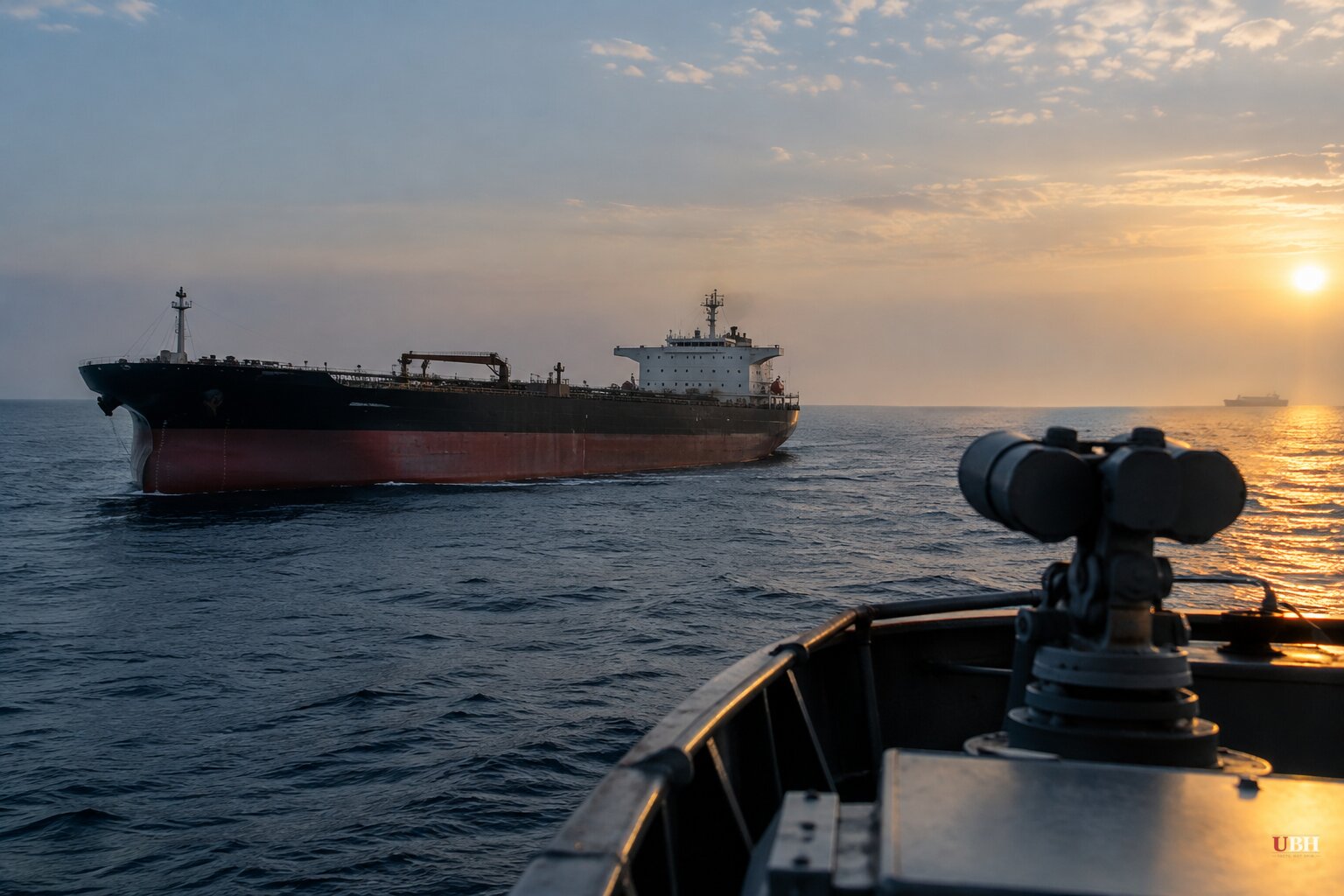
Since the U.S. naval blockade of Iranian ports was reimposed on July 14, Iran's crude exports have stayed near a standstill, according to shipping sources who spoke to Reuters. This week, Tehran signaled it may try to change that.
Sabereen News, an outlet affiliated with the Revolutionary Guards, reported that Iran is considering resuming oil exports despite the blockade. That came hours after the tracking firm TankerTrackers said Iran "appears to be preparing to ship out oil again." In an earlier post marked "unofficial," Sabereen claimed dozens of Iranian tankers were readying to sail for China. It also claimed Tehran had warned regional countries it would go to war if the U.S. attacked those tankers.
That is one IRGC-linked outlet's account. Iran's government has not confirmed any sailing plan.
CENTCOM closes the transfer loophole
On Wednesday, Nov. 18, U.S. Central Command issued an advisory widening what counts as blockade evasion. Any ship that receives cargo through a ship-to-ship transfer from a blockaded vessel carrying Iranian-loaded cargo "may be considered to be evading the blockade, even if it has not entered Iranian ports or the Iranian coastline," CENTCOM said.
Such ships "may be stopped, boarded, diverted, captured, or directed to proceed to the Iranian port where the cargo originated." Vessels that fail to comply immediately could face "the use of force consistent with applicable law." The advisory says the blockade covers every Iranian port, the entire coastline and its oil terminals, and applies to ships of all flags.
The blockade has a messy history. It was first imposed April 13 and lifted in June after Washington reached a draft understanding with Tehran. It was reimposed on July 14 after that agreement collapsed.
The leaks
The blockade is not airtight. United Against Nuclear Iran, an advocacy group, says at least nine small tankers carrying Iranian oil or LPG have slipped out of the Gulf of Oman since mid-July. UANI says it filmed one of them, the SOGL, at an offshore anchorage near Malaysia on Sept. 16.
According to UANI senior analyst Jemima Shelley, the SOGL loaded roughly 500,000 barrels of LPG at Assaluyeh in late August, broke the blockade Sept. 1, and delivered to China. "Most vessels aren't" getting through, Shelley said.
Reuters has also reported that Iran exported some LPG and jet fuel since July. Those are small cargoes compared with crude.
CENTCOM's own tally, released Nov. 18, says U.S. forces have redirected nearly 150 vessels since July and disabled five. The command estimates it has prevented about $30 billion in Iranian crude exports. It says nearly 4,000 commercial ships carrying about 1.7 billion barrels have transited the Strait of Hormuz under American protection.
Trump: no deal needed
On Thursday, Nov. 19, President Trump wrote on Truth Social: "We don't need a deal with Iran. Those days have long since passed. We've got their money, Hundreds of Billions of Dollars, and we've got their Strait!" He told interviewer Hugh Hewitt, "We control the Gulf in terms of the Hormuz Strait. We control it. Totally control it." He also said the regime is collapsing.
The post told Vice President JD Vance to focus on domestic priorities. The Wall Street Journal had reported Vance was weighing a meeting with Mohsen Rezaei, secretary of Iran's Supreme National Security Council. No meeting had been scheduled. A U.S. official told the New York Post that if Trump sees "a smart deal worth looking at, he'll send the VP to get it done."
Tehran says there is nothing to talk about until Washington accepts seven conditions, including lifting the blockade, easing sanctions, releasing frozen assets and paying reparations. Secretary of State Marco Rubio called those demands "absurd" on Tuesday, Nov. 17, saying Iran should be the one paying reparations.
Iranian officials claim the closure of the strait has already paid off. Rezaei said: "We want to impose a cost on the Americans that makes attacking Iran too expensive, and that serves as a deterrent."
Oil leverage is fading
Iran effectively shut the strait at the start of the war in February. Oil prices spiked, and U.S. gasoline prices became a major factor in heavy Republican losses in this month's midterms. Trump himself acknowledged the war was partly to blame, according to CNN.
The pressure has eased. The International Energy Agency attributes falling prices to recovered Gulf exports, and expects supply to exceed demand in the fourth quarter for the first time since the war began. Iranian attacks on shipping in the strait have continued regardless.
"It certainly seems that Iran is either unwilling or unable to prevent the flow of crude oil at present," said David Oxley, chief climate and commodities economist at Capital Economics. Danny Citrinowicz of Israel's Institute for National Security Studies said that if prices keep falling despite Iranian attacks, "an important part of that strategy becomes less effective." Experts cited by CNN warn that a cornered Tehran has tended to choose escalation over capitulation.
China is bearing part of the cost. A Reuters analysis found independent Chinese refiners cut off from discounted Iranian crude are paying more for oil, squeezing margins and cutting output.
What to watch
It remains unclear whether Iranian tankers actually leave port for China, and what CENTCOM does if they do. Under the new advisory, any ship that takes cargo from them at sea becomes a target as well. Sabereen's claim that Tehran has threatened war over an attack on those tankers is unconfirmed. Trump has publicly said he is willing to keep the blockade in place for as long as it takes.
Sources used for this briefing
7 links from 6 independent newsrooms (syndicated copies of the same report count once)
These are the sources it draws on, linked so you can verify.
More coverage: Iran


