
Unbiased headlines. Facts, not spin.
Unbiased Headlines is an independently owned news organization. We bring you the facts, not opinions, written fresh from 110+ named sources. Sources linked so you can verify it yourself.
 energy
Major Story (8/10)
Hormuz Tanker Attacks Intensify as Brent Falls to $91.95; Empty Tanker Capacity Bound for the Gulf Is Down 40% Since August
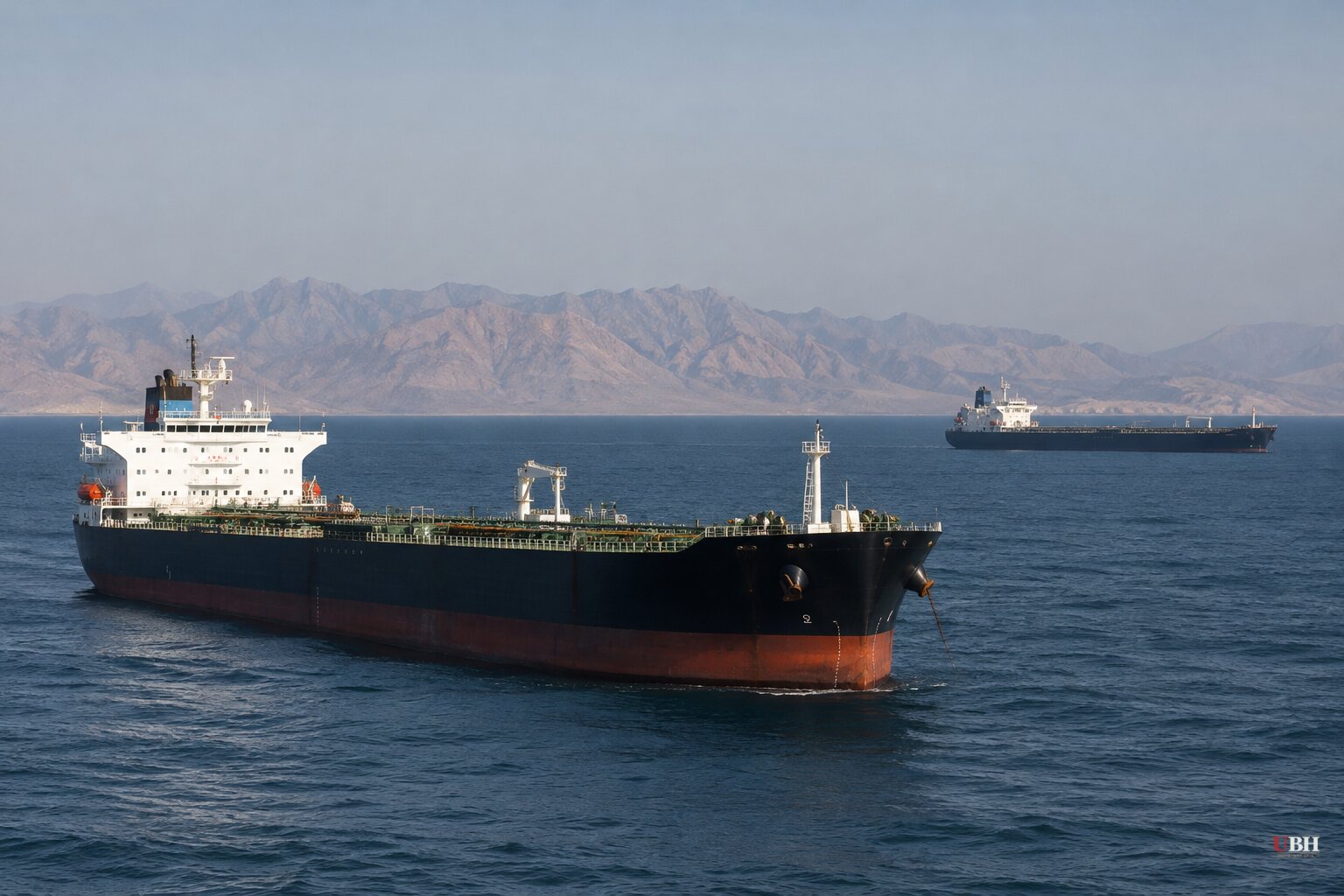
Since the Iran war began on Feb. 28, the Strait of Hormuz has gone from near-closure to a chokepoint where oil flows again under daily fire. As of Thursday, Nov. 19, the attacks are getting worse while prices are getting lower.
Bloomberg's compilation of maritime incident data shows attacks on tankers rose in October after a stretch of low-grade clashes and have stayed at the higher tempo this month. At least two seafarers are missing after attacks this week.
Iran's military said three vessels hit mines near the strait on Tuesday, Nov. 17. Footage of a burning vessel circulated among traders and shipowners this week, but Bloomberg could not immediately verify it.
Attacks are getting more serious
Several maritime security officials told Bloomberg that Iran has tried to hit the same ship more than once to deter salvors. They also reported sightings of limpet mines attached to hulls.
One Gulf oil official told Bloomberg the situation around Hormuz has deteriorated since the U.S. midterms on Nov. 3. A senior Saudi shipping official said at a conference last week that the kingdom has no choice but to keep shipping oil through the strait.
Gulf producers rarely disclose damage, so the true scale of the hits is hard to measure. "It seems like the new normal: Something like a war, but not exactly a war, with attacks on ships virtually every day," said Georgios Sakellariou, an analyst at Signal Ocean. "Oil is going out, but being certain about the volumes is complicated by the attacks and the secrecy."
Prices keep sliding anyway
Brent settled at $91.95 a barrel on Wednesday, down 1.3%. West Texas Intermediate fell 3.2% to $83.26. Brent peaked above $118 in late October, and Bloomberg puts its slide at about a fifth this month.
The U.S. Energy Information Administration said commercial crude stocks rose 3.4 million barrels to 417.8 million in the week ended Nov. 13, a bigger build than expected.
The International Energy Agency said in its November Oil Market Report that global supply has passed demand for the first time since the war began. World oil production rose 2.3 million barrels a day in October to 105.4 million. The agency expects demand to fall 2.7 million barrels a day this year because of high fuel prices and disruption to energy-intensive industries.
Brent is still well above its roughly $72 close on Feb. 27, the day before the war started.
Exports are up, but ships are short
Vortexa data shows smaller tankers, Suezmaxes and Aframaxes, moved more than 2 million barrels a day through Hormuz in October, the most of the war. Attacks on larger vessels cut the supply of very large crude carriers. Total Persian Gulf oil exports reached 11.4 million barrels a day, the highest since the conflict started.
That recovery now has a logistics problem. Ship-to-ship transfers in the Gulf of Oman tie up supertankers for weeks, which pulls vessels away from other routes such as U.S. Gulf Coast to Asia.
Tankertrackers.com data shows the combined capacity of ballasting supertankers and Suezmaxes heading to the Gulf of Oman fell to 71 million barrels as of Nov. 16. That is down from 130 million at the end of August. "There are not enough vacant tankers to take oil out of the region," Samir Madani, the firm's co-founder, told Bloomberg.
Bloomberg also reports that flows appear to have pulled back recently. Shipments swing week to week, and it is not clear whether the attacks are the reason.
Two readings of the same market
Most analysts and traders are betting on continued recovery and a large surplus next year. OilPrice.com's analysis argues that assumption is shaky because no forecast in this situation has better than 50/50 odds, and the tanker shortage could cap exports from the region.
Analysts cited by CNN see another risk. David Oxley of Capital Economics said it "certainly seems that Iran is either unwilling or unable to prevent the flow of crude oil at present." Danny Citrinowicz of Israel's Institute for National Security Studies said that if prices keep falling despite Iranian attacks, "an important part of that strategy becomes less effective." Experts told CNN a cornered Tehran has tended to choose escalation over capitulation.
Tehran frames it differently. Mohsen Rezaei, head of Iran's Supreme National Security Council, said: "We want to impose a cost on the Americans that makes attacking Iran too expensive, and that serves as a deterrent." Iranian officials have claimed victory.
Diplomacy has not moved
Secretary of State Marco Rubio said earlier this month, "I wouldn't say we're on the verge of a breakthrough." Iranian President Masoud Pezeshkian said Tehran favors negotiation but will not surrender to coercion.
Mediators have discussed a two-day proposal in which the U.S. would lift its naval blockade and release some frozen Iranian funds. Iran would then move toward renewed nuclear inspections and reopen Hormuz before broader talks. Washington has not accepted it.
The politics have shifted. Democrats flipped both chambers on Nov. 3, and Vice President JD Vance blamed the war for Republican losses. President Trump told reporters the assessment was largely true because the war pushed up gasoline prices. ING's commodities analysts noted the new Congress does not take office until January, which leaves room for escalation before any funding fight begins.
AAA put regular gasoline at $4.10 a gallon on Nov. 5, against about $3.08 a year earlier. GasBuddy's Patrick De Haan projected it could fall toward $3.65 in the weeks ahead.
The open question is physical, not financial. If attacks keep sinking or damaging ships faster than owners can replace them, the surplus the market is pricing in may not arrive.
Sources used for this briefing
7 links from 7 independent newsrooms (syndicated copies of the same report count once)
These are the sources it draws on, linked so you can verify.


