
Unbiased headlines. Facts, not spin.
Unbiased Headlines is an independently owned news organization. We bring you the facts, not opinions, written fresh from 110+ named sources. Sources linked so you can verify it yourself.
 energy
Major Story (8/10)
Acting Navy Secretary Cao tells Senate Hormuz insurance costs $64 million per transit as strait traffic stays near 8% of normal
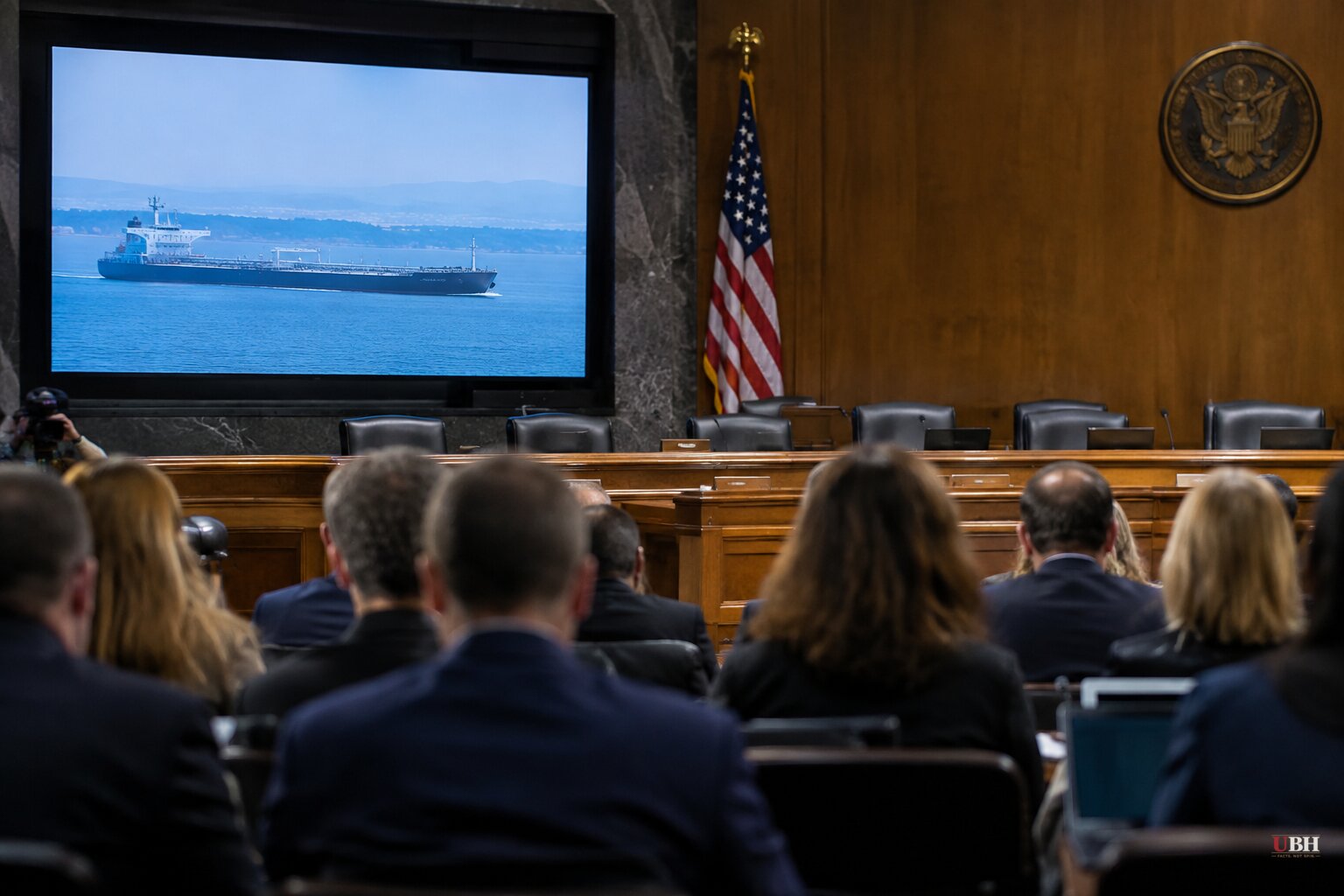
Nine months into the war with Iran, the man nominated to run the U.S. Navy could not tell the Senate what the Navy's own blockade costs per day.
Acting Navy Secretary Hung Cao appeared Tuesday, Nov. 17, before the Senate Armed Services Committee for his confirmation hearing. Senator Elizabeth Warren, a Massachusetts Democrat, asked him for the daily cost of the blockade of Iranian ports. "I do not know," Cao said.
He then said the blockade has cost "about $30 billion" so far.
The numbers Cao could not square
Warren's office says the blockade has cost as much as $42 million a day, with estimates putting the current figure around $32.5 million. That works out to nearly $1 billion a month.
The war began Feb. 28, which makes today day 264. Cao's $30 billion figure and Warren's per-day estimates were not reconciled at the hearing, and Cao could not state a daily cost himself.
The Pentagon estimated in October that the war had cost more than $47 billion. Warren says that excludes damage to bases, which she puts at $5 billion to $15 billion based on reports.
On Naval Support Activity Bahrain, home of the Fifth Fleet, Cao conceded in September that Iran "blew the hell out of" the base. Reports estimate the damage at about $400 million. The Defense Department has released no figure, and Cao told the committee: "We have not been able to do a full assessment."
That is taxpayer money. An official in line to run the Navy should be able to say how much of it is going out the door.
Warren says 23 service members have died. She called it "Donald Trump's war" and an "unauthorized" conflict, and said Congress should use "the upcoming government funding bill next month" to end it. Secretary of State Marco Rubio has defended the war as not "necessarily popular, but necessary."
The $64 million claim
In an exchange with Democratic Senator Elissa Slotkin, Cao said insurance for a commercial ship crossing the Strait of Hormuz has reached $64 million per transit.
He first cited $54,000, then clarified that this was the pre-war price. Slotkin blamed the war for the jump, saying commercial vessels no longer have the freedom of navigation they had before it.
Cao's figure has not been independently verified. It also conflicts with earlier reported increases in shipping insurance costs over the course of the conflict.
Cao also said the war is "a strain on our navy." Democrats called him a Trump "yes man." Senator Kirsten Gillibrand, a New York Democrat, asked about a sailor who went overboard, one of eight reported suicide attempts on an aircraft carrier. Cao said the sailor "was not trying to kill himself and he admitted that."
Is the strait open?
President Donald Trump says it is. In an interview with CBS's "60 Minutes," he said the strait is open and that he sees no reason to escalate the war. He also says the Navy is successfully escorting ships through.
The tracking data tells a narrower story. As of 15:58 UTC today, Nov. 18, the tracking site hormuz.now rated the strait "Restricted." Ship-position data shows about 6.4 commercial crossings a day over the past week, against 84.8 a day before the war. That is about 8% of normal.
October averaged 3.8 transits a day. The busiest month since the war began, June, averaged 12.9, according to IMF PortWatch.
Many ships cross with their transponders switched off. Windward counted nine transits on Nov. 13, and all nine were dark.
The two sides describe the strait differently. U.S. Central Command said Oct. 25 that the main routes "remain free and clear of Iranian sea mines" and that more than 3,000 commercial vessels had crossed with its support in six months. Iran declared the strait closed to "hostile" shipping at the start of the war. It requires transit permits through its Persian Gulf Strait Authority and said Nov. 10 that it will not reopen until the U.S. meets its conditions.
Ships now use either a U.S.-coordinated corridor in Omani waters or a northern route Iran controls. Before the war, about one-fifth of the world's oil moved through the strait.
Fighting continues while talks stall
The shooting has not stopped. The U.S. struck locations on Iran's Qeshm island on the night of Nov. 17. Authorities in Hormozgan province confirmed the strikes but said residential and commercial areas and critical infrastructure were untouched.
This morning, Iran's military said, through state news agency IRNA, that loitering munitions hit Patriot systems and U.S. equipment at Ali Al Salem Air Base in Kuwait. The statement included no evidence of damage or casualties, and the U.S. has not confirmed it.
On diplomacy, Rubio said over the weekend, "I wouldn't say we're on the verge of a breakthrough." He called Iran's demands unrealistic. Trump has met Qatar's prime minister, Sheikh Mohammed bin Abdulrahman Al-Thani, as mediators push a proposal that Axios reported Nov. 9. Under it, the U.S. would lift its naval blockade and release some frozen Iranian funds. Tehran would take steps toward renewed nuclear inspections and reopen the strait before broader talks. Washington has not accepted it.
Iranian President Masoud Pezeshkian said Tehran is ready to negotiate an end to what he called a state of neither war nor peace, but will not yield to coercion.
Cao's confirmation is pending. The funding bill Warren is targeting comes up next month.
No one has yet put a reliable daily price tag on the blockade.
Sources used for this briefing
7 links from 6 independent newsrooms (syndicated copies of the same report count once)
These are the sources it draws on, linked so you can verify.
More coverage: Congress


