
Unbiased headlines. Facts, not spin.
Unbiased Headlines is an independently owned news organization. We bring you the facts, not opinions, written fresh from 110+ named sources. Sources linked so you can verify it yourself.
 energy
Breaking / Critical (9/10)
Event date: November 15, 2026 ·
Brent Near $94, European Gas at €86 as Hormuz Vessel Attacks and Iranian Strikes on Bahrain Continue
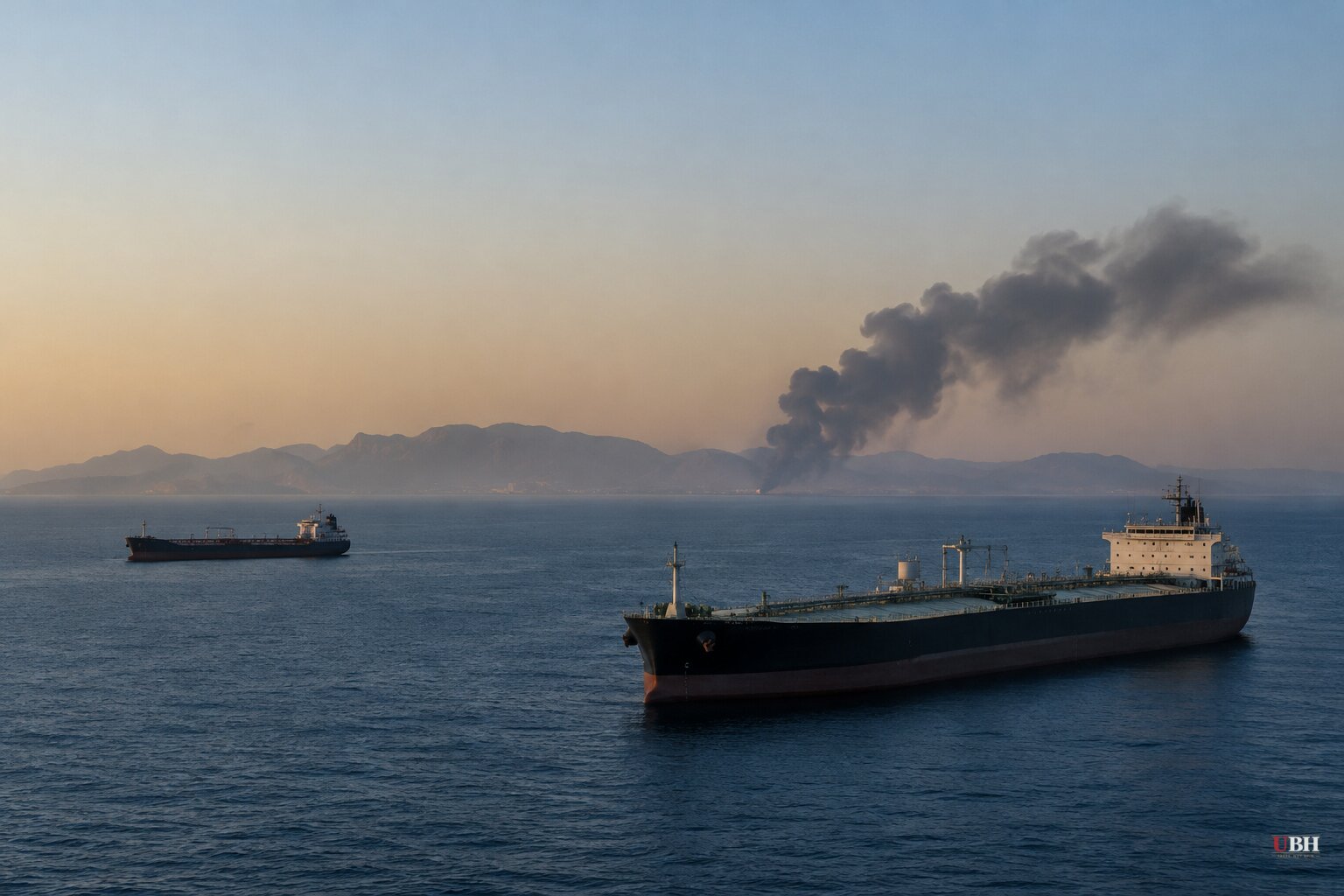
Since the Iran war began in February, energy markets have lurched on every flare-up around the Strait of Hormuz. Today, Nov. 17, was another one.
Brent crude rose toward $94 a barrel after falling 3.2% in Monday's session. The January Brent contract gained 0.8% to $93.21, and WTI for December delivery rose 0.9% to $86.56, according to Bloomberg News market data.
The latest fighting
Vessel attacks were reported in and around the Strait on Tuesday, and the UK Maritime Trade Operations center issued a fresh warning to shipping. Iran also targeted Bahrain for the third time in less than a week, aiming at a U.S. radar system, per Bloomberg.
Iran's semi-official Mehr News Agency said U.S. forces struck several locations on Qeshm Island in the Strait. The Iranian military separately warned vessels against taking "fake American routes" through the waterway.
The Bahrain Defense Force said Sunday it had "intercepted and destroyed" several Iranian drones, after a similar interception Friday. The Revolutionary Guard had earlier claimed an attack on a U.S. helicopter base in Bahrain, saying it was retaliation for unspecified U.S. "aggression." The U.S. Embassy in Bahrain urged Americans to exercise "heightened vigilance" and warned of possible airspace closures.
A third U.S. aircraft carrier strike group arrived in the Persian Gulf region Nov. 16. Iran has threatened to strike civilian infrastructure near U.S. or Israeli bases if similar sites inside Iran are hit.
Farther south, Reuters reported Sunday, citing sources, that Houthi fighters have advanced to within about 50 miles of Aden, the temporary seat of Yemen's recognized government.
Oil: a pattern of Friday gains and Monday drops
Bloomberg describes a settled rhythm: gains into the weekend on escalation fears, sharp declines early in the week when they don't materialize, and choppy trading in between. Brent fell 2.5% last week and was at $95.69 in early Asian trading Monday before Monday's slide, according to Reuters.
The price is well off the October peak. On Oct. 30, the January Brent contract traded at $113.10 and the expiring December contract at $117.14. WTI was at $103.94 that day. Today's January Brent, at $93.21, is far below those levels. Brent is still up more than 50% this year.
Ryan McKay, senior commodity strategist at TD Securities, said crude "should see some risk premium priced back into the market as tensions grow." He pointed to flow data showing a notable reduction in volumes in recent weeks. Tankertrackers.com data show fewer empty tankers heading to load Middle East crude, which could threaten the recent revival in regional flows.
Bloomberg says one ceiling on prices is Trump's reluctance to order mass attacks on Iran after the Democrats' midterm victory. Vice President JD Vance told Fox News the U.S. would not allow the war to become an extended commitment and ruled out even a two-year involvement. "We're not going to stay there forever," he said.
Europe's gas problem is bigger than oil
The Dutch TTF front-month contract rose 2% to about €86 per megawatt-hour as of 8:00 a.m. in Amsterdam today. That follows a drop of as much as 7% Monday, when U.S. LNG export facilities took in record gas flows over the weekend and mild weather covered the biggest consuming countries.
Prices are down from the four-year high above €100 in late October. They are still nearly triple the roughly €30 of a year ago.
Oil has partly recovered through Hormuz. LNG has not. Average outbound LNG cargoes are about one-third of pre-war levels, per Oilprice.com's estimate.
European storage is about 70% full, against roughly 90% in prior years, because the summer filling season coincided with a lack of Qatari supply. Net withdrawals have started in nearly all EU countries. INES, the association of German gas storage operators, warned last week that supply in Germany "may not be fully secured during the coming winter in the event of extremely cold temperatures."
Weather models point to a cold spell across most of Europe from around Nov. 20, which would lift heating and power demand.
Tehran's position
Iran rejects the framing that it is the aggressor. Deputy Foreign Minister Kazem Gharibabadi said Sunday that "from a legal perspective, we are still in a state of war," per Iran's state-run IRNA. He dismissed U.S. officials' statements that sanctions are working and Washington is no longer seeking a deal as the "same failed policies." He argued that the damage to global energy and financial markets, and to the U.S. itself, is "far heavier than the pressure brought to bear on Iran."
Foreign Ministry spokesman Esmaeil Baghaei objected to Gulf Cooperation Council suggestions that Iran owes its neighbors compensation. "How can countries that actively participated in military aggression against a neighboring country and made their airspace, territory and waters available to those who attacked Iranian territory speak of seeking compensation from Iran?" he asked, adding that Iran has an "inherent and legal right to defend itself." Iran itself is seeking compensation in any deal with the U.S.
The economic cost
The European Commission's autumn forecast says energy flows through Hormuz remain "severely disrupted" almost eight months into the conflict. It says damage to regional energy infrastructure means supply will recover only gradually even if the Strait fully reopens. Diesel prices have doubled year on year. The Commission also says low strategic reserves and gas storage leave thin buffers against further shocks. It still projects continued growth alongside higher inflation.
Qatar said earlier today that mediation efforts remain ongoing. The war is now in its ninth month, and on-and-off U.S.-Iran talks have produced no settlement.
The nearest test is the European cold snap forecast for around Nov. 20. It will draw on storage that is only about 70% full, against roughly 90% in prior years, while LNG cargoes out of the Gulf remain at about a third of pre-war volumes.
Sources used for this briefing
7 links from 6 independent newsrooms (syndicated copies of the same report count once)
These are the sources it draws on, linked so you can verify.
More coverage: Iran


