
Unbiased headlines. Facts, not spin.
Unbiased Headlines is an independently owned news organization. We bring you the facts, not opinions, written fresh from 110+ named sources. Sources linked so you can verify it yourself.
 energy
Notable (6/10)
Event date: November 13, 2026 ·
Russian Crude Exports Reach 3.9 Million Barrels a Day, Highest Since July, as Ukraine Hits Refineries
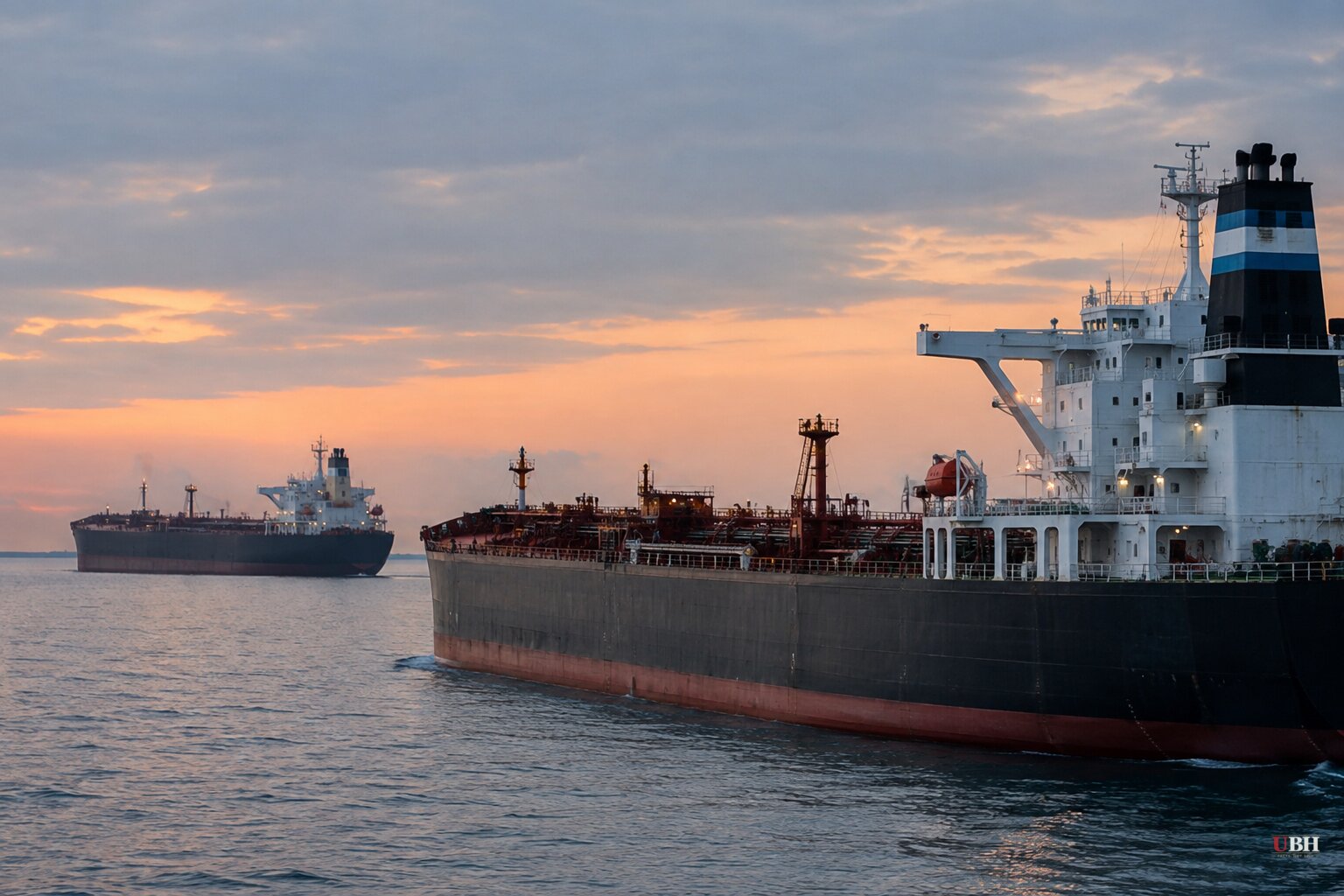
Since Ukraine resumed strikes on Russian refineries after a two-week pause in October, more Russian crude has been pushed onto tankers instead of into domestic plants. Over the 28 days ending Nov. 15, Russia exported crude at an average of 3.9 million barrels a day, its highest pace since late July, according to Bloomberg's tanker tracking. That is 280,000 barrels a day more than in the four weeks through Nov. 8.
The single-week figure is sharper. In the week ended Nov. 15, 39 tankers loaded 30.27 million barrels of Russian crude, versus 31 ships carrying 23.6 million barrels the week before. The weekly average of 4.32 million barrels a day was up 950,000 barrels a day and the highest since June. Bloomberg cautioned that weekly numbers swing with vessel departure timing, weather and maintenance.
Why the barrels are leaving
The mechanism is simple. When a strike knocks out processing units, the crude those plants can no longer handle gets shipped abroad. When attacks lull, crews repair units, domestic plants take in more oil, and exports drop. Bloomberg's tally shows Ukraine has hit 13 Russian refineries since the start of November, including TAIF-NK's Nizhnekamsk plant and Ilsky in the Krasnodar region.
Ukraine paused refinery strikes for two weeks in October, then went back after major targets including Kirishi, which is geared toward exports, and Omsk, Russia's biggest. Drone strikes in the first half of October had already cut refinery throughput.
President Volodymyr Zelenskyy says long-range strikes have disabled more than 55% of Russia's oil refining capacity. He calls the campaign a justified response to Russia's refusal to de-escalate and its attacks on Ukrainian energy infrastructure. Bloomberg said it could not verify the 55% figure.
Volume up, money down
More barrels did not mean more cash. On a four-week basis, the gross value of Russia's oil shipments fell to $2.45 billion a week, the lowest in seven weeks. Urals prices fell for a fifth straight week, more than offsetting the higher volumes. For the single week ended Nov. 15, export revenue rose to roughly $2.29 billion.
China and India remain the top buyers. Volumes bound for Asia, counting cargoes with no final destination listed, climbed to 3.72 million barrels a day from a revised 3.42 million in the period ending Nov. 8.
The broader market is loosening. The International Energy Agency said in its Nov. 13 monthly report that global supply rose 2.3 million barrels a day in October to 105.4 million, topping demand for the first time since the war in Iran began. Russian output also rose in October, though the IEA put it 1.22 million barrels a day below its implied production target. The agency warned diesel remains under severe pressure.
The diesel deal and the sanctions question
Diesel is where Russia and the American pump intersect. Under an Oct. 9 agreement between President Trump and Vladimir Putin, Washington temporarily permitted Russian diesel imports. By late October, three tankers carrying about 140,000 metric tons were crossing the Atlantic, and Russian Deputy Prime Minister Alexander Novak said a fourth was due to leave Oct. 28.
One of them, the Malta-flagged Agioi Fanendes, carries 300,000 barrels. That is roughly 10% of what the U.S. transportation sector alone burns in a day, according to the Energy Information Administration. U.S. diesel has topped $6 a gallon nationwide for the first time, up from $3.76 before the Iran war, according to AAA data.
The administration says it followed the legal process. Jeremy Paner, a Hughes Hubbard & Reed partner and former Treasury sanctions official, said the 2022 law banning Russian energy imports does not strip the president of authority to authorize the cargoes.
Critics disagree. Sen. Richard Blumenthal, D-Conn., sent letters to Eastern Mediterranean Maritime Limited and PetroVietnam demanding they recall the tankers, arguing Treasury's General License No. 135 cannot override the statute. Ben Harris, the former assistant Treasury secretary who worked on the 2022 sanctions and is now at the Brookings Institution, said Trump "sees no value in sanctioning Russia" and called the moves "incredibly disheartening."
Is the price cap doing anything?
The Centre for Research on Energy and Clean Air says no, not durably. Its October analysis found Urals averaged $102 a barrel that month, far above the cap, which was lowered to $44.1 on Feb. 1 and frozen there under the EU's 21st sanctions package. ESPO-grade crude has consistently traded above both cap levels on Chinese and Pacific demand.
CREA notes the EU's 20th package, adopted in April, lays the groundwork for a ban on maritime services for Russian crude. It takes effect only if the G7 and Price Cap Coalition agree. That ban would have been the first sanction aimed at Russian export volumes rather than prices. The Hormuz disruption led the group to rethink it for fear of deeper supply crunches.
CREA recommends either fixing the cap at a level that severely restricts Russian revenue or imposing a tax or surcharge on Western maritime services used to carry Russian oil. Neither the G7 nor the coalition has adopted that approach.
It is not yet clear whether the volume surge will persist. Bloomberg's own reading is that exports track the tempo of Ukraine's strikes, so the next few weeks of refinery attacks, or another pause like October's, will set the pace.
Sources used for this briefing
7 links from 7 independent newsrooms (syndicated copies of the same report count once)
These are the sources it draws on, linked so you can verify.


