
Unbiased headlines. Facts, not spin.
Unbiased Headlines is an independently owned news organization. We bring you the facts, not opinions, written fresh from 110+ named sources. Sources linked so you can verify it yourself.
 energy
Notable (6/10)
Thailand Scrambles to Supply Clean Water to 20,000 Households as Arsenic From Myanmar Mining Hits Chiang Rai
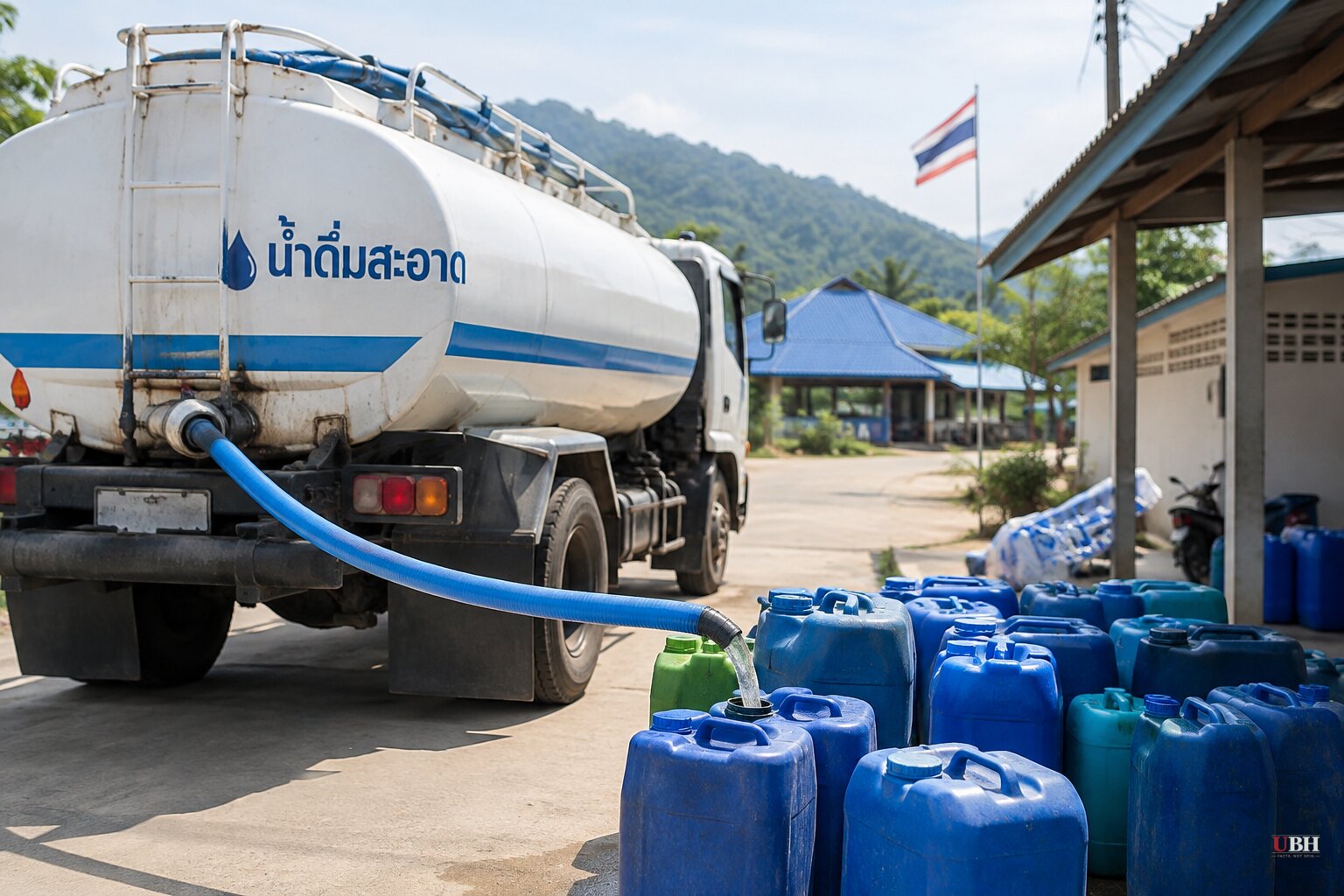
Thailand's government is racing to get clean water to more than 20,000 households in Chiang Rai province. Arsenic pollution that officials link to mining in Myanmar has contaminated local supplies.
Prime Minister Anutin Charnvirakul late Tuesday, Nov. 17, ordered agencies to find alternative water sources and closely monitor tap water quality, deputy government spokeswoman Lalida Persvivatana said. Anutin is attending the ASEAN Summit in Manila. He also asked the Provincial Waterworks Authority (PWA) to publish its test results and explain its production process to residents.
The numbers
Tap water to 14 villages in Mae Sai district, near the Myanmar border, was suspended this month. Officials found arsenic in the local waterworks at 30 times the safe limit. The government says those villages hold more than 20,000 households.
Untreated water from the Sai River, a Mekong tributary, tested at 25 times the drinking-water limit in the government's later tests. Other readings of raw river water have run as high as 28 times the standard, according to the Pollution Control Department and research agencies cited in Thai reporting.
Two trucks are delivering drinking water. The government is also weighing alternative river sources.
The PWA has a different account of its own system. In a Nov. 11 update, it said raw-water conditions on Nov. 10 allowed normal production and that water in its treatment system met its standards. It also said the high readings concerned raw river water, not treated tap water. The government's figure for the waterworks and the PWA's statement have not been reconciled publicly.
Households paying their own way
Many residents have stopped using tap water and are buying bottled and bulk water, raising household costs. The Nation reported that the government's treated-water response has reached only about 15% of the affected area, leaving most residents to find their own supplies.
The Ministry of Public Health has told residents to avoid direct contact with river water and sediment. Communities are steering clear of fish and other aquatic animals from the river and connected canals.
The Department of Fisheries has found excessive heavy-metal accumulation in some aquatic species. Agriculture Minister Suriya Juangroongruangkit has told his ministry and the department to determine this week whether contaminants have reached the food supply.
Separately, Thai officials said arsenic turned up in the urine of 17 of 177 people tested in October in Nong Khai province, on the border with Laos. Nong Khai lies far downstream on the Mekong.
Where the arsenic comes from
Researchers at Naresuan University said last week that chemical analysis and satellite modelling traced much of the arsenic-laden sediment in the Sai River to gold mining across the border in Myanmar. Thai officials and others also point to rare earth mining in Shan State, where the Chinese-run operations in question are said to supply Chinese processing plants. The Thai government says it has raised the matter with Beijing.
The rare earth link is not confirmed. Investigations into the source are ongoing. A Bloomberg report on Nov. 11 noted that Thai authorities had yet to identify the source of the latest spike. It added that some suspected mines sit in areas beyond the Myanmar government's full control, which complicates enforcement.
Foreign Minister Sihasak Phuangketkeow visited Naypyidaw on Nov. 12. He blamed "wastewater from mining" and described a "dramatic" increase in pollution in the Sai River as an "urgent matter that needs urgent attention."
A monitoring deal that has not met
Thailand and Myanmar signed a six-page agreement on Aug. 6 to jointly monitor transboundary pollution. Thai Foreign Ministry sources told Mongabay the joint working group created by that deal has not met once since. Civil society groups and some Thai officials had earlier criticized the agreement, saying revisions requested by Myanmar and accepted by Thailand would blunt its effect.
After the Nov. 12 visit, the Thai Foreign Ministry said both sides agreed to convene the working group "as soon as possible," followed by a joint field visit. Myanmar officials were not immediately available to comment when Bloomberg sought a response earlier this month.
Thai PBS reported Nov. 18 that Deputy Prime Minister Yodchanan Wongsawat held a private discussion with senior Myanmar officials. He reportedly said Thailand is ready to help address the problem if Myanmar allows it. Yodchanan also chairs the northern disaster-response committee.
He has pushed technical measures, including water filters, portable test kits for residents, check dams to trap contaminated sediment, and risk maps to track the spread. The Nation lists six urgent measures in total, including restrictions on raw-mineral imports and tighter heavy-metal controls.
What comes next
Contamination has been detected in the Kok, Sai and Ruak rivers, in the Mekong at Chiang Saen district, and at times in the Salween basin. Thai authorities have been finding dangerous arsenic and heavy-metal levels in the Kok, Sai and Ruak system for nearly two years, since early 2025.
A delegation from Myanmar's Ministry of Natural Resources and Environmental Conservation is scheduled to meet Thailand's Ministry of Natural Resources and Environment on Nov. 25 and 26. It is unclear whether that session will produce the first actual working-group meeting under the August agreement.
Sources used for this briefing
7 links from 7 independent newsrooms (syndicated copies of the same report count once)
These are the sources it draws on, linked so you can verify.


