
Unbiased headlines. Facts, not spin.
Unbiased Headlines is an independently owned news organization. We bring you the facts, not opinions, written fresh from 110+ named sources. Sources linked so you can verify it yourself.
 energy
Major Story (7/10)
Event date: November 17, 2026 ·
Judge Voids Wildlife Review for American Samoa Deep-Sea Mining Lease Sale Set for Nov. 19
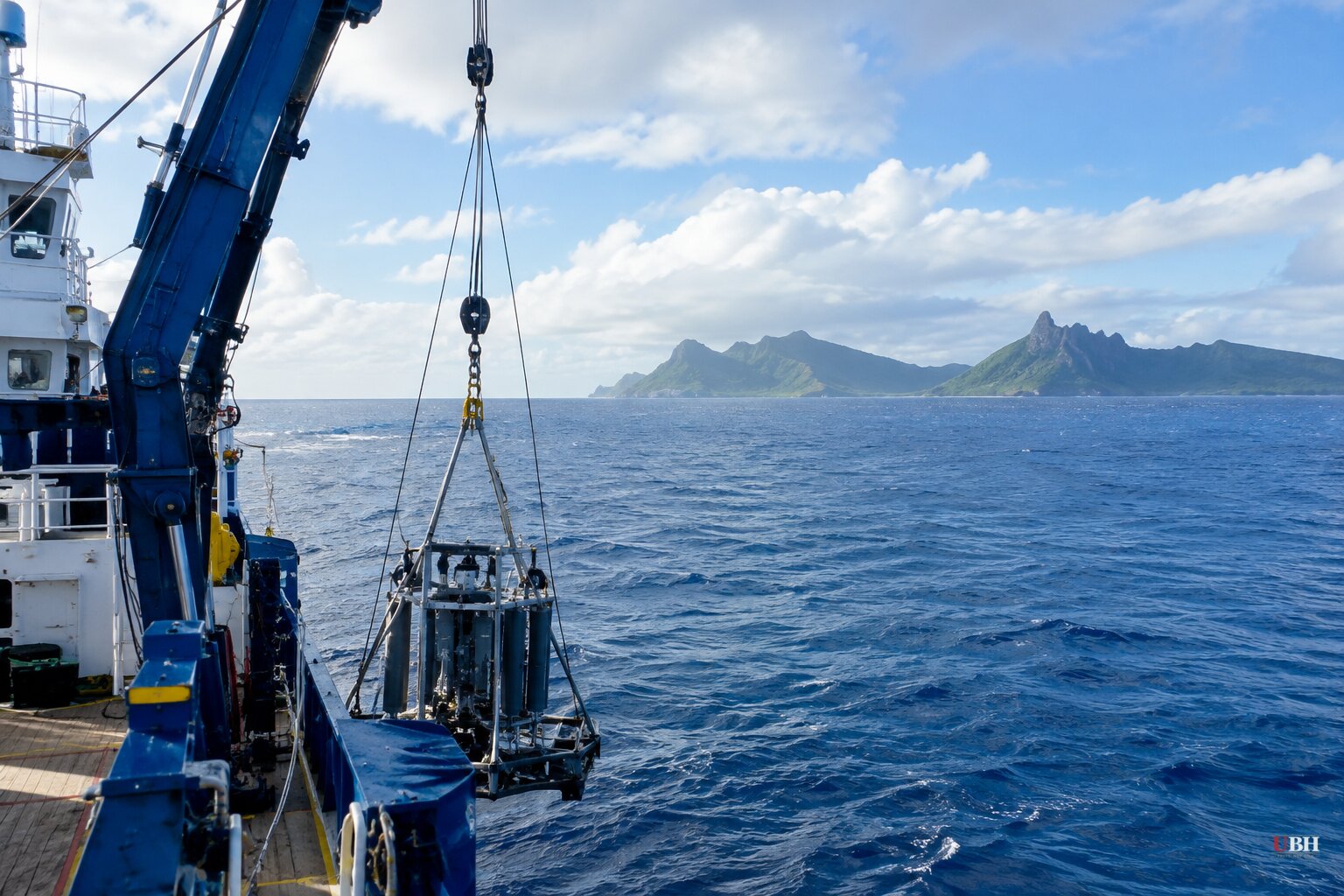
A federal judge ruled Monday, Nov. 16, that the Trump administration cut legal corners on the first deep-sea mining lease sale in U.S. history. The auction is still on the calendar for tomorrow, Thursday, Nov. 19.
U.S. District Judge Jill Otake, a Trump appointee in Hawaii, found that the National Marine Fisheries Service violated the Endangered Species Act. The agency cleared the sale of two seabed areas northeast of American Samoa's Manu'a Islands, covering more than 31 million acres, with a finding that it was "not likely to adversely affect" protected species. Otake invalidated that finding in a 41-page order.
What the judge found
The problem was scope. The Fisheries Service reviewed only the lease sale and preliminary survey work, not the mining the leases could eventually allow.
"Limiting the agency action here to the lease sale and preliminary activities ignores the reality that the purpose of the leases being sold is eventually to conduct deep-sea mining," Otake wrote.
She called the review "cramped, expedited, informal" and "apparently unprecedented" for offshore leasing. She noted the government effectively conceded at an Oct. 30 hearing that it had no prior example.
The Marine Minerals Administration asked for the faster informal route. The Fisheries Service agreed in February and issued its letter 10 days after deciding it had enough information to begin. A formal review would have required a deeper look at whether the project could push protected species toward extinction or damage their habitat.
The review area covers waters near American Samoa, Hawaii and the West Coast. Otake said it is home to several dozen protected species, including blue, fin, sei and sperm whales, sea turtles and five types of coral.
"As extinction is permanent, caution and foresight before acting are necessary," she wrote.
The government's argument
The government argued the Fisheries Service only had to evaluate the project as the Marine Minerals Administration described it, meaning the sale itself. Otake rejected that, writing that a consulting agency "may not blindly accept" another agency's description of what it plans to do. She also said that in the oil and gas leasing cases the government cited, agencies had completed formal reviews.
The court acknowledged the near-term limits of the leases. For now they would only authorize preliminary surveying, but they "may eventually allow the lease holder to develop marine minerals from polymetallic nodules."
MMA spokesperson Jordan Akiyama said the agency is "aware of the opinion" and is "currently working to address the issues raised." The agency has not announced whether Thursday's sale will go ahead, be delayed or be rescheduled. A second sale covering waters off the Northern Mariana Islands and Guam is tentatively set for Dec. 19 and faces a similar lawsuit.
Earthjustice filed the case on Aug. 18 for Fa'asao Amerika Samoa and the Conservation Council for Hawai'i. It named the Fisheries Service and Commerce Secretary Howard Lutnick. Seumalu Dr. Elora Raymond of Fa'asao Amerika Samoa said many of the affected species "are sacred to the Samoan people." Earthjustice calls it the first lawsuit against the administration's push to open U.S. waters to deep-sea mining, an industry that barely exists beyond a few small exploratory projects.
Arctic leases brought back
The American Samoa ruling lands in the middle of a broader offshore push. On Nov. 12, the Center for Biological Diversity and Sovereign Iñupiat for a Living Arctic sued Interior and the Bureau of Safety and Environmental Enforcement in U.S. District Court for the District of Columbia. They are challenging the revival of Hilcorp Alaska's Liberty Unit leases in the Beaufort Sea.
Liberty holds roughly 150 million barrels of oil and would be the first producing field located entirely in federal Arctic waters. BP discovered it in the 1990s, and the oldest lease dates to 1991. The leases never produced and were extended 11 times. Hilcorp took over as operator in 2014. The first Trump administration approved its drilling plan in 2018.
BSEE denied the company's 12th suspension request, filed in August 2024, in the closing weeks of the Biden administration. The plaintiffs say the leases expired and the unit terminated at that point. They argue BSEE had no legal authority to undo that. The Trump administration later reversed course; the plaintiffs' release dates the reversal to November 2025 and cites a national energy emergency.
"These leases expired because Hilcorp could not meet the basic requirements, including a workable plan for an oil spill in waters covered by sea ice much of the year," said Nauriaq Simmonds, executive director of Sovereign Iñupiat for a Living Arctic. Rebecca Noblin, Alaska legal director at the Center for Biological Diversity, said "oil drilling in the Arctic Ocean is as dangerous as it gets." Interior declined to comment, citing pending litigation.
California's platforms
A third offshore item is further out. A September executive order on recreational fishing directs Interior, through the Marine Minerals Administration, to set up a federal "reef-in-place" program for retired oil and gas platforms. Interior has also scheduled a 2027 rulemaking that would make "toppling in place" the default decommissioning method.
There are 23 platforms in federal waters off California, eight of them in some stage of decommissioning. Toppling has been used in the Gulf of Mexico. It has never been tried off California, where every decommissioned platform has been removed.
Full removal of some of the largest platforms could cost more than $200 million, according to federal estimates. Oil industry consultant Robert Collier, who first flagged the plan on his Substack, called toppling "a huge windfall for oil companies" compared with removal.
Milton Love, a research biologist at UC Santa Barbara, says the change could benefit marine life. Rockfish, mussels and anemones have colonized the structures over time.
What comes next
The immediate issue is whether the Marine Minerals Administration holds the American Samoa auction on Thursday on top of a vacated wildlife review, or pulls it. Either way, the Dec. 19 sale, the Liberty case in D.C. and the 2027 platform rulemaking are all still ahead.
Sources used for this briefing
6 links from 6 independent newsrooms (syndicated copies of the same report count once)
These are the sources it draws on, linked so you can verify.


