
Unbiased headlines. Facts, not spin.
Unbiased Headlines is an independently owned news organization. We bring you the facts, not opinions, written fresh from 110+ named sources. Sources linked so you can verify it yourself.
 energy
Major Story (7/10)
Event date: November 10, 2026 ·
National Weather Service Says El Niño Likely to Be Strongest on Record, With Northwest Snowpack and Idaho Water Supplies in Question
Since forecasters began warning this summer that a record El Niño was building, the readings have only climbed. The National Weather Service said Nov. 12 that the event far exceeds the very strong threshold and likely has the staying power to be the strongest on record.
The Climate Prediction Center's latest readings put sea-surface temperatures along the central equatorial Pacific 2.5°C above normal. A reading of 2°C above normal triggers a "very strong" classification. If the 2.5°C level holds, it would be the highest on record for late fall and early winter.
Record warmth, now in its sixth month
The Washington Post reports that the Pacific has now set ocean temperature records for 165 straight days. Its reporting puts the surge as high as 3.5°C (6.3°F) above average, topping the previous record from November 2015. Temperatures dipped slightly in early November but are forecast to rise again, according to the Post. Effects on global climate are expected to linger through the first half of 2027.
NOAA figures put the odds at 63% that a very strong El Niño will be in place from November 2026 through January 2027.
Ken Graham, director of NOAA's National Weather Service, called it "a strong, if not historic El Niño going into this winter." He said decades of records show an event this strong will likely push the jet stream south and east over the lower 48 states and raise the chance of storms across the South.
NASA Jet Propulsion Laboratory climate scientist Josh Willis uses the nickname "Godzilla" for events like this. He says it "breathes fire on Indonesia and Southeast Asia," where severe drought and major wildfires are underway, while its tail kicks up storms and high tides on the U.S. side of the Pacific.
The last comparable event, in 2015-16, brought catastrophic flooding to South Carolina and a blizzard on the East Coast.
What forecasters will and won't promise
NOAA's outlook calls for warmer-than-average temperatures across much of the continental U.S. and above-average precipitation in several regions. California is expected to be in the path of soaking storms, with Southern California the most likely to see above-average precipitation.
NOAA's winter outlook makes no call on seasonal snow totals. A stormier winter is not the same as a snowier one. Graham put the limits plainly: El Niño shifts the odds, but it does not guarantee outcomes. He also said seasonal predictions help communities "assess all the risks and how to mitigate them."
AccuWeather's Paul Pastelok expects "a season of several storm tracks," and where each storm goes will decide what winter looks like in any one town.
The Northwest: warmer, with snow levels at stake
The Northwest is on the other side of the jet stream shift. Forecasters are less confident about Northwest precipitation than about California's. They expect warmer winter temperatures and a thinner snowpack.
Oregon State Climatologist Larry O'Neill said that during past very strong El Niños, Oregon's winter temperatures averaged about 1°F above normal. That was enough to raise snow levels by 500 to 1,000 feet. "That could be really significant," he said.
Snowpack works as a natural reservoir, holding water in the mountains and releasing it gradually as it melts. Rain runs off sooner, leaving less for summer irrigation.
Idaho: little room for a dry year
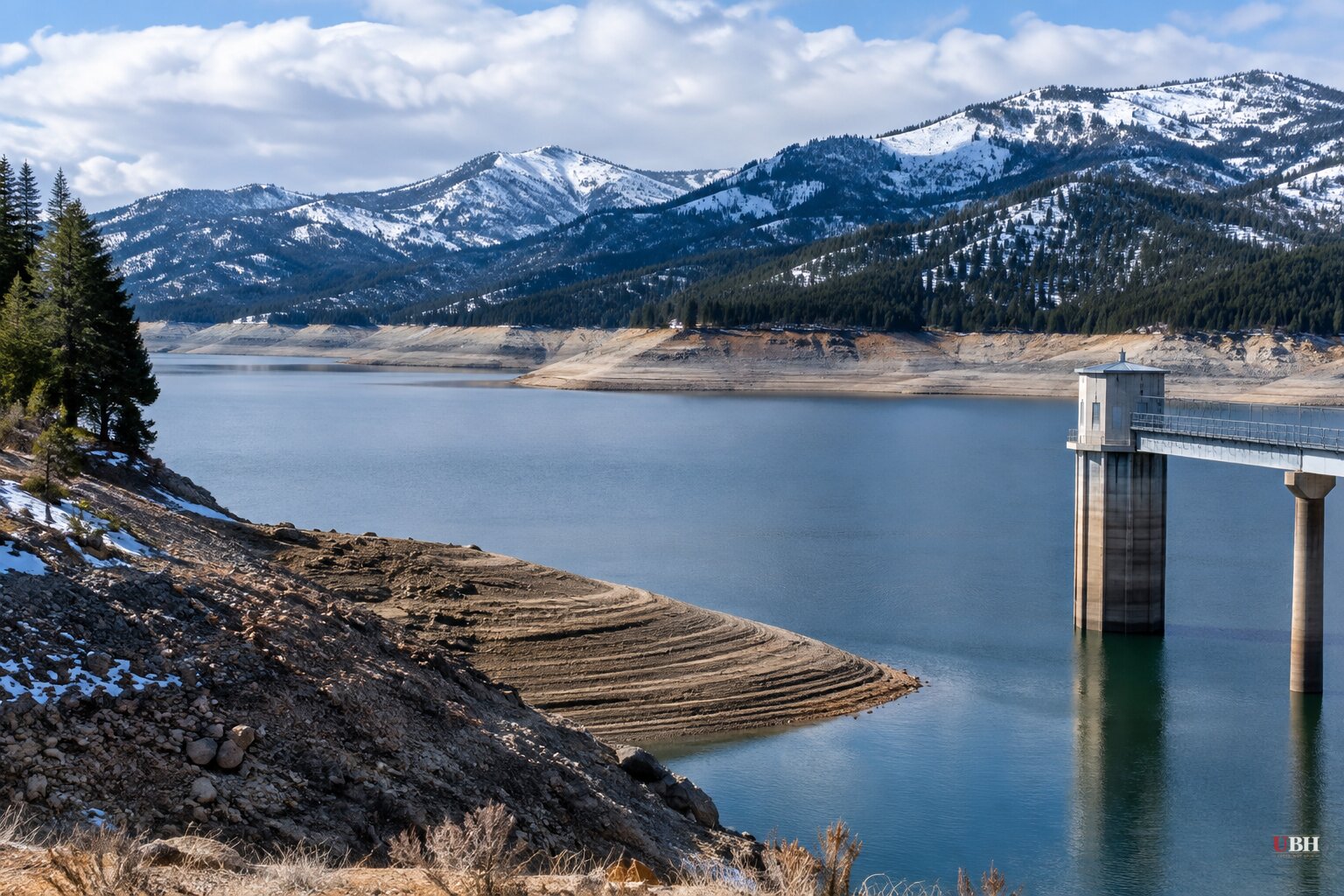
Idaho is coming off a hard year. The Salmon River Canal Company, south of Twin Falls, shut off irrigation water June 10, according to David Hoekema, a hydrologist with the Idaho Department of Water Resources. "You can't really grow much if you shut your water off on June 10," he said.
Hoekema said the Upper Snake River basin needs above-normal snowpack to recover, and reservoirs have little carryover storage. A dry winter would make things worse.
The Boise Basin had very low snowpack last year but was rescued by spring rain from an atmospheric river. "We've never seen quite that big of a swing in water supply," Hoekema said. The Snake River basin got no such rescue.
A strong El Niño does not settle the question for the southern part of the state. Hoekema said the Southern Snake River basin sits near the edge of the patterns El Niño produces. "It could go either way at this point," he said. In northern Idaho, he said, a fifth year of drought, particularly in summer, is likely.
Boise State geosciences professor Alejandro Flores pushes back on the idea that the El Niño label tells you much about snow. His preliminary research found that large snowpacks can occur in strong El Niño or La Niña conditions. Precipitation and temperature, he said, matter more for how much snow accumulates.
The state is not waiting on the weather. The Idaho Department of Water Resources is using cloud seeding and aquifer recharge, and the water board plans to put about 200,000 acre-feet into the East Snake Plain Aquifer over the winter. "You can't just all of a sudden see a drought coming and make drastic changes," Hoekema said.
Hoekema and Flores both point to the same open question: whether the jet stream's southward shift leaves Idaho's mountains with snow or only warmer rain will not be clear until the winter storms arrive. Early-season snowpack readings will be the first check.
Sources used for this briefing
6 links from 6 independent newsrooms (syndicated copies of the same report count once)
These are the sources it draws on, linked so you can verify.


