
Unbiased headlines. Facts, not spin.
Unbiased Headlines is an independently owned news organization. We bring you the facts, not opinions, written fresh from 110+ named sources. Sources linked so you can verify it yourself.
 energy
Notable (6/10)
EU Lawmakers and Governments Reach Provisional Deal to Speed Permits for Renewables, Grids and Storage
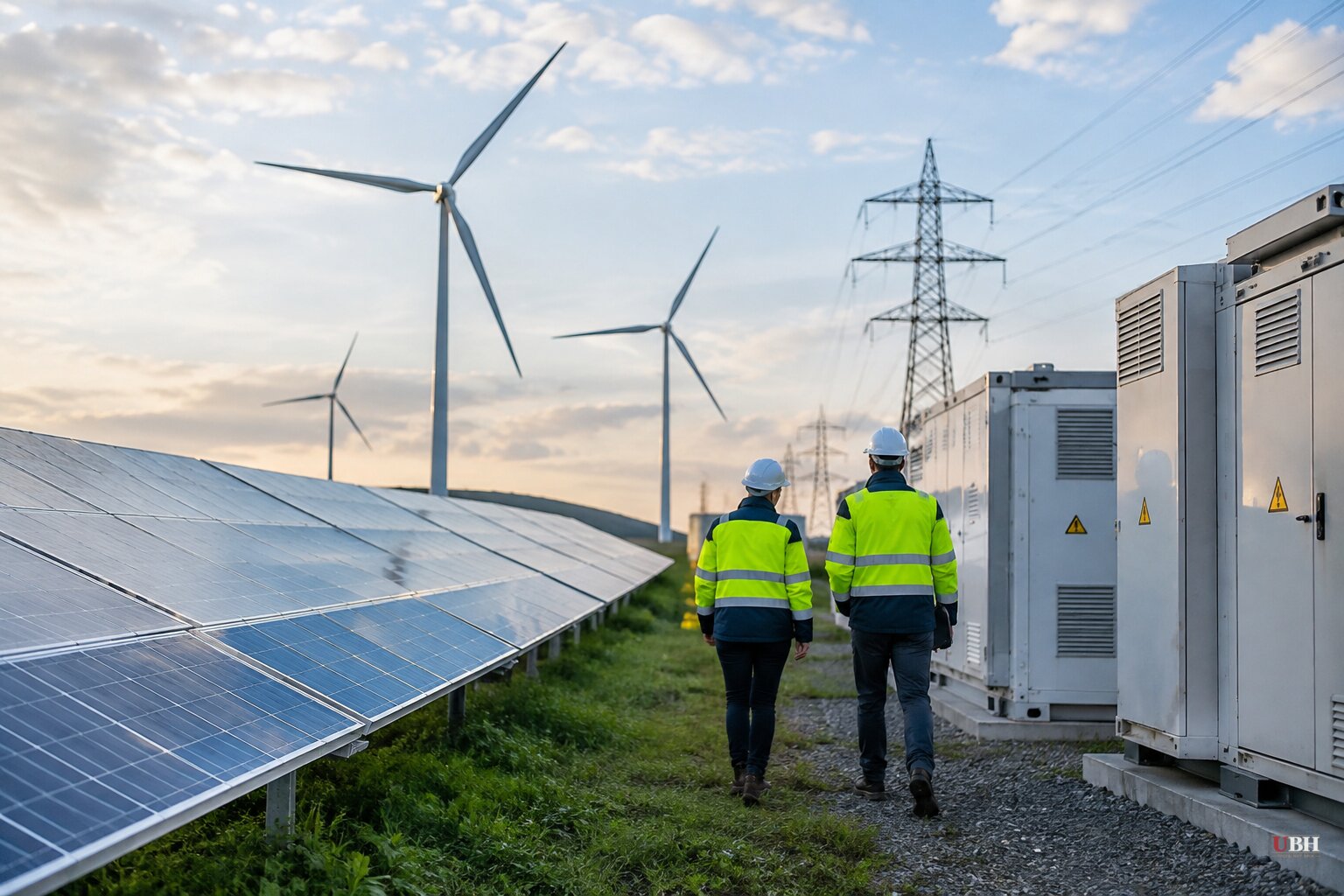
The EU Council and the European Parliament reached a provisional agreement early Wednesday, Nov. 18, to accelerate permitting for renewable energy projects, electricity grids and energy storage facilities across the bloc.
The deal completes the permitting directive. That is the first half of the European Grids Package, an initiative meant to modernize and expand Europe's energy infrastructure. The package is a component of the EU's "One Europe, One Market" roadmap, which aims to strengthen European competitiveness and bring down energy prices.
What the agreement does
The stated goal is to speed up deployment of critical energy infrastructure, strengthen energy security and modernize the electricity network to support the move toward climate neutrality.
The EU Council said the provisional agreement lets member states treat wind, solar, grid upgrades and storage projects as being in the overriding public interest. That designation is meant to make it easier to push projects through approval.
Ireland's Minister for Climate, Energy and the Environment, Darragh O'Brien, welcomed the deal in a statement. "With tonight's provisional agreement on the permitting directive, we have completed the first half of the European Grids Package. We are delivering on the ambition in the 'One Europe, One Market' roadmap," he said.
O'Brien said faster, more streamlined permitting would help accelerate electrification and support the infrastructure needed to deliver "clean, affordable and domestically produced energy."
Not law yet
The agreement is provisional. Both the Council and the Parliament must endorse it. Both institutions must then formally adopt it after legal-linguistic revision.
Once that happens, member states will have 1.5 years to incorporate the directive's provisions into national legislation. Developers waiting on approvals will see little change until national governments finish that work.
The cost of imported fuel
The deal lands as the EU's fuel import bill is under scrutiny. A new analysis by the Öko-Institut, commissioned by WWF Germany, put the EU's net energy import costs at €296 billion in 2025 after deducting export revenues.
The analysis found that the volume of energy imports fell 10% over the past decade, while costs rose 33%. Oil and gas together account for nearly 90% of the import bill, with oil the largest share. Natural gas market swings have pushed costs up substantially since 2020.
The study also models what could have been avoided. It estimates that about 85% of today's fossil fuel imports could be replaced through electrification, renewable deployment and efficiency measures. On that basis, it says the EU could have saved more than €250 billion in 2025 and avoided roughly 1.8 billion tonnes of CO₂ emissions.
Those are modeled figures from a study commissioned by an advocacy group, not measured outcomes. Felix Schmidt, an energy expert at WWF Germany, drew his own conclusion from them: "Oil and natural gas imports are the energy policy Achilles' heels of Europe." He argued that governments must turn their commitments to transition away from fossil fuels into action.
Pump prices and profits
A separate study by energy expert Steffen Bukold, commissioned by Greenpeace Germany, looked at fuel margins since the start of the war in Iran. It estimates oil companies in the EU are making €81.4 million in extra profit every day, or around €2.5 billion in additional profit for March alone.
The study found that prices at the pump rose far more than the underlying increase in crude prices. Germany, France, Spain and Italy had the highest total windfall profits. Margins shrank in a few smaller, lower-income countries, including Slovakia and Slovenia.
Greenpeace EU campaigner Ariadna Rodrigo called on governments to introduce higher taxes on fossil fuel profits. She wants the money used to cut energy bills and deploy renewables. Greenpeace has asked for permanent top-up taxes on oil and gas company profits. No EU government has announced such a tax in response.
What comes next
The formal votes in the Council and Parliament are the next hurdle for the permitting directive. The Council and Parliament have not set a date for them.
Ahead of that, governments are due to gather at the COP31 climate negotiations in the coming weeks. There they will discuss a worldwide electrification target of at least 35% by 2035, a priority of the Turkish COP presidency.
The European Commission's 2040 climate and energy package is expected early next year. It will show whether Brussels pairs faster permitting with firmer targets on fossil fuel imports, as WWF is urging.
Sources used for this briefing
5 links from 5 independent newsrooms (syndicated copies of the same report count once)
These are the sources it draws on, linked so you can verify.


