
Unbiased headlines. Facts, not spin.
Unbiased Headlines is an independently owned news organization. We bring you the facts, not opinions, written fresh from 110+ named sources. Sources linked so you can verify it yourself.
 energy
Major Story (7/10)
Event date: November 12, 2026 ·
Appalachian Power Commits $17 Billion to 3 GW of New Gas Plants and $7.5 Billion to Coal Upgrades in West Virginia
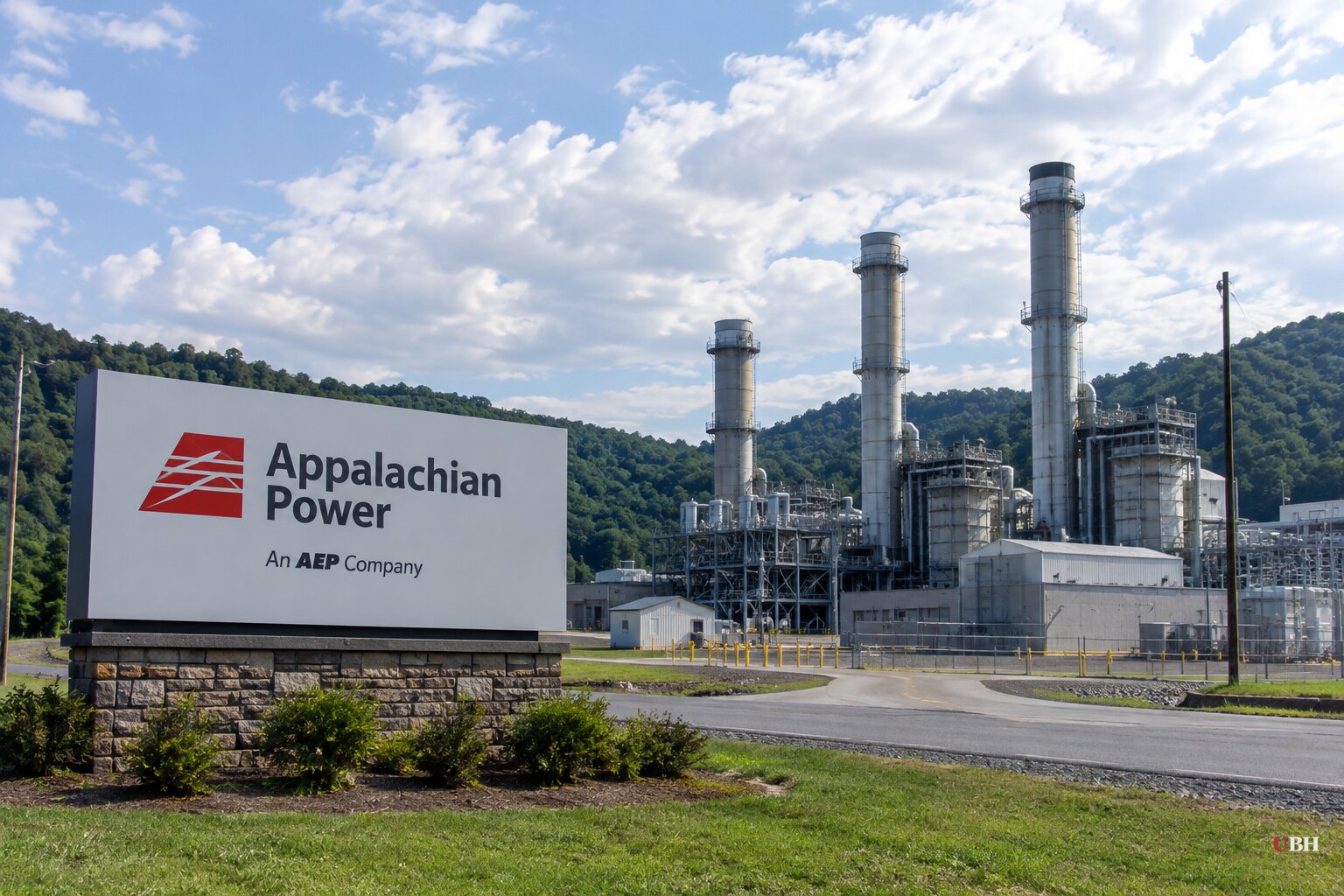
Appalachian Power, a subsidiary of American Electric Power, has committed $17 billion to new natural gas generation in West Virginia, Gov. Patrick Morrisey announced at the state's annual Energy Summit. The utility is also putting $7.5 billion toward upgrading its existing coal-fired plants through 2050.
That is roughly $24.5 billion in total.
What was announced
The gas money pays for three plants totaling 3 gigawatts, all expected to be operating by 2031. Morrisey said the plants will be geographically dispersed around the state. Specific locations have not been announced.
The governor's office projects about 2,050 construction jobs and 100 permanent jobs. Other local reports have carried different job totals, but 2,050 and 100 are the figures the governor's office put out.
The office also says the project is the largest single power generation announcement by capacity in state history. It surpasses the roughly 2.9-gigawatt John Amos Power Plant, announced in the early 1970s.
At that rate, $17 billion for 3 gigawatts works out to about $5.7 billion per gigawatt.
The coal commitment is separate. Morrisey framed it as protecting generation the state already has. "A key piece of that 50 by 50 initiative was trying to make sure we're going to extend reasonable, useful life of coal," he said.
The 50 by 50 target
Morrisey launched the "50 by 50" initiative in September 2025. It aims to roughly triple West Virginia's generating capacity from about 16 gigawatts to 50 gigawatts by 2050.
The governor's office says this announcement lifts the total capacity announced since then to 11.67 gigawatts. That is more than 34 percent of the additional capacity needed.
The office also says West Virginia has now announced $113.6 billion in private investment and 21,030 projected jobs since October 2025. Those are projections tied to announcements, not completed projects.
Morrisey has pitched the buildout as a way to attract fast-growing industries such as AI data centers and advanced manufacturing. "We are the Saudi Arabia of gas and you're seeing what that means," he said.
The ratepayer promise
The central claim is about the bills. The governor's office says the projects will proceed under Morrisey's "ratepayer protection pledge," meant to ensure infrastructure costs are not shifted onto existing residential and business customers.
The office's release goes further: "Electricity prices will not rise because of these initiatives." Morrisey has said power bills "must not go up because of these new additions."
That is the governor's stated position. The announcement does not describe how the pledge will be enforced, and the governor's office has not said what rate review the projects will go through. How the utility recovers $24.5 billion in spending is the open question.
Morrisey's stated reasoning is that supply is the fix for rising bills. "Families are struggling with rising costs, and too many are seeing more of their paychecks consumed by electric bills," he said. "We're tackling that problem from both directions, helping families reduce their energy use while increasing the supply of affordable, reliable electricity."
He also contrasted West Virginia with other states. "While other states are restricting energy production and retiring reliable power plants, West Virginia is increasing its energy supply," he said.
The efficiency side
The governor also highlighted Google's $10 million Energy Impact Program. It includes an initial $1 million, routed through the West Virginia Office of Energy, to help households in Putnam, Kanawha, Cabell, Mason, Jackson and Lincoln counties make home repairs needed to qualify for energy rebates. The program also supports efficiency upgrades for local governments and nonprofits.
More than 1,400 West Virginians have applied for the state's Home Energy Rebate programs since launch, according to the governor's office.
Timeline and what comes next
The gas plants have a 2031 target. The coal upgrades run through 2050, a horizon of more than two decades.
Morrisey told the summit more announcements are coming. "If you like the last two years, the best is yet to come," he said.
The next concrete details to watch are the three plant sites and how the project's costs are treated in rates. Those will show whether the pledge that bills will not rise is backed by a mechanism customers can see.
Sources used for this briefing
7 links from 7 independent newsrooms (syndicated copies of the same report count once)
These are the sources it draws on, linked so you can verify.


