
Unbiased headlines. Facts, not spin.
Unbiased Headlines is an independently owned news organization. We bring you the facts, not opinions, written fresh from 110+ named sources. Sources linked so you can verify it yourself.
 energy
Notable (6/10)
EU Draft Would Require a Third of Emergency Oil Stocks to Be Refined Fuels, Not Crude
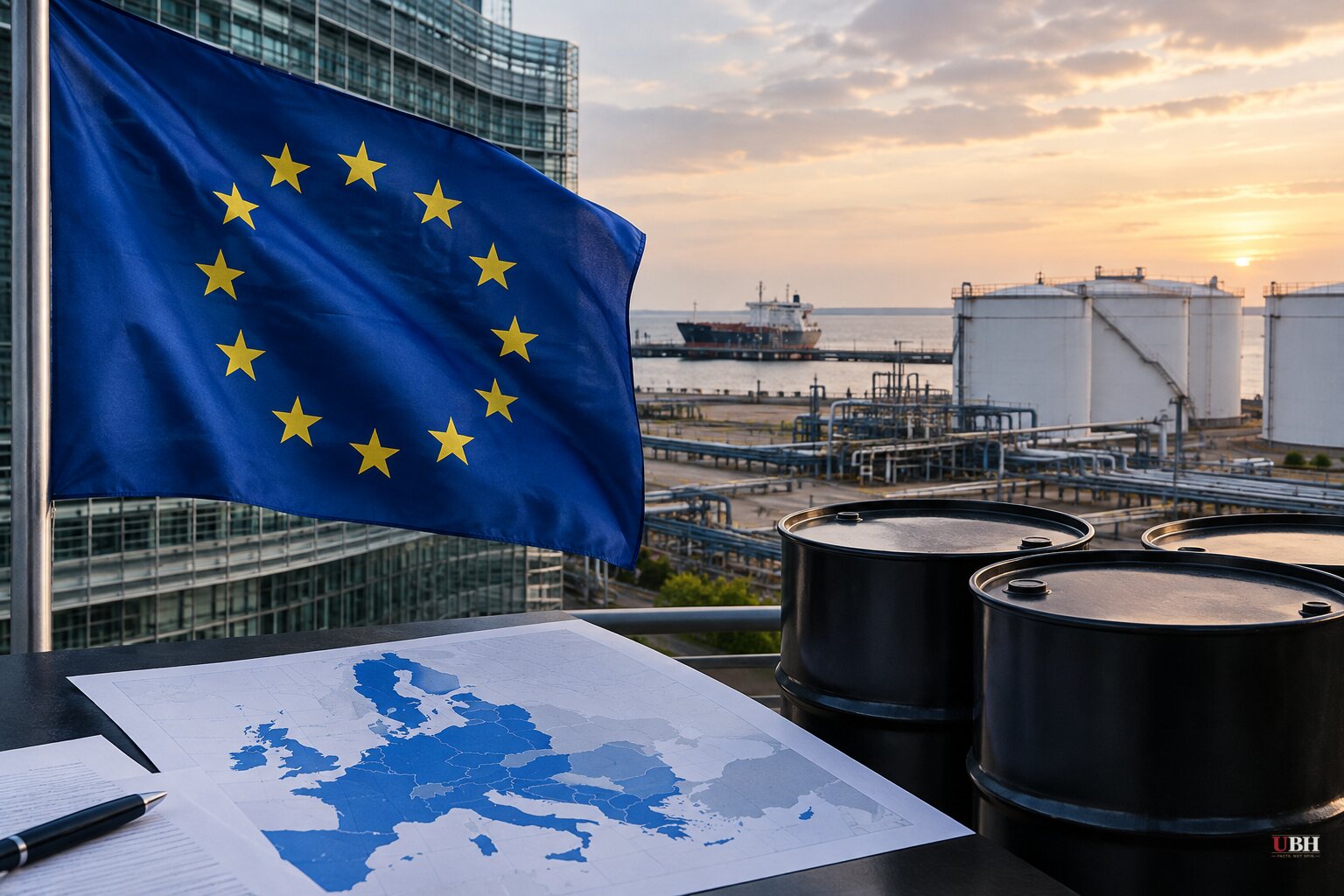
The European Union is rewriting its emergency oil rules after discovering that barrels in storage are not the same as diesel in the pump.
A draft Commission document seen by Bloomberg on Thursday, Nov. 19, would force member states to align their reserves with national fuel use and refining capacity. The Commission intends to approve it in early December. The text may change before then, and the Commission declined to comment.
What the draft says
Bloomberg quoted the draft: "At least one third of emergency stocks must be held as products other than crude oil, and composition should reflect the national risk assessment, including refining capacity and domestic needs."
Each country's stocks would have to include at least one refined product. The options listed are fuel oil, diesel, jet fuel and gasoline.
The draft would also let armed forces tap emergency liquid fuel reserves on a temporary, exceptional basis, provided certain requirements are met.
Current rules require stocks equal to at least 90 days of net imports or 61 days of domestic consumption, whichever is higher. Part of that must already be refined product. Nothing requires countries to hold the mix they actually consume.
The gap the war exposed
Eurostat counted 103.5 million metric tons of EU emergency reserves in July. Of that, 43.7 million tons were crude and 36.5 million tons were gasoil and diesel. Thirteen member states held stocks below their minimums that month.
On those figures crude was about 42% of the total, so the bloc-wide mix already sits above a one-third floor for non-crude products. What the draft targets is whether each country's mix matches what it burns.
The Commission's autumn economic forecast says the EU makes more gasoline than it needs but remains structurally short of diesel and especially jet fuel. Crude in a tank cannot fill that hole without refineries to process it.
The Commission's April communication put numbers on the exposure: about 40% of EU jet fuel consumption is imported, and about half of those imports pass through the Strait of Hormuz. That communication also said the Commission would revise the Oil Stocks Directive to fix weaknesses revealed by the crisis.
The bill so far
EU estimates put the added cost of the Middle East conflict at €40 billion ($44 billion) for diesel imports from March through September. Jet fuel added another €16 billion to €19 billion.
The same estimates say a one-week fuel supply interruption would cost 0.15% to 0.2% of an average member state's annual GDP. Oil makes up about 38% of EU energy consumption.
Brent crude hit $112 a barrel on Oct. 20 and was near $92 on Thursday. The Commission's oil monitoring group expects global diesel markets to stay tight into 2027. TUI and easyJet have both issued profit warnings.
Reserves already being drawn down
On Oct. 29, French Economy Minister Roland Lescure said Europe would put 42 million barrels of reserves on the market over three months, half of it diesel. He left open further releases.
At the same Luxembourg meeting, eleven countries pledged to release 20.5 million barrels of diesel from strategic stocks by the end of January 2027. They are Belgium, Denmark, France, Germany, Greece, Italy, Lithuania, Luxembourg, the Netherlands, Portugal and Sweden.
The International Energy Agency said last week that its members will release another 71 million barrels through February, including about 15 million barrels of diesel, largely from France and Germany.
The IEA's monthly report, published Nov. 13, showed global supply rising 2.3 million barrels a day in October to 105.4 million, topping demand for the first time since the war began. The agency still warned of severe pressure on diesel. Onshore inventories remain at their lowest since at least 2016, and global stocks are down a cumulative 462 million barrels since the war started.
Hungary offers a snapshot of the refill problem. Its strategic reserve was cut in half in March, when stocks were released to support price caps. Hungarian stockpiling data released Wednesday show reserves back at the EU-required 90 days by the end of October, the first time since February. The Hungarian government says the replenished stocks will serve security of supply, not pricing goals.
Refineries and the argument over shortages
The Commission says physical shortages are not foreseen. It says commercial and emergency stocks remain sufficient, and it rejected a proposed diesel export ban outright. Jørgensen has argued that very high prices, not missing barrels, would hurt vulnerable consumers most.
Poland, Czechia and Slovakia see a deeper problem. They have asked for a long-term strategy to protect refineries, arguing that crude cannot substitute for diesel or aviation fuel without suitable processing capacity.
About a quarter of EU refineries have closed over the past 20 years, cutting capacity by roughly 10%, according to Commission estimates. The Commission opened talks with refiners on Oct. 28 to raise output at existing plants. It has set no financial incentives or capacity targets, and the next meeting is planned for early 2027.
Jørgensen has said a jet fuel stockholding requirement is something the Commission would consider, and that redistribution tools could be introduced if necessary. The Commission has also proposed EU-wide monitoring of refinery output.
What comes next
EU energy ministers meet Dec. 10 to review progress on the diesel pledges. The Commission's monitoring group is to supply monthly data on volumes released, product types and delivery timing.
The Commission's planned approval in early December will show how much of the draft survives, including the one-third floor and the military access provision. Whether the refinery talks produce any binding capacity commitment before the early 2027 meeting remains unresolved.
Sources used for this briefing
7 links from 6 independent newsrooms (syndicated copies of the same report count once)
These are the sources it draws on, linked so you can verify.


