
Unbiased headlines. Facts, not spin.
Unbiased Headlines is an independently owned news organization. We bring you the facts, not opinions, written fresh from 110+ named sources. Sources linked so you can verify it yourself.
 energy
Major Story (7/10)
Event date: November 11, 2026 ·
Wyden and Merkley Block Amendment Time Agreement on Permitting Bill Over Data Centers on Public Lands
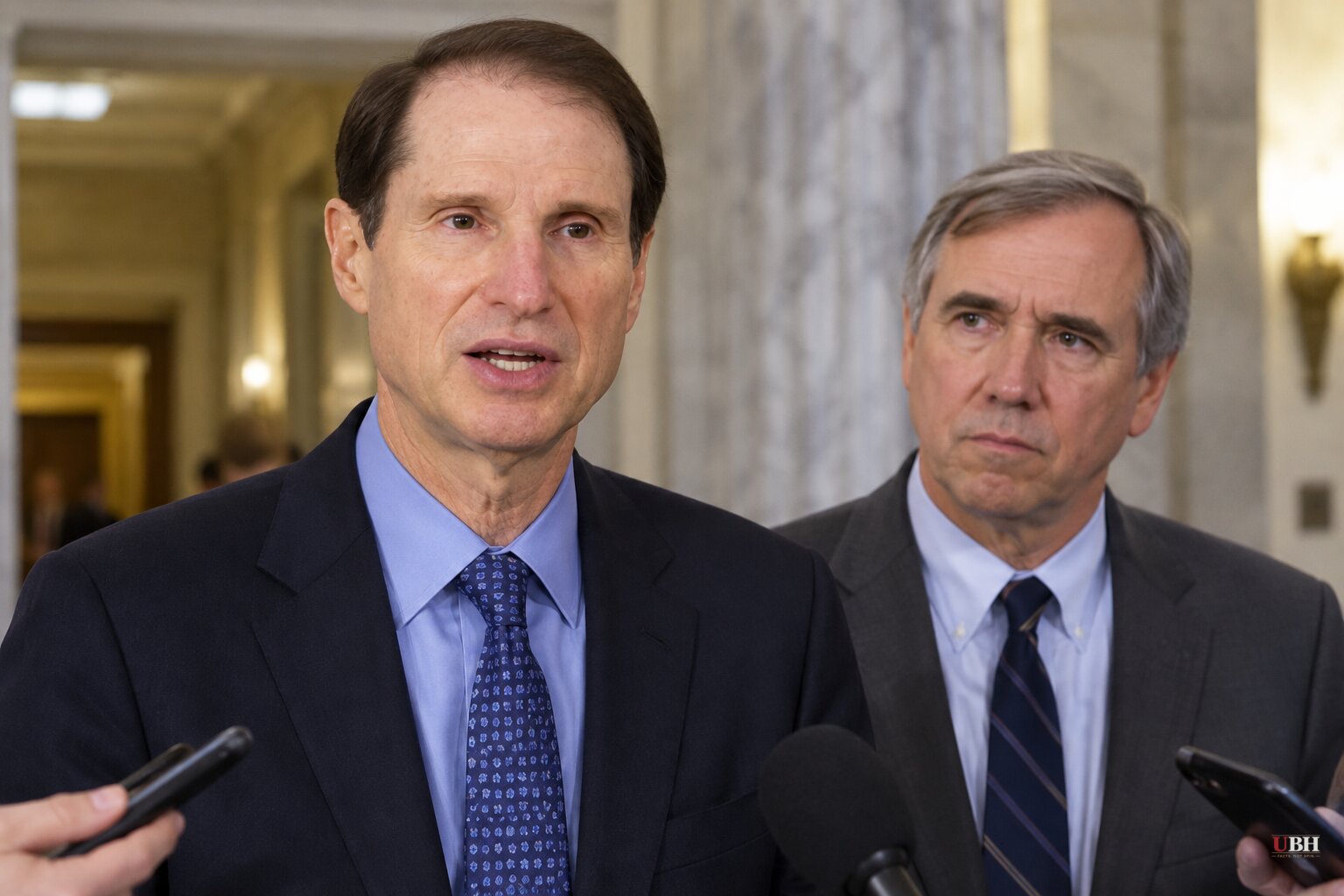
Since the Senate first advanced the Bipartisan American Affordability and Jobs Act (BAAJA, S. 5653) by 73-25 on Nov. 9, the fight over the bill has moved from whether to debate it to what gets amended. On Wednesday night, Nov. 18, that fight stalled the floor schedule.
The objection
Sens. Ron Wyden and Jeff Merkley, both Oregon Democrats, objected to a time agreement for amendment votes. The senators controlling floor debate had left Wyden's amendment to ban data centers on public lands off their list of votes.
"Republicans are blocking a simple vote on my amendment to ban data centers on public lands," Wyden wrote on X. "Republicans are too afraid to stand up to Trump even though Americans overwhelmingly voted to rein in data centers."
The objection came a day after the Senate voted 70-27 to cut off debate on the bill. Without a time agreement, the amendment process is harder to schedule, and the Senate has not announced when a final vote will happen.
What is on public land
Hours before the Wyden amendment reached the floor, 115 conservation, community and faith groups wrote to Interior Secretary Doug Burgum and Agriculture Secretary Brooke Rollins. They asked for an immediate moratorium on new commercial data centers on public lands. Their argument: the administration is moving ahead without first resolving whether that industrial use is legally authorized.
Bureau of Land Management records show at least 17 data center campuses and 13 related infrastructure projects proposed on more than 24,000 acres of public land in Arizona, Idaho, Nevada, Oregon, Utah and Wyoming, according to the Center for Western Priorities.
The bill's text does not itself ban data centers on public lands. That is the gap Wyden's amendment was meant to close.
What backers say the bill does
Sen. Alan Armstrong of Oklahoma, the former CEO of pipeline company Williams Companies and a lead negotiator, told the Senate on Tuesday that the bill ties infrastructure to affordability. "If the bill fails," he warned, "our data center and artificial intelligence leadership will follow them right out the door." He also said the bill requires data centers to pay 100 percent of grid upgrade costs.
That cost provision is in the text. A White & Case analysis of the manager's substitute says the bill sets a national policy that data centers and other large computational loads bear their full incremental grid and transmission service costs, without other customers subsidizing them.
House Energy and Commerce Chair Brett Guthrie of Kentucky told an energy industry audience Wednesday that stripping out provisions sought by Sen. Mike Lee of Utah would collapse the deal. Lee's language would curb use of the National Historic Preservation Act to review projects, a change Tribal nations oppose. Guthrie also warned against local data center moratoriums. "The answer is to build more energy," he said.
President Trump has urged passage on Truth Social, calling the bill a "BIG WIN for U.S. ENERGY INDEPENDENCE and DOMINANCE" and saying "China will take any data center that we don't want." The bill was written by Lee, Shelley Moore Capito (R-W.Va.), Martin Heinrich (D-N.M.) and Sheldon Whitehouse (D-R.I.).
Opposition from environmental groups and the left
Earthjustice says the 400-plus page bill would fast-track pipelines, mines, power plants and data centers while sacrificing "clean water, Tribal rights, public lands, and endangered species." It also argues the bill would make it harder for a future president to undo the administration's actions. The group concedes the transmission provisions are important.
Oil Change International's Allie Rosenbluth called the bill "a massive giveaway to the data center industry" that "creates a backdoor for fossil fuels to enter the grid through data centers." The Sierra Club and Natural Resources Defense Council are among hundreds of groups that have signed letters urging Congress to reject the bill as written, TIME reported. Those groups point to Global Energy Monitor data, reported by Wired, showing U.S. gas projects tied to data centers rose from roughly 4 gigawatts in early 2024 to 189 gigawatts in development by mid-2026.
Actor Mark Ruffalo has joined the campaign. In an Instagram video, he said Senate Democrats were "on the verge of handing Trump, Republicans, and the fossil fuel industry a major legislative win." He asked why Chuck Schumer and other Democrats would back the bill "after the country just overwhelmingly rejected Trump."
Merkley framed his own opposition on narrower grounds. He said he will vote no because the bill speeds natural gas pipelines and LNG export terminals, weakens environmental protections and limits tools to challenge projects. He praised its transmission and data center provisions and said he looks forward to working on permitting reform "to get it right."
The other side of the coalition
BAAJA is not a one-party fight. TIME reported broad support from labor leaders, who say it will create thousands of jobs, and from clean energy advocates who believe it could unlock wind, solar and new transmission lines. Industry trade groups have also backed it, even though TIME says it would likely make building more expensive.
Several Democratic senators said their November vote to start debate was not an endorsement of the final bill, citing concerns over Tribal sovereignty, environmental protections and state authority over utilities, according to White & Case.
What comes next
It is not yet clear whether Wyden gets his vote. Neither the bill's managers nor Senate leaders have said whether the public-lands amendment will be added to the list. Sponsors have said they want the bill through the Senate before the current Congress ends in January, and the House would still have to act.
Sources used for this briefing
6 links from 6 independent newsrooms (syndicated copies of the same report count once)
These are the sources it draws on, linked so you can verify.


