
Unbiased headlines. Facts, not spin.
Unbiased Headlines is an independently owned news organization. We bring you the facts, not opinions, written fresh from 110+ named sources. Sources linked so you can verify it yourself.
 energy
Breaking / Critical (9/10)
IEA: Gulf Crisis Has Removed 2.8 Billion Barrels of Oil, and Hormuz Flows Were Down 13.1 Million Barrels a Day in August
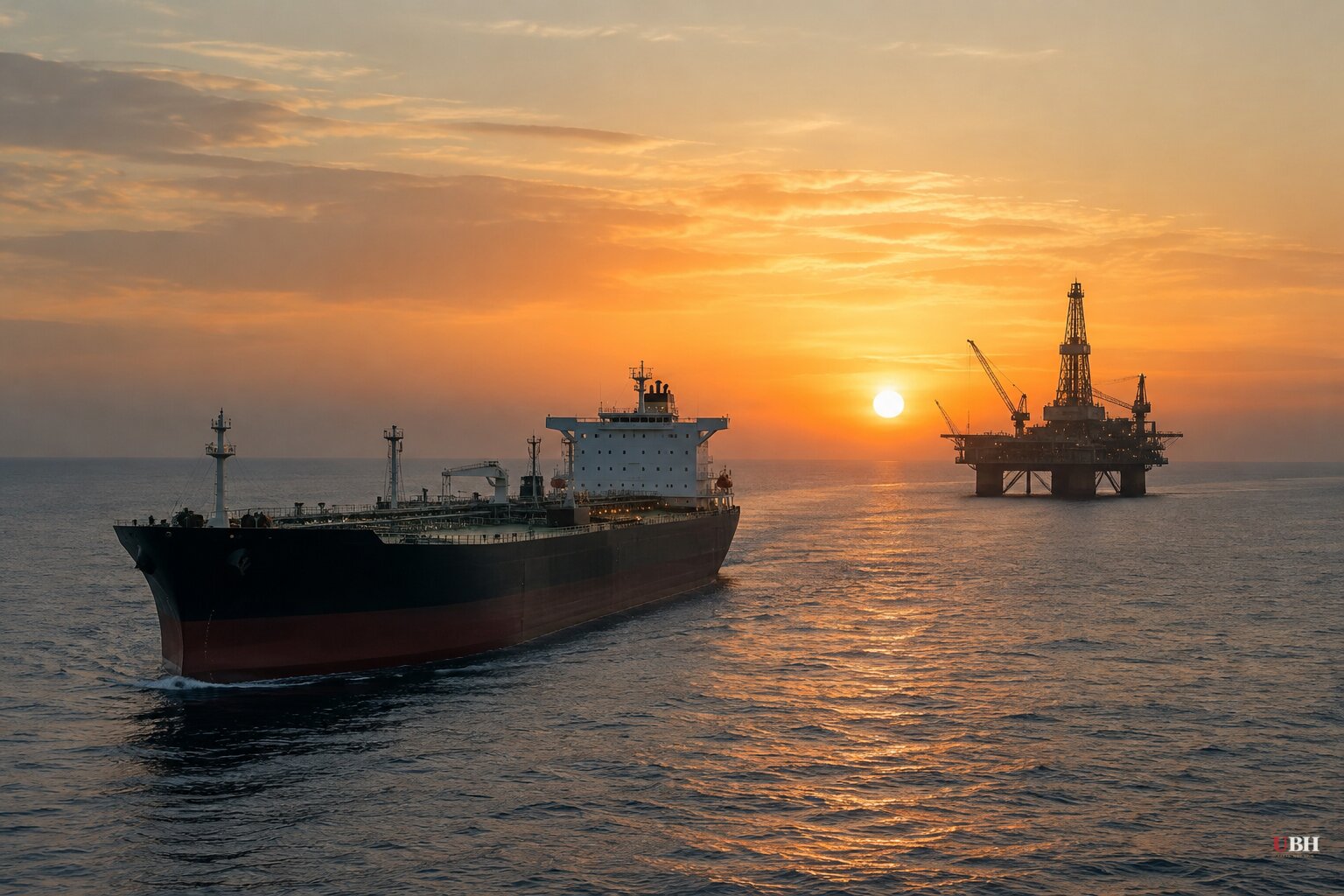
More than eight months into the Iran war, the International Energy Agency's World Energy Outlook 2026, released Thursday, puts hard numbers on the damage to the oil and gas trade.
By November, the world had lost a cumulative 2.8 billion barrels of oil and 60 billion cubic meters of gas from the Gulf, the Paris-based agency said. It called the Hormuz disruption the largest energy supply shock on record and said the crisis remained unresolved as of November.
What the flow data shows
Oil flows through the Strait of Hormuz fell to 7.6 million barrels a day in August. That is 13.1 million below pre-war levels, the IEA said, even after producers rerouted exports and raised output outside the Gulf.
Diesel has exceeded $200 a barrel, according to the IEA. It pointed to disrupted Gulf exports, threats to Red Sea shipping and limits on Russian supplies.
More than 4 billion people live in countries that rely on Hormuz for over 30% of their oil, the report said. Before the war, Asia received about 80% of the oil and nearly 90% of the LNG that moved through the strait.
Global spending on imported oil and gas is projected to reach $1.6 trillion in 2026, up 25% from 2025, the IEA said.
The market was already loosening before this report
The agency's monthly report, published Nov. 13, showed some easing. Global oil supply rose 2.3 million barrels a day in October to 105.4 million, following a 3 million increase in September. The IEA said supply surpassed demand for the first time since the war began, and it expects a surplus in the fourth quarter of 2026 with a larger build in 2027.
The relief is thin. Global inventories are down a cumulative 462 million barrels since the war started. OECD onshore stocks remain at their lowest since at least 2016, and the IEA warned that diesel markets are still under severe pressure. Member countries are accelerating emergency stock releases, including more than 20 million barrels of diesel.
OPEC+ crude output rose to 37.72 million barrels a day in October from 35.71 million in September. Saudi Arabia, Iraq and Kuwait all increased production, while Iran's edged down.
Three paths for oil demand
The new outlook adds an "Additional Response Case," which assumes governments respond to prolonged insecurity with faster electrification, efficiency and cuts in imported fossil fuels. In that case, oil demand reaches 97 million barrels a day in 2035 and falls to 85 million by 2050. Electric vehicles alone displace more than 11 million barrels a day.
Under the Stated Policies Scenario, which reflects current government intentions, demand is just over 101 million in 2035 after leveling off near 103 million by 2030. Gas demand under the Additional Response Case is more than 300 bcm lower.
The agency's Current Policies Scenario points the other way. Oil and gas demand keep rising, with petrochemicals, aviation and heavy trucks adding 5 million barrels a day through 2035, offsetting weaker passenger-car demand. The IEA also cautioned that inadequate grids, charging networks and power supplies could slow electrification.
So the lower-demand outcome is a scenario that depends on policy choices. It is not a forecast.
Bypass pipelines and a smaller role for Hormuz
About 7 million barrels a day of pipeline capacity to bypass Hormuz is under construction or consideration, requiring an estimated $40 billion in investment, the IEA said. Such routes would remain vulnerable to regional instability.
If shipping through the strait stays risky for years, the volume needed through it could drop from about 20 million barrels a day before the crisis to 8.5 million in 2030. By 2035 it could fall below 2 million. Even then, the agency said, the Middle East would remain the world's largest oil-exporting region.
Since February, 25 countries have announced new electrification policies, and solar panel and battery imports have risen across affected parts of Asia and Africa, the IEA said. Some Asian importers with large coal reserves could lean on coal longer as a hedge.
Electricity's share of final energy use is projected to approach 30% under the Stated Policies Scenario, up from about 23% today. Cooling demand in buildings has exceeded heating demand for the first time.
Birol's read and Tehran's position
IEA Executive Director Fatih Birol said the energy sector and the global economy have proved resilient but that effects deepen the longer the crisis continues. He said countries are choosing to build energy at home rather than import it.
A lasting end to the conflict would shift the balance toward buyers, the report said. Delayed LNG cargoes would reach the market and press prices down, even as countries rebuild depleted stocks.
There is no sign of that settlement. After the U.S. midterm elections, Iran's Supreme Leader Ayatollah Mojtaba Khamenei wrote on X that "the slightest inclination toward submission" would waste the sacrifices of the Iranian nation. Parliament Speaker Mohammad Bagher Ghalibaf, who has served as Tehran's chief negotiator in talks with Washington, warned that Iran's "NO comes with a Nightmare."
Whether Hormuz traffic recovers from its August low of 7.6 million barrels a day will decide which of the IEA's scenarios the market is living in by 2027.
Sources used for this briefing
7 links from 7 independent newsrooms (syndicated copies of the same report count once)
These are the sources it draws on, linked so you can verify.


