
Unbiased headlines. Facts, not spin.
Unbiased Headlines is an independently owned news organization. We bring you the facts, not opinions, written fresh from 110+ named sources. Sources linked so you can verify it yourself.
 energy
Major Story (7/10)
IEA Projects Data Center Emissions Up 70% by 2030 as U.S. Leans on Gas and China on Coal
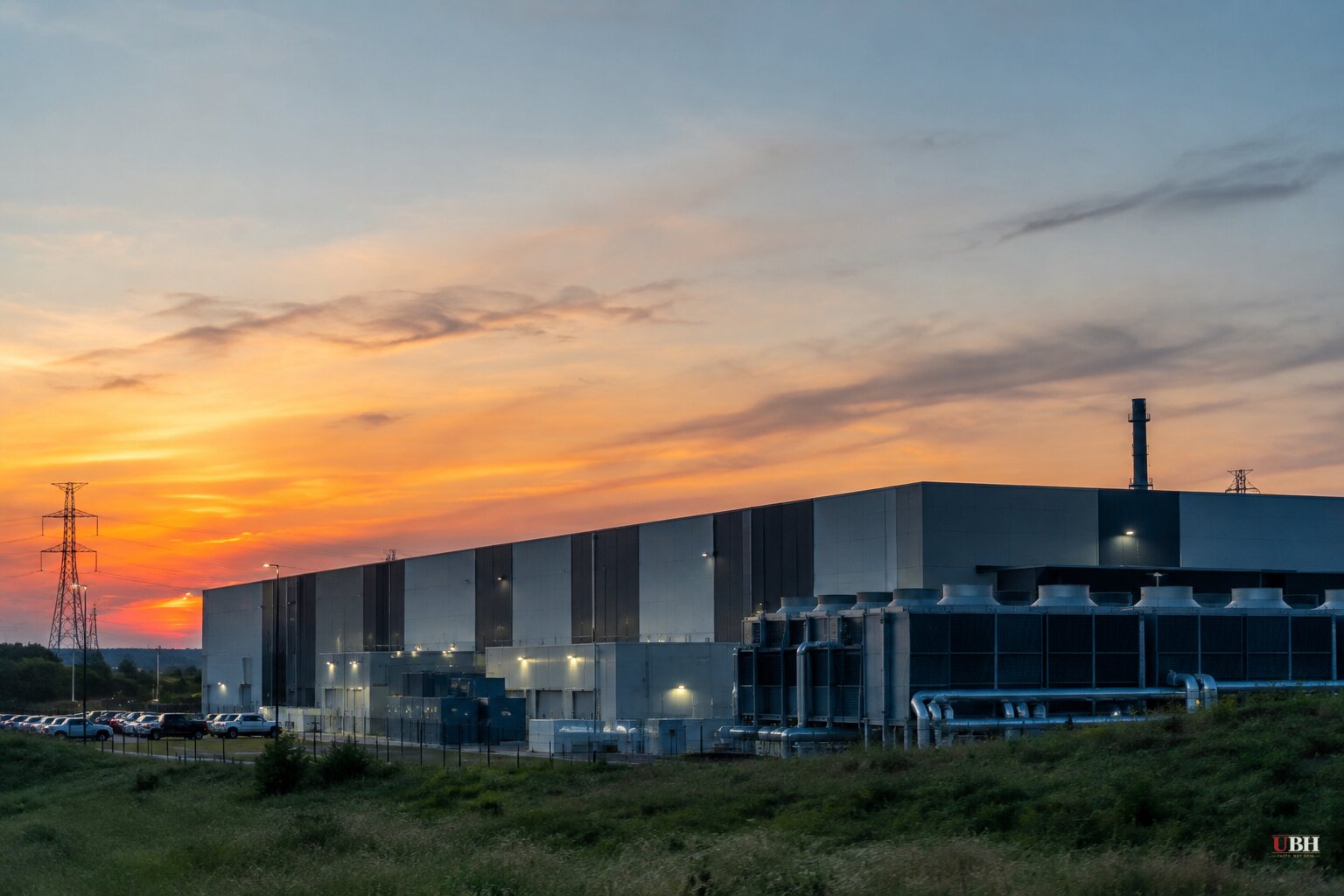
Since a Harvard study this week put the largest U.S. data centers at 82 terawatt-hours of electricity a year, the fight over their power use has widened from the grid to global climate talks and the ballot box.
The IEA's numbers
The International Energy Agency says in its annual report that data centers will consume twice as much electricity by 2030 as they do today. AI accounts for about three-quarters of that growth.
The agency expects AI data centers to add 350 terawatt-hours of annual demand over the next four years. That is more than Great Britain uses in a year.
The IEA says emissions associated with the sector are on track to rise 70% by 2030, because the two biggest builders are leaning on fossil fuels. It bases its outlook on an eighteen-fold rise in global AI server shipments since 2020 and on satellite tracking of 93 large "AI factories" under construction worldwide. Existing data center capacity stands at about 120 GW, and China, the United States and the EU hold 80% of it.
Gas in America, coal in China
The U.S. is expected to get about 60% of its data center electricity from gas by 2030. As of August 2026, developers had plans for roughly 180 GW of new gas-fired plants tied to U.S. data centers. The IEA says that is almost as much gas capacity as is installed across the entire European Union.
American appetite for gas power is more than 16 times Canada's, where the agency counted plans for 11 GW. Developers in the rest of the world have proposed a combined 4 GW.
China's picture is different. About half of the electricity for its AI data centers will come from coal by the end of the decade, the IEA says, with most of the rest from renewables and little from gas. In the EU, the agency expects renewables to supply about 70% of data center power.
The IEA also notes that data center developers are already the world's largest corporate buyers of renewable energy. Its point is that fossil demand is expected to grow faster anyway.
IEA Executive Director Fatih Birol tied the outlook to the Middle East war, which the agency has called the greatest energy market disruption in history. "I don't see any credible pathway for the energy world to return to the way it was before," Birol said. The agency says government policy choices after the crisis will decide how rising demand is met.
Climate talks and the Harvard estimate
At the COP31 climate talks in Antalya, Turkey, negotiators launched a voluntary pledge on Monday, Nov. 16. It asks companies and countries to power data centers with clean energy and to disclose their power and water use and emissions.
UN climate chief Simon Stiell framed it as a pocketbook issue. "We cannot ask people to accept higher bills, more planet heating pollution and deeper inequality today in exchange for promises of a better tomorrow," he said. "Claims about future emissions savings cannot excuse rising pollution now."
The pledge is voluntary. It carries no enforcement mechanism in the details released so far.
The same day, Harvard researchers published a study in Nature Sustainability covering 403 large U.S. data centers between May 2024 and April 2025. They estimated 25.7 million metric tons of CO2, with more than half of the 82 TWh coming from fossil fuels. Senior author Francesca Dominici said the figure is two to three times what earlier studies found.
Separately, the advocacy group Climate Action Against Disinformation reports that the biggest tech companies' electricity consumption rose 240% between 2022 and 2025. The group says that has left them failing to meet their climate goals.
The political fallout
A new analysis from Humans First, a conservative AI safety group chaired by Amy Kremer, claims data centers cost Republicans votes in the 2026 midterms. Fox News Digital obtained the memo first.
The group examined 1,540 counties in 16 states. Counties hosting large data centers shifted an additional 2.2 percentage points toward Democrats compared with non-host counties in the same states. The pattern showed up in 14 of the 16 states and 25 of 27 governor and Senate races.
In deep-red counties, those Donald Trump won by at least 20 points in 2024, the raw gap was 2.1 points. Among deep-red counties with projects still only proposed, the gap was 1.1 points after adjusting for past voting, population, demographics and recent trends. Republican vote totals fell an additional 1.1% in deep-red host counties, while Democratic totals showed no significant change.
The memo itself says it shows an association, not proof that data centers changed votes. County-level returns also cannot show whether Republicans switched sides or stayed home.
Kremer offers her own explanation. "People engage politically when issues affect them personally," she said. "There's nothing more personal than your pocketbook, your health care, your kids and family, your home and your community. A data center involves all of those things."
The group counts 114 proposed large data center projects across 92 deep-red counties. Those are the next local fights, and county commissions will vote on them before anyone can test whether the midterm pattern repeats.
Sources used for this briefing
6 links from 6 independent newsrooms (syndicated copies of the same report count once)
These are the sources it draws on, linked so you can verify.


