
Unbiased headlines. Facts, not spin.
Unbiased Headlines is an independently owned news organization. We bring you the facts, not opinions, written fresh from 110+ named sources. Sources linked so you can verify it yourself.
 energy
Major Story (7/10)
Event date: November 17, 2026 ·
Virginia Regulators Are Hearing the $67 Billion Dominion-NextEra Case, With a Ruling Due Jan. 11
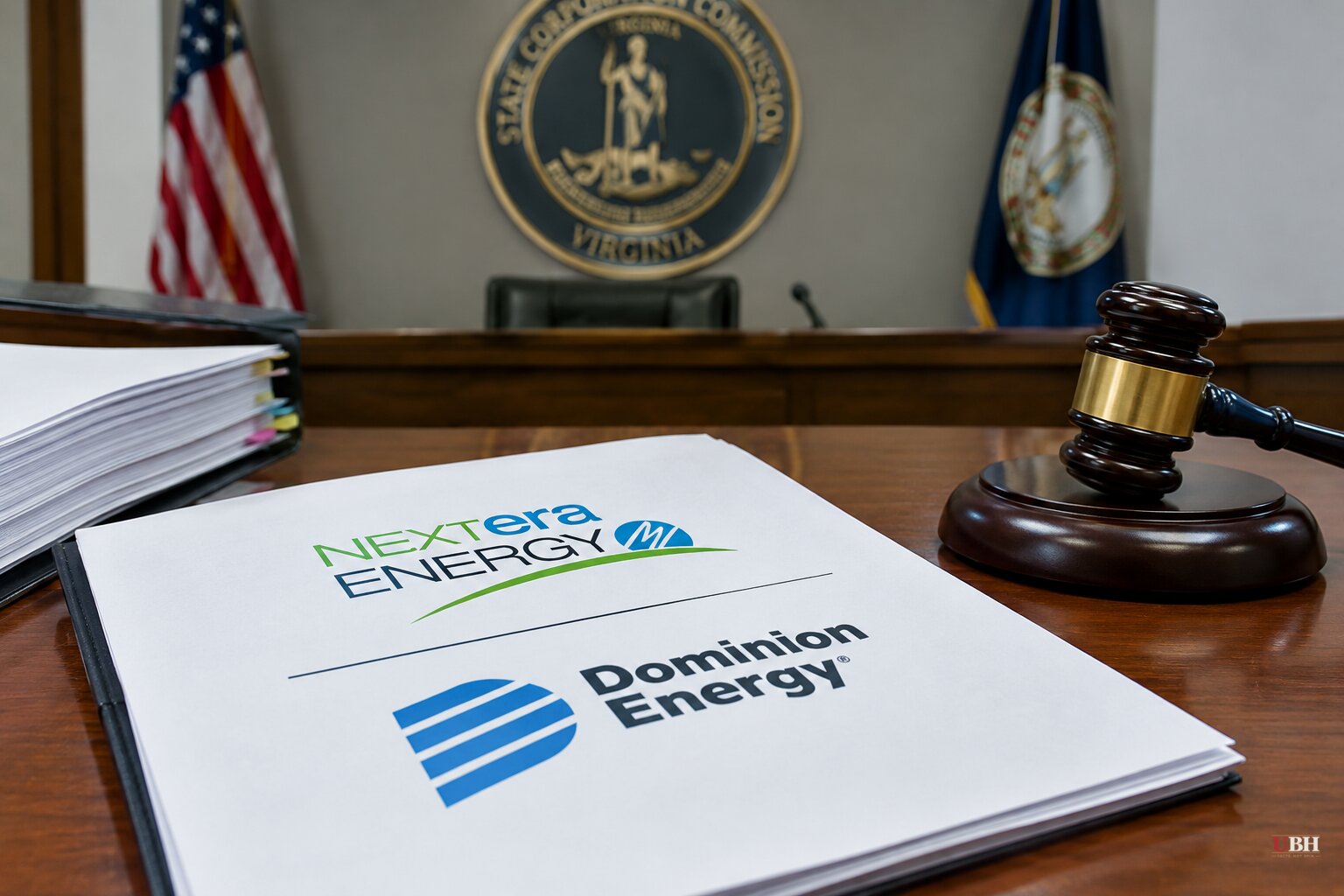
The Virginia State Corporation Commission is in the middle of a multi-day evidentiary hearing on NextEra Energy's proposed takeover of Dominion Energy. It opened Tuesday, Nov. 17, in Richmond (case PUR-2026-00112), and the hearings are expected to run through November.
The $67 billion all-stock deal would put roughly 10 million customers, about 110 gigawatts of generation and a 130-GW large-load connection queue under one corporate roof. NextEra shareholders would own 74.5% of the combined company. Dominion shareholders would own 25.5%.
The petition was filed July 15. The commission used the full 120-day extension the law allows, which sets its deadline at Jan. 11, 2027. Under Virginia's Utility Transfers Act, if the commission does not rule by then, the application is treated as approved.
The legal fight over scope
Opening arguments Tuesday turned on how wide the commission's review should be.
Joe Reid, a McGuire Woods attorney for NextEra and Dominion, said the deal is a "consequential combination," but its size "does not change the requirements of the Transfers Act." He said this case "is simply not the one to litigate the cost of service," or "who's paying their fair share ... including the data centers."
Commission Chair Kelsey Bagot asked Reid whether regulators should ignore longer-term benefits. Reid said the commission "should consider all the evidence that is in front of it."
Opponents say the statute is broader. Attorney Nate Benforado said petitioners "must prove that this transaction will not impair or jeopardize adequate service at just and reasonable rates." He called it more than a "do no harm standard." He also said the petitioners "have failed to provide any real evidence or analysis" that customers will benefit.
Will Reisinger, representing the Piedmont Environmental Council, noted the statute says the commission "shall be satisfied." "That standard, satisfied, is subjective," he said. "This decision is 100% within your judgment."
Greg Habeeb, representing Clean Virginia, took aim at the risk question: "Rates that carry another company's risk are not just and reasonable." Commission staff wrote in pre-filed testimony that NextEra's unregulated, competitive business exposes Dominion to additional risks. The Sierra Club and other intervenors said the companies' claimed savings from bulk-buying infrastructure are not quantifiable or guaranteed.
What the companies say and what they've offered
Dominion's Bill Murray said in July that the combined company could buy infrastructure in bulk and finance it more cheaply at a one-notch credit rating upgrade. "That's a benefit to customers," he said. He added that the deal was not a case of Dominion throwing up its hands and asking to be rescued.
Dominion CEO Bob Blue said in testimony that the companies still consider their original bill-credit allocation fair and reasonable. They revised it to ease concerns.
The original filing offered credits for two years, and Dominion's GS-5 customers, largely data centers, would have shared in them. The revised version offers about $10 a month to the average residential customer for four years. It redirects the money GS-5 customers would have received.
The companies also offer five years of job protection for Dominion employees, a new office building in downtown Richmond, and up to $200 million in workforce development and weatherization programs. Dominion says the utility would remain a separate entity bound by Virginia law, including the Virginia Clean Economy Act.
Commission staff and the attorney general's consumer counsel proposed 117 conditions between them. In rebuttal testimony filed Nov. 2, the companies accepted 101 as written and 13 more with changes.
On a ring-fencing structure staff wanted at closing, the companies would create the separate entity but activate it only if NextEra's credit rating falls to Dominion's level. They offered two independent board members rather than a majority.
Where the gaps remain
Gov. Abigail Spanberger wants a six-year freeze on residential base rates and $29 monthly bill credits for four years. The attorney general's counsel asked for a three-year freeze. The governor's freeze covers residential base rates only, and her expert would leave fuel charges and other riders to the commission's normal proceedings.
The companies say rates belong in Dominion's biennial rate cases, where state law gives the utility a chance to recover reasonable and prudent costs.
Commission staff has recommended rejecting the deal as filed, saying the companies have not shown customers will be adequately protected. Five Virginia members of Congress, including Reps. Don Beyer, Suhas Subramanyam, Eugene Vindman and James Walkinshaw, are urging the same. They say the cost of building power infrastructure for data centers could strain customer bills for years.
Data centers in the case
The biggest power users are active parties. Google's attorney, Will Cleveland, said the company will put on energy economist Carolyn Berry to testify that the minimum demand charge from Dominion's 2025 rate case discourages large loads from using their statutory right to retail choice. Dominion has told the commission it considers that testimony irrelevant.
Amazon's attorney, Brian Greene, said that if the deal is approved, the company wants Dominion to reform the large-load interconnection queue and address new capacity through bring-your-own options.
Dominion's largest customers move to a new rate class, GS-5, on Jan. 1, 2027. The commission created it in Dominion's 2025 biennial review.
Public comment
The commission held public hearings in Fairfax on Oct. 9, in Newport News and in Richmond, and accepted written comments through Nov. 12.
Chesterfield County Supervisor Jessica Schneider cited NextEra's history of disconnecting customers who fall behind on bills. State Sen. Kannan Srinivasan, D-Loudoun, said "the primary benefits are for shareholders." Supporters argued the merger could bring economic benefits and give Dominion more resources to meet rising electricity demand.
The evidentiary hearing continues in Richmond, with a webcast available. Some intervenors have also pushed to bring NextEra's alleged involvement in past political campaigns into the record. Whether the commission allows that evidence, and whether it approves, conditions or rejects the deal, will be settled before the Jan. 11 deadline.
Sources used for this briefing
7 links from 7 independent newsrooms (syndicated copies of the same report count once)
These are the sources it draws on, linked so you can verify.


