
Unbiased headlines. Facts, not spin.
Unbiased Headlines is an independently owned news organization. We bring you the facts, not opinions, written fresh from 110+ named sources. Sources linked so you can verify it yourself.
 energy
Notable (6/10)
Chinese Consortium Wins Kashagan Gas Plant Contract as Beijing Adds Energy and Trade Deals From Moscow to Ottawa
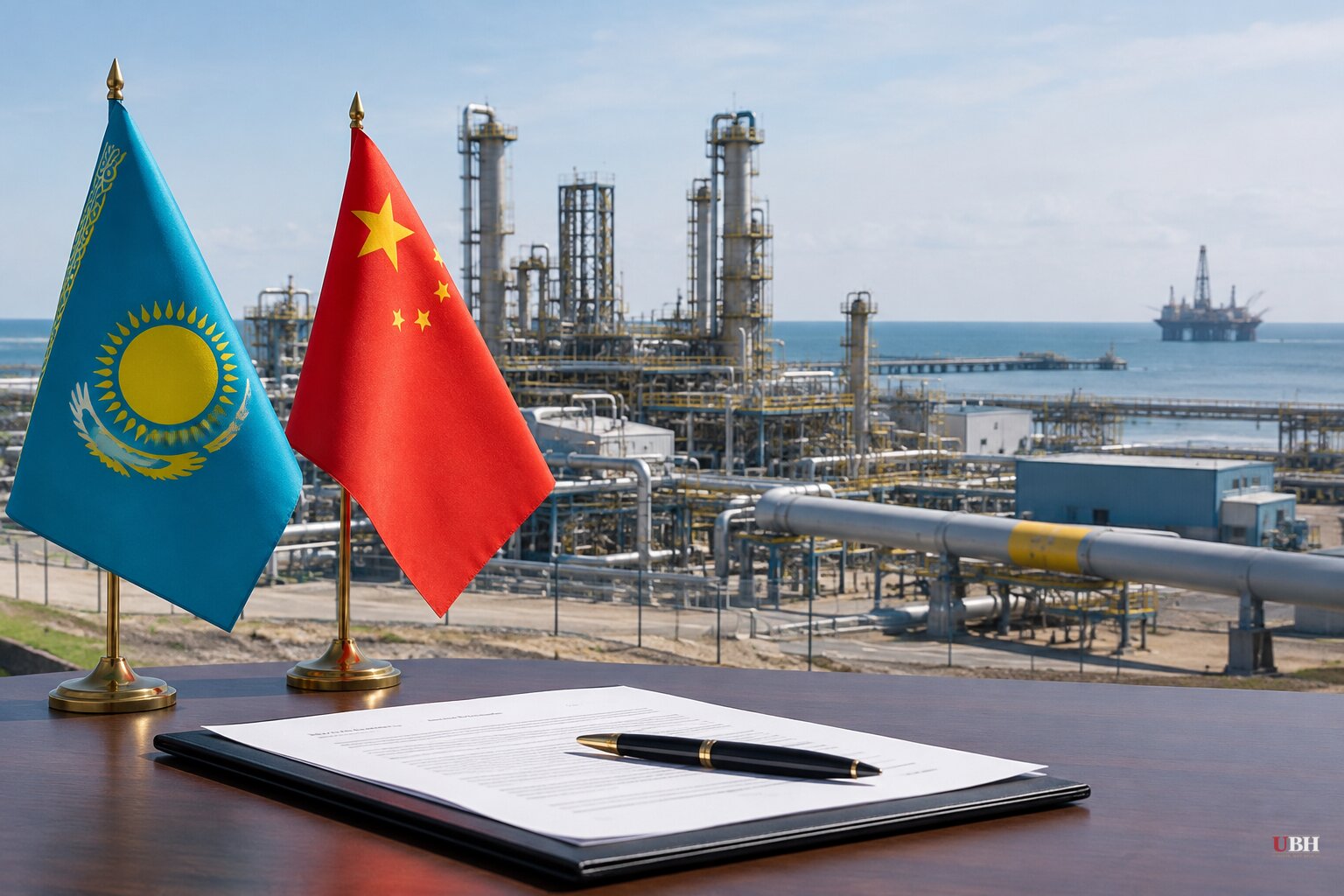
Kazakhstan's national gas company, QazaqGaz, has signed a contract with a Chinese consortium to build a gas processing plant at the Kashagan field. The plant will handle 2.5 billion cubic meters of gas a year.
The deal is turnkey. The consortium runs every phase, from design to final operational testing.
The contract value has not been disclosed. A 2024 estimate put the project at up to $2.5 billion.
The consortium members are China National Chemical Engineering Sixth Construction Company, China Wuhuan Engineering Corporation, AVC Production and C-NRG.
A string of Chinese wins in Central Asia
The Kashagan contract is the latest in a run of energy wins for Chinese firms this year. Others include a $6.1 billion biorefinery project in Uzbekistan and several energy contracts in Kazakhstan.
Construction ministers from China and all five Central Asian states also met in Bishkek for the second China-Central Asia ministerial meeting. They adopted a joint statement and a 2027-28 action plan covering earthquake-resistant building, affordable housing, digital construction technology and training. No new project financing or construction contracts were announced there.
Kazakhstan's own books show the strain of running a pipeline corridor to China. The Chief Transport Prosecutor's Office found 92,000 tons of oil moved through the Kenkiyak-Kumkol and Atasu-Alashankou pipelines missing from official records. Regulatory adjustments brought in an extra 2.9 billion tenge in corporate income tax and 300 million tenge in property tax, penalties included.
Russia sells to China at a steep discount
The leverage runs against Moscow. Russian government projections submitted to the Duma, as reported by the Moscow Times, show China paying an average of about $248 per thousand cubic meters of pipeline gas in 2026. Gazprom's other foreign customers outside the former Soviet Union pay $562.
That is a discount of roughly 56%. Russia hopes to shrink it in the coming years, according to the Moscow Times.
Sergei Vakulenko, a senior fellow at Carnegie's Russia Eurasia Center, wrote in an estimate that "it's much harder for Russian negotiators today." He said U.S.-China confrontation and Middle East instability should push China toward pipeline gas over LNG, which would favor Moscow. But the break with Europe, he said, has left Gazprom with few alternative buyers.
The same Carnegie estimate puts China's payments to Turkmenistan up to $60 per thousand cubic meters above what it pays Russia. Talks on a "Power of Siberia 2" pipeline have stalled over price, according to Beijing-connected media reports.
American LNG joins the mix
China is also buying from the United States. Venture Global and China Gas Holdings announced an upsized sales and purchase agreement for 1 million tonnes per year of U.S. LNG for 20 years, starting in 2030. It doubles the 0.5 million tonne-per-year deal the two companies announced in September 2026.
Venture Global's long-term volume with China Gas now totals 3 million tonnes per year under 20-year contracts, supplied across its Louisiana projects. CEO Mike Sabel called it "reliable, low-cost American LNG."
Liu Ming Hui, chairman and president of China Gas, said the volumes support the company's plan to build a global LNG trading business.
Ottawa trades tariff relief with Beijing
On Nov. 17 in Shenzhen, on the sidelines of the APEC leaders' meeting, Prime Minister Mark Carney and Xi Jinping announced further tariff cuts on Canadian pork and seafood going into China. They also announced further exemptions for Chinese steel and aluminum entering Canada.
That follows January agreements letting a quota of Chinese electric vehicles into Canada at a reduced tariff, replacing the 100 percent rate. In exchange, China lowered tariffs on Canadian canola and other agricultural goods.
Xi called closer ties the "right choice." Carney described the effort as part of reshaping a "global order that benefits all peoples through sustainable, peaceful, and human-centred growth."
China analysts see the exchange as lopsided. Michael Kovrig, a senior adviser at the International Crisis Group and a former Canadian diplomat in China, called the deals "asymmetric." He said China's entry into Canada's EV sector is a strategic gain, and that Beijing can revoke Canada's canola access at any time.
"China's asking price keeps rising," Kovrig said. "To roll over canola and seafood access, Ottawa extended surtax relief on cut-price Chinese steel and aluminum to 2028, in the middle of the CUSMA review."
Scott McGregor, a former Canadian Armed Forces intelligence operator and author, told The Epoch Times that Canada may gain short-term market access while "Beijing potentially gains longer-term strategic leverage."
Canada's gains are concrete: lower tariffs on pork, seafood, canola and other farm exports. Carney's side of the argument is the "strategic partnership" framing he and Xi both used in Shenzhen.
QazaqGaz and the consortium have not published the Kashagan contract price, so the true cost to Kazakhstan remains unknown. The Canadian surtax relief on Chinese steel and aluminum now runs to 2028, overlapping with the CUSMA review. Moscow is still pressing to narrow its price gap with Beijing, and the stalled Power of Siberia 2 talks show how little pull it has so far.
Sources used for this briefing
7 links from 5 independent newsrooms (syndicated copies of the same report count once)
These are the sources it draws on, linked so you can verify.


