
Unbiased headlines. Facts, not spin.
Unbiased Headlines is an independently owned news organization. We bring you the facts, not opinions, written fresh from 110+ named sources. Sources linked so you can verify it yourself.
 energy
Notable (6/10)
EU Negotiators Strike Provisional Deal to Cut Energy Permit Waits to Six Months for Most Projects
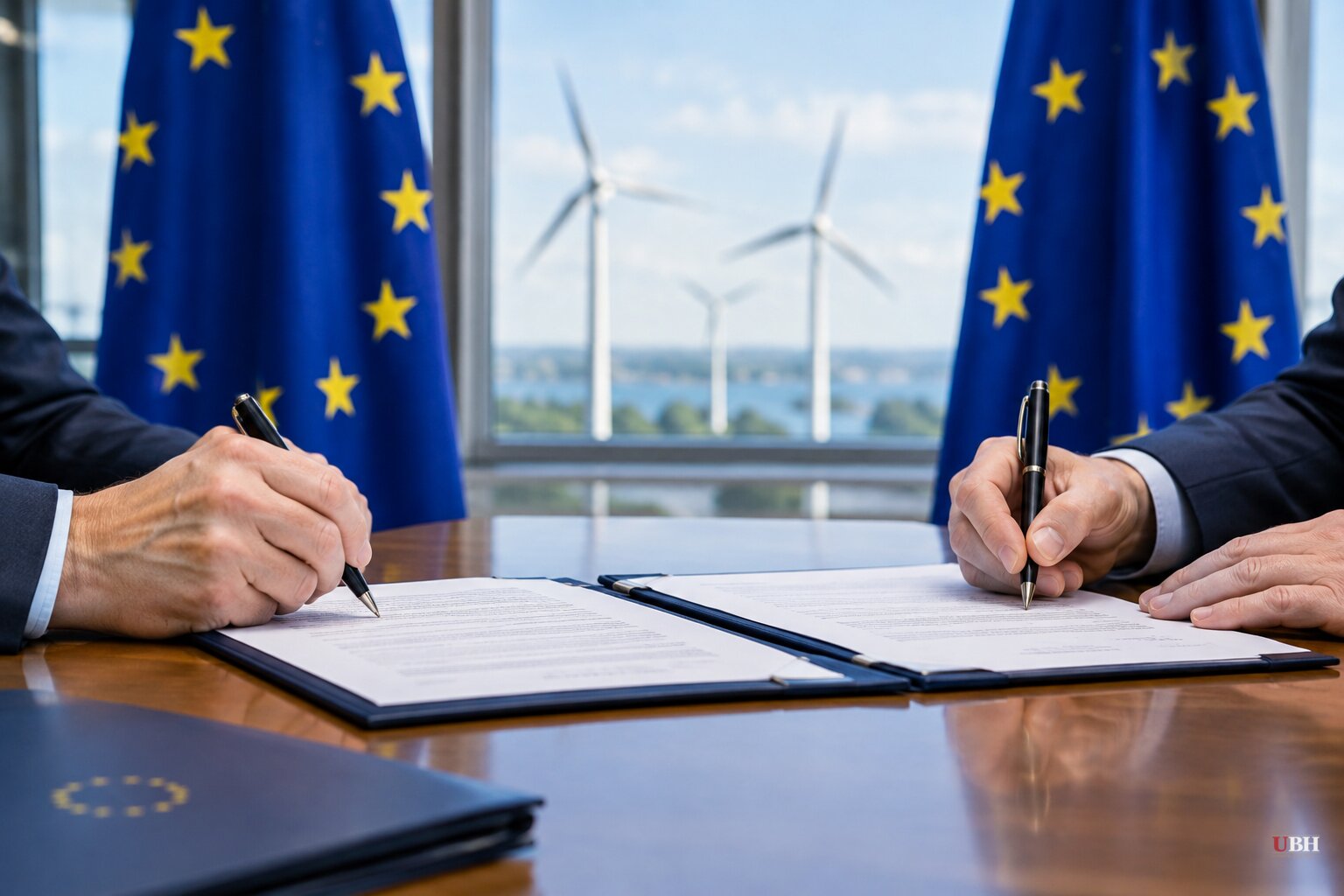
Since the U.S.-Israeli war with Iran closed the Strait of Hormuz and sent oil and gas prices climbing, now in its ninth month, Brussels has been hunting for a long-term answer to fossil fuel shocks. On Wednesday, Nov. 18, the European Parliament and the Council of the EU produced a piece of one: a provisional deal on energy permitting.
The agreement covers renewable power, electricity networks and storage. It sets up digital permitting portals and streamlined procedures. Jørgensen told Euronews that permits for such projects can take five years or even a decade, and that the deal aims to bring most of them down to six months.
What the deal does
The text allows member states to treat silence from an authority at some intermediate administrative steps as approval. That approach is optional, not mandatory.
The Council's account also includes community benefit-sharing principles for renewable projects larger than 7 megawatts. Niels Fuglsang, the Danish S&D member who led negotiations for Parliament, said predictable approvals matter for investment and that communities hosting projects should share in the benefits. He called the deal a "very important step." His group said negotiators kept safeguards for water resources and protected areas.
Nothing is final. Both institutions must endorse the agreement and finish legal and language checks. After adoption, member states get 18 months to write the directive into national law.
A project approved under these rules is unlikely to be feeding the grid before the end of this decade's second half, once transposition and construction are counted.
Jørgensen: no quick price relief
Jørgensen welcomed the deal as a win for getting renewable electricity into the system and letting consumers swap gas and oil for electricity. "This is about making sure that we have the infrastructure to actually electrify our societies," he said, citing electric cars and heat pumps.
He also said the winter will be difficult for EU citizens and the economy. Even if the geopolitical situation improves, he said, markets could take months to normalize. The permits deal will not lower bills in the short term.
His longer-term argument is that renewables are cheaper than the fossil alternative, and that expanding them, improving efficiency and connecting national markets will bring prices down. He said cross-border electricity links already save Europe more than €30 billion a year, and that the potential for further savings is much greater. Those are the Commissioner's figures and claims. He also urged households to move from oil and gas boilers to heat pumps, swap combustion-engine cars for EVs and improve insulation.
Who pays for the wires
Faster permission is not money. Critics of the approach argue that quicker permits do not automatically mean cheaper electricity, pointing to a lack of investment in infrastructure and the fact that network expansion still has to be paid for. Jørgensen himself acknowledged that financing the grid remains an obstacle.
The cost question is already splitting governments. EU countries are still discussing a related proposal, and Sweden has pushed back hard. Stockholm argues Brussels would redirect money paid by Swedish power consumers and grid operators to fund electricity grids elsewhere in Europe rather than benefiting Sweden.
That is a ratepayer fight, not a climate fight. Whoever ends up funding cross-border lines will be asking households and grid operators to pay up front for savings that Jørgensen says come later.
The wider electrification push
The Brussels deal lands as the COP31 climate conference runs in Antalya, Turkey, through Nov. 20. Kingsmill Bond, an analyst at the energy think tank Ember, says some are calling it "the electrification COP." He describes the headline target as raising the global electrification rate from about 23% today to about 35% by 2035, "35 by '35." Bond argues this energy shock differs from the 1970s and 2022 because "you've got really cheap solutions to address it," meaning solar, batteries and EVs, many of them made in China.
Demand is the other side of that equation. A Harvard study published Monday in Nature Sustainability estimated that 403 of the largest U.S. data centers produced about 25.7 million metric tons of carbon dioxide between May 2024 and April 2025. They used 82 terawatt hours of electricity, and more than half came from fossil fuels. Senior author Francesca Dominici said the emissions estimate is two to three times what earlier studies showed.
Also on Monday, COP31 negotiators launched a voluntary pledge to power data centers with clean energy and disclose their power and water use and emissions. UN climate chief Simon Stiell said, "We cannot ask people to accept higher bills, more planet heating pollution and deeper inequality today in exchange for promises of a better tomorrow."
A report by the advocacy group Climate Action Against Disinformation says electricity consumption at the biggest tech companies rose 240% between 2022 and 2025.
What comes next
The next test is formal endorsement of the permits text by Parliament and the Council. The Sweden-led dispute over who funds grids across borders remains unresolved among member states, and no financing mechanism has been agreed to match the new approval timelines.
Sources used for this briefing
7 links from 6 independent newsrooms (syndicated copies of the same report count once)
These are the sources it draws on, linked so you can verify.


