
Unbiased headlines. Facts, not spin.
Unbiased Headlines is an independently owned news organization. We bring you the facts, not opinions, written fresh from 110+ named sources. Sources linked so you can verify it yourself.
 energy
Major Story (7/10)
Mozambique Approves Exxon's Amended Rovuma LNG Plan, Clearing Way for Year-End Investment Decision
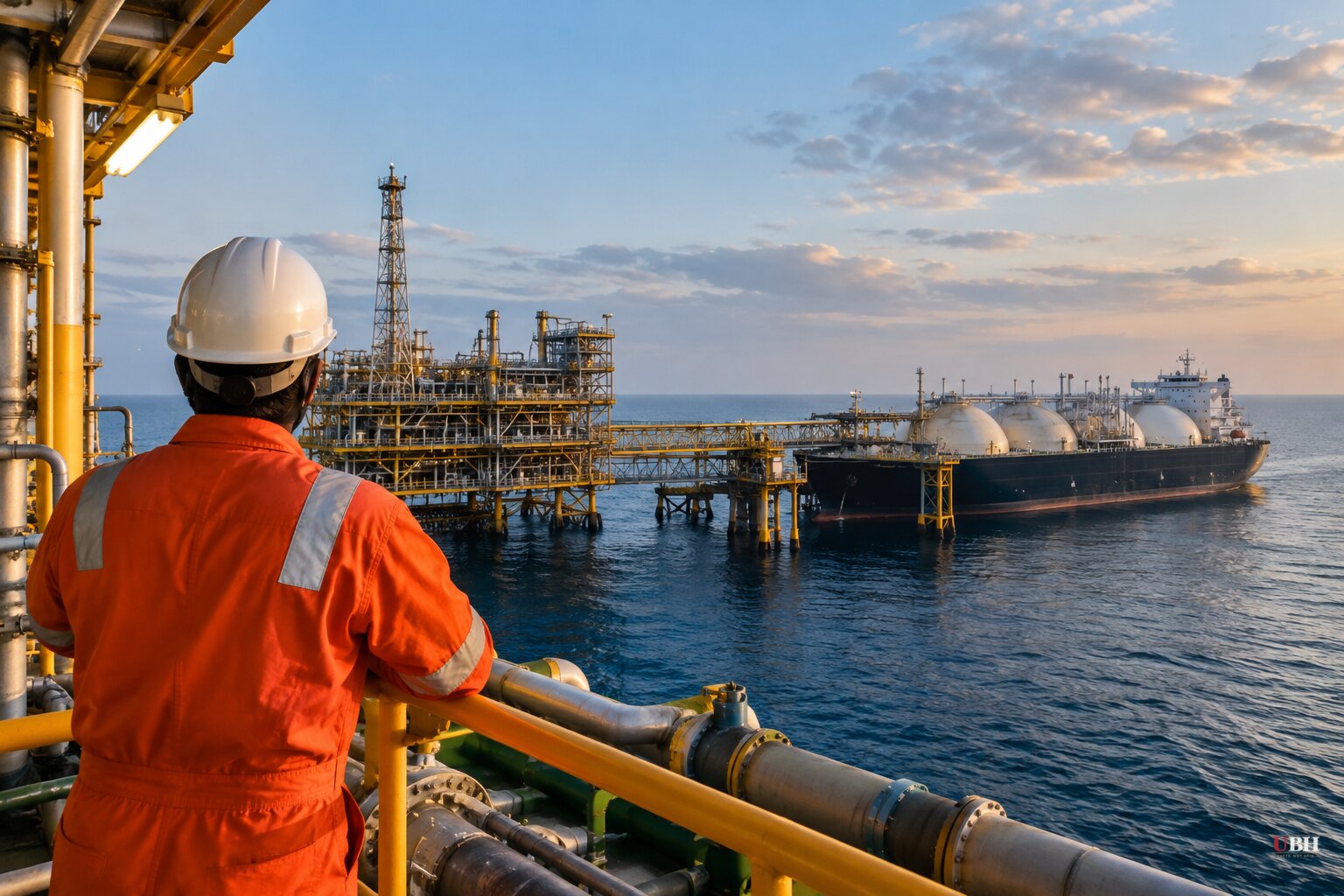
Mozambique's cabinet signed off Tuesday, Nov. 17, on ExxonMobil's amended development plan for the Rovuma LNG project. The approval removes a major regulatory hurdle ahead of a final investment decision Exxon is targeting before the end of 2026.
It is a significant government sign-off for Exxon on the redesign. The money has not been committed yet.
What changed in the plan
The original plan, approved by Mozambique in 2019, called for an onshore plant producing 15.2 million tons of LNG a year. The amended version raises that to 18.6 million tons.
Exxon also redesigned the facility around modular, electrically powered processing units. Mozambique's National Petroleum Institute (INP) says the new configuration should lower development costs and cut emissions by about 40% compared with the 2019 design.
Those are the government agency's projections, not audited results. Nothing has been built yet.
The money
Standard Bank Group estimates the project could cost nearly $30 billion. The INP puts the production-phase investment at roughly $26 billion. Either way, it would be the largest onshore project in the country.
The government projects it could collect about $121 billion in financial returns over the plant's 25-year production life. That is an estimate stretched across a quarter century, with first output not expected until the early 2030s.
The revised plan also includes about $6 billion in contracts for local goods and services. It reserves 25% of the gas produced for Mozambique's domestic market, which the government says is meant to support industrialization.
Mozambique is one of the world's poorest nations, and its gas reserves are among the few assets that could change that. How much of the projected revenue actually arrives depends on a project that has not yet reached FID.
Who owns what
In October, Exxon raised its stake in Rovuma LNG to 50% through a deal with block partner Eni. Eni is shifting its focus to floating LNG projects in Area 4 of the Rovuma Basin, including Coral Sul and Coral Norte.
The project runs through Mozambique Rovuma Venture, which includes ExxonMobil, Eni and China National Petroleum Corporation. Other Area 4 partners are the state-owned Empresa Nacional de Hidrocarbonetos, KOGAS and Galp.
Dan Ammann, president of ExxonMobil's upstream business, met President Daniel Chapo in Maputo on Monday, the day before the cabinet decision.
The neighbor next door
Rovuma LNG is one of two large onshore developments in northern Mozambique. The other is the TotalEnergies-led Mozambique LNG, a roughly $20 billion project designed for 13.1 million tons a year.
That project was suspended in 2021 after insurgent attacks in Cabo Delgado province forced workers to evacuate. TotalEnergies lifted its force majeure and announced a full restart of onshore and offshore activity in January 2026. Insurgent violence delayed both onshore projects for years.
BloombergNEF says the planned projects would lift Mozambique's LNG capacity to nearly 45 million tons annually. That is about 10% of global supply last year.
Demand outlook
Supply disruptions tied to the wars in Ukraine and Iran have increased buyer interest in alternative LNG sources. BloombergNEF expects global LNG demand to grow about 40% in the decade through 2035.
Fitch forecasts that sub-Saharan Africa's LNG exports will rise nearly 175%, to 98 billion cubic meters by 2034, from 35.7 billion cubic meters in 2024.
Forecasts like these are why the project is attractive on paper. They are also forecasts. Gas markets, construction costs and security conditions in Cabo Delgado can all change over a decade.
What comes next
Exxon has not yet made a final investment decision. The company is aiming to make it before the end of the year, which leaves about six weeks. If Exxon commits, first output could come in the early 2030s.
It is unclear whether security in Cabo Delgado will hold. The attacks that froze Total's project for years are the same risk hanging over Exxon's site.
Sources used for this briefing
7 links from 6 independent newsrooms (syndicated copies of the same report count once)
These are the sources it draws on, linked so you can verify.


