
Unbiased headlines. Facts, not spin.
Unbiased Headlines is an independently owned news organization. We bring you the facts, not opinions, written fresh from 110+ named sources. Sources linked so you can verify it yourself.
 energy
Notable (6/10)
Event date: November 17, 2026 ·
Google Signs 50 MW Superhot Geothermal Deal With Quaise for Oregon Data Centers
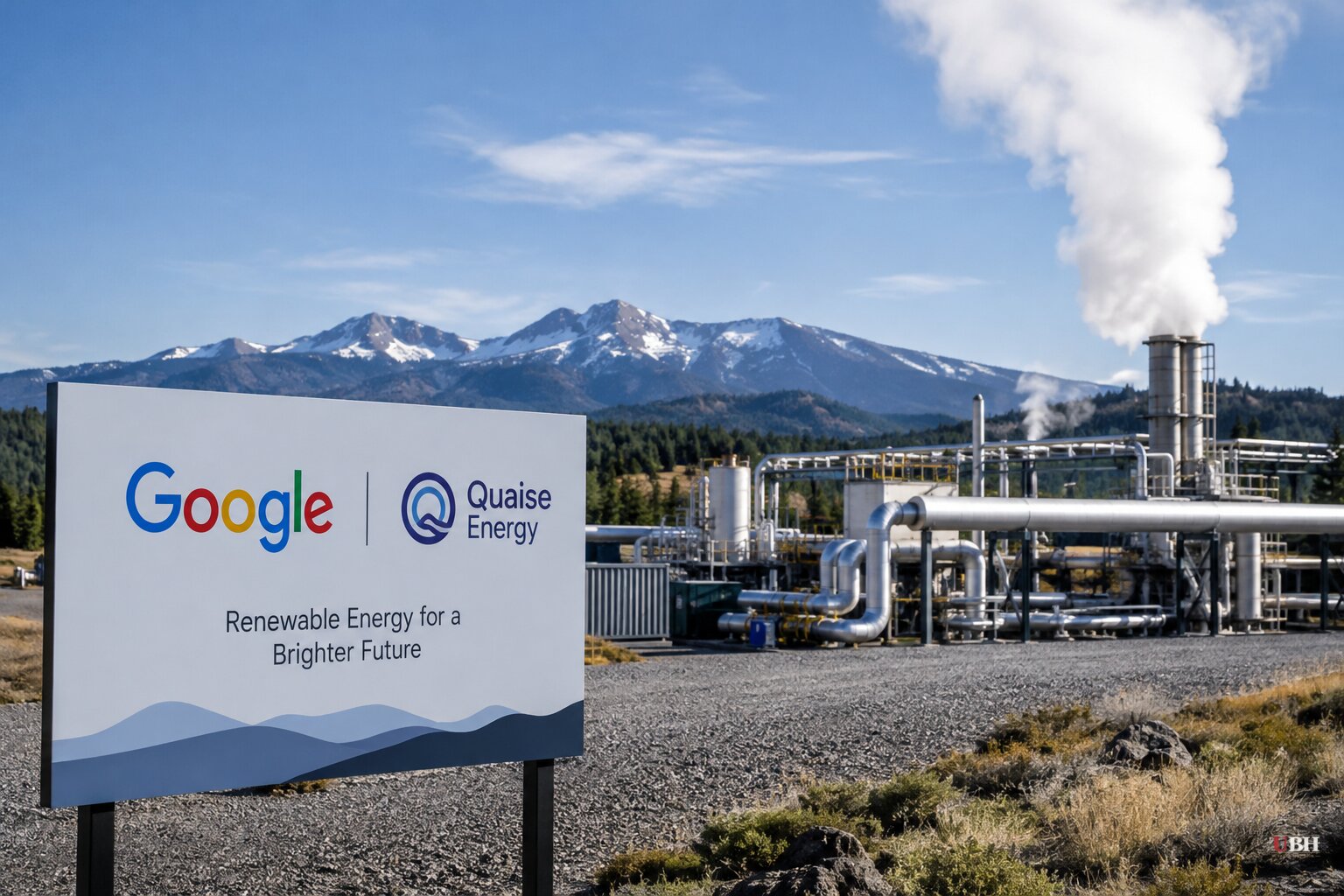
Google has agreed to buy 50 megawatts of superhot geothermal power from Quaise Energy's Project Obsidian in Central Oregon, Quaise announced Tuesday, Nov. 17. Delivery is slated to begin as early as 2030.
The power is meant to support Google's existing data center operations in The Dalles, Oregon. Quaise says it is the company's first power purchase agreement.
What the deal covers
Project Obsidian sits on federal land near the Newberry Volcano, about 20 miles south of Bend. Quaise has been developing the first phase around a planned 50 MW plant, so Google's purchase covers that entire initial build.
The first phase will use conventional drilling to reach superhot conditions at commercial scale, according to Quaise. The second phase is expected to be the first in the world to use millimeter wave drilling, a technology Quaise says can plug into existing rigs and reach superhot rock economically.
The 2030 delivery target does not hinge on the newer drilling method, which has yet to be used at a commercial project.
Traditional geothermal depends on naturally occurring hot-water reservoirs that rarely exceed 600°F, Quaise says. Superhot projects drill miles down to rock approaching 800°F. Quaise claims that yields up to 10 times more power per well.
The price tag is not settled in the public record
The financial terms were not part of the announcement. The Bend Bulletin reported that the companies did not disclose them.
Canary Media reported something different: that Quaise confirmed the deal is valued at more than $500 million. Quaise is also working to find buyers for an additional 200 MW of future capacity at the Oregon site, according to Canary Media.
Google has not published a price per megawatt-hour.
Local impact
Quaise spokesperson Harry Kelso told The Bulletin the company has put more than $6 million into Deschutes County businesses so far. The project is expected to support 200 to 400 construction jobs and more than 50 permanent positions.
Those are company projections, not independent estimates.
Google's power appetite
Google's own numbers show why it keeps signing these deals. Its latest Environmental Report showed electricity demand rose 37% in 2025, its largest annual increase. Scope 1 and 2 greenhouse gas emissions still fell 2% that year, which Google credits largely to its clean energy purchases.
From 2010 to 2025, Google signed more than 240 agreements for nearly 35 GW of new clean energy. That includes more than 29 GW in North America across 148 projects.
This is also not Google's first geothermal contract. Earlier this year it signed a record 396 MW agreement with Fervo Energy.
Google says it pays for 100% of the power its data centers use and covers the infrastructure needs its growth drives. Its three Oregon campuses have reached 83% carbon-free energy, and Quaise notes that customers of Northern Wasco County People's Utility District have the third-lowest electricity rates in the state.
Lucia Tian, Google's head of advanced energy technologies, said the aim is "to make them more affordable and widely available for the entire industry."
Quaise CEO Carlos Araque said the deal builds "the commercial foundation for superhot geothermal and cementing the United States as the global leader in geothermal power." Those are the company's claims about its own future, not results.
A crowded volcano
Quaise is not alone at Newberry. Mazama Energy is developing its own superhot project at the same volcanic site. This week it announced a cooling technology it says protects critical equipment in 645°F rock while increasing drilling speed by 20%.
Mazama CEO Sriram Vasantharajan said the advance lets developers work on cost "from both directions," cheaper wells and hotter rock. Those figures are Mazama's own and have not been independently verified.
What comes next
Quaise now has an anchor customer for the first phase of Project Obsidian. Still ahead are the drilling work to reach superhot conditions, the second-phase deployment of millimeter wave drilling, and a buyer or buyers for the extra 200 MW. The deal's value, reported at more than $500 million by one outlet and undisclosed by the companies in their announcement, remains the open number.
Sources used for this briefing
7 links from 7 independent newsrooms (syndicated copies of the same report count once)
These are the sources it draws on, linked so you can verify.


