
Unbiased headlines. Facts, not spin.
Unbiased Headlines is an independently owned news organization. We bring you the facts, not opinions, written fresh from 110+ named sources. Sources linked so you can verify it yourself.
 energy
Major Story (8/10)
MARAD Alert From October Warned of War-Risk Premium Spikes as Ships Face Fire From Both Sides Near Hormuz
Since US and Israeli strikes on Iran began Feb. 28, and since the US reinstated its naval blockade of Iranian ports on July 14, the cost of moving cargo through the Gulf has become a problem Washington's own shipping regulator is tracking in private.
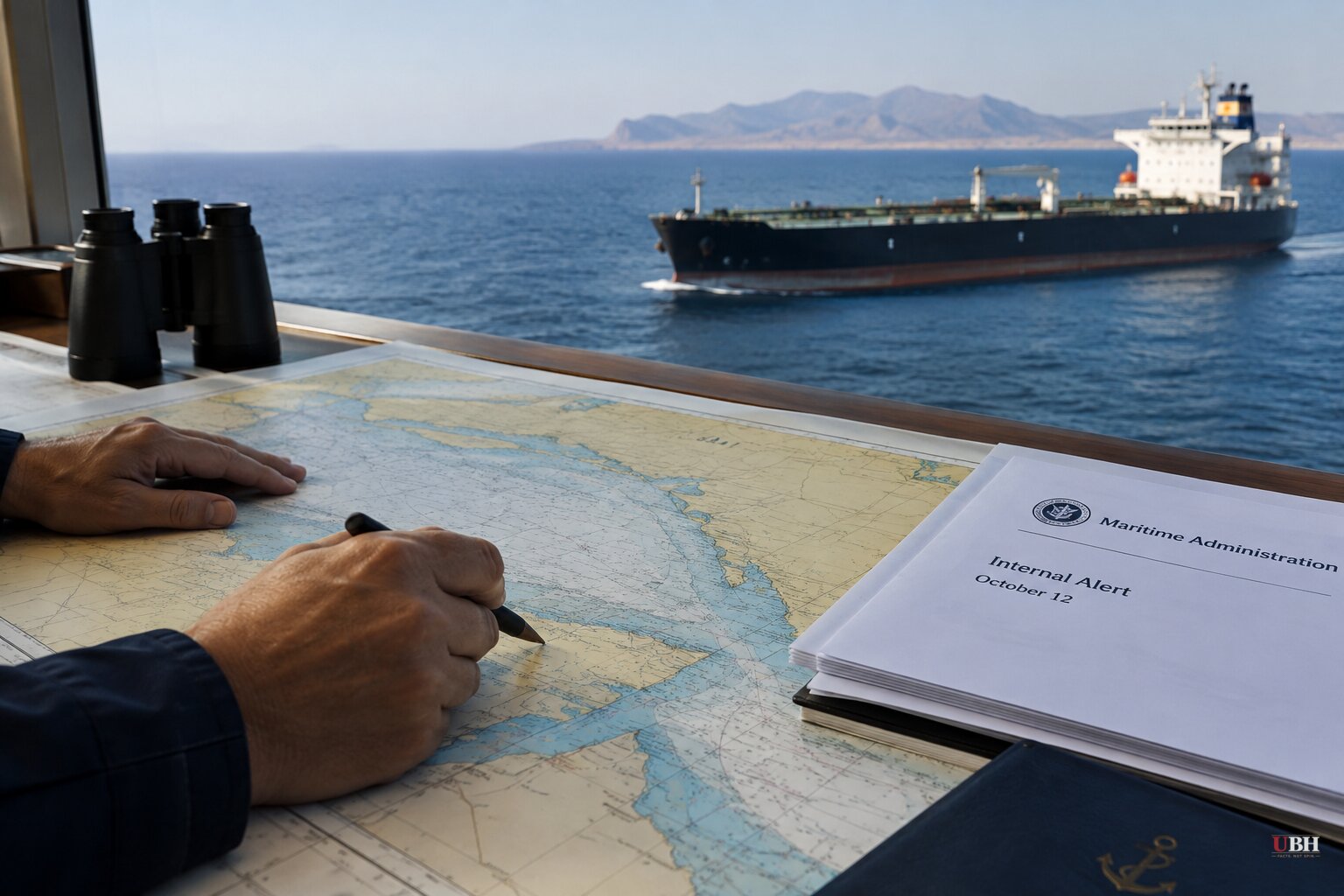
Documents obtained by Al Jazeera through a Freedom of Information Act request show the US Maritime Administration (MARAD) circulated an alert on Oct. 12 titled "Hormuz risk expands beyond the strait." MARAD sits under the Department of Transportation.
What the MARAD alert said
The alert followed two events. US Central Command (CENTCOM) announced it had disabled the Panama-flagged bulk carrier Ocean Molica for allegedly trying to breach the blockade. Separately, three other tankers in and around the Strait of Hormuz were hit in attacks no one has claimed.
"This materially escalates the previous alert: merchant ships now face kinetic action from both sides, and the threat has spread to Gulf anchorages and the Gulf of Oman," the memo said. It added that this "increases the likelihood of further war-risk premium spikes, crew refusals and effective tanker capacity contraction."
MARAD Administrator Stephen M. Carmel forwarded the alert to Michael Yarrington of the agency's Office of Marine Insurance. "How is the insurance market responding to all this?" Carmel wrote. He also asked for an update on MARAD's effort to "rebuild" war-risk insurance.
Yarrington replied that a colleague had contacted people in London and sent a summary of rising premiums compiled from news reports. The details of MARAD's "core deliverables" on war-risk insurance were redacted. It is unclear whether the alert originated at MARAD or another agency.
MARAD, the White House, the Pentagon and CENTCOM did not respond to Al Jazeera's requests for comment.
The numbers on shipping costs
The International Maritime Organization has recorded about 130 attacks on vessels since the war began, with at least 25 seafarers killed.
OPEC says insurance for an oil tanker carrying Middle Eastern crude to East Asia rose roughly 200-fold between January and the end of October, to $12.29 per barrel. Industry estimates cited in Singapore's Parliament put war-risk cover at 3.5% to 7.5% of a vessel's market value as of July, against 0.10% to 0.25% before the war.
One figure is far larger and far less clear. Acting Navy Secretary Hung Cao told the Senate Armed Services Committee on Nov. 17, at his confirmation hearing, that insurance for a single transit has gone from $54,000 before the war to $64 million. He did not explain how he arrived at the number, and it has not been independently verified.
Michelle Bockmann, an analyst at maritime intelligence firm Windward, told Al Jazeera that Cao "gave no context." She asked whether he meant additional war-risk premiums, which are set as a percentage of hull value and vary by vessel type.
Washington's position
The administration says the blockade is working. A US official told The Epoch Times earlier this month that "the United States is in a very strong position with control of the Strait of Hormuz and the Iranian economy collapsing." Treasury Secretary Scott Bessent said in an Oct. 26 interview with Iran International that Iran's economy could shrink by more than 25% between March 2026 and March 2027.
Cao told Democratic Sen. Elissa Slotkin that the US controls both the Strait of Hormuz and the Bab el-Mandeb. Slotkin countered that commercial vessels no longer have the freedom of navigation of a year ago. "We do not have the same freedom of navigation that we had a year ago," she said. President Trump says the Navy is successfully escorting ships. Iran says it controls passage.
Blockade tightens again
On Nov. 18, CENTCOM issued a maritime advisory saying any ship receiving cargo at sea from a vessel loaded in Iran will be treated as trying to evade the blockade. Such ships may be stopped, boarded, diverted, captured or forced back to the Iranian load port. CENTCOM said vessels that defy lawful instructions risk the use of force consistent with applicable law.
The move targets the ship-to-ship transfers that have carried Iranian crude to buyers despite sanctions. Commodity analysts at CMB News say the change adds risk to tankers well beyond those calling at Iranian ports. Iranian crude exports are at a virtual standstill, though jet fuel and liquefied petroleum gas shipments have been sighted.
Traffic through the strait has partly recovered. S&P Global Commodities at Sea data show October volumes were the highest monthly level since July, but still well below pre-war levels.
Oil prices
Crude has been drifting down despite the disruption. Brent traded around $106 on Nov. 3, after reports of US strikes on an Iranian anti-aircraft site on Qeshm Island. It was near $97.67 on Nov. 9 after Trump said new strikes were highly unlikely while talks progressed. CMB News put front-month Brent in the high $80s to low $90s on Nov. 19, and WTI in the low $80s, both down roughly mid-teens percent over the past month.
What decides the next phase
Trump said he is "highly unlikely" to order fresh attacks if Tehran strikes a nuclear deal and reopens Hormuz. Qatar's prime minister, Sheikh Mohammed bin Abdulrahman Al Thani, has been mediating, including a Washington meeting with Trump on Nov. 9.
Iran's Foreign Ministry spokesman Esmail Baghaei has said Iran will not reopen the strait unless Washington lifts the blockade. Each side's condition for reopening depends on the other moving first. The Nov. 18 advisory suggests the blockade is widening rather than easing.
Sources used for this briefing
7 links from 7 independent newsrooms (syndicated copies of the same report count once)
These are the sources it draws on, linked so you can verify.


