
Unbiased headlines. Facts, not spin.
Unbiased Headlines is an independently owned news organization. We bring you the facts, not opinions, written fresh from 110+ named sources. Sources linked so you can verify it yourself.
 energy
Major Story (7/10)
India's Crude Import Bill Jumps 88% to $19.5 Billion as IEA Says Energy Markets Won't Return to Pre-Iran-War Normal
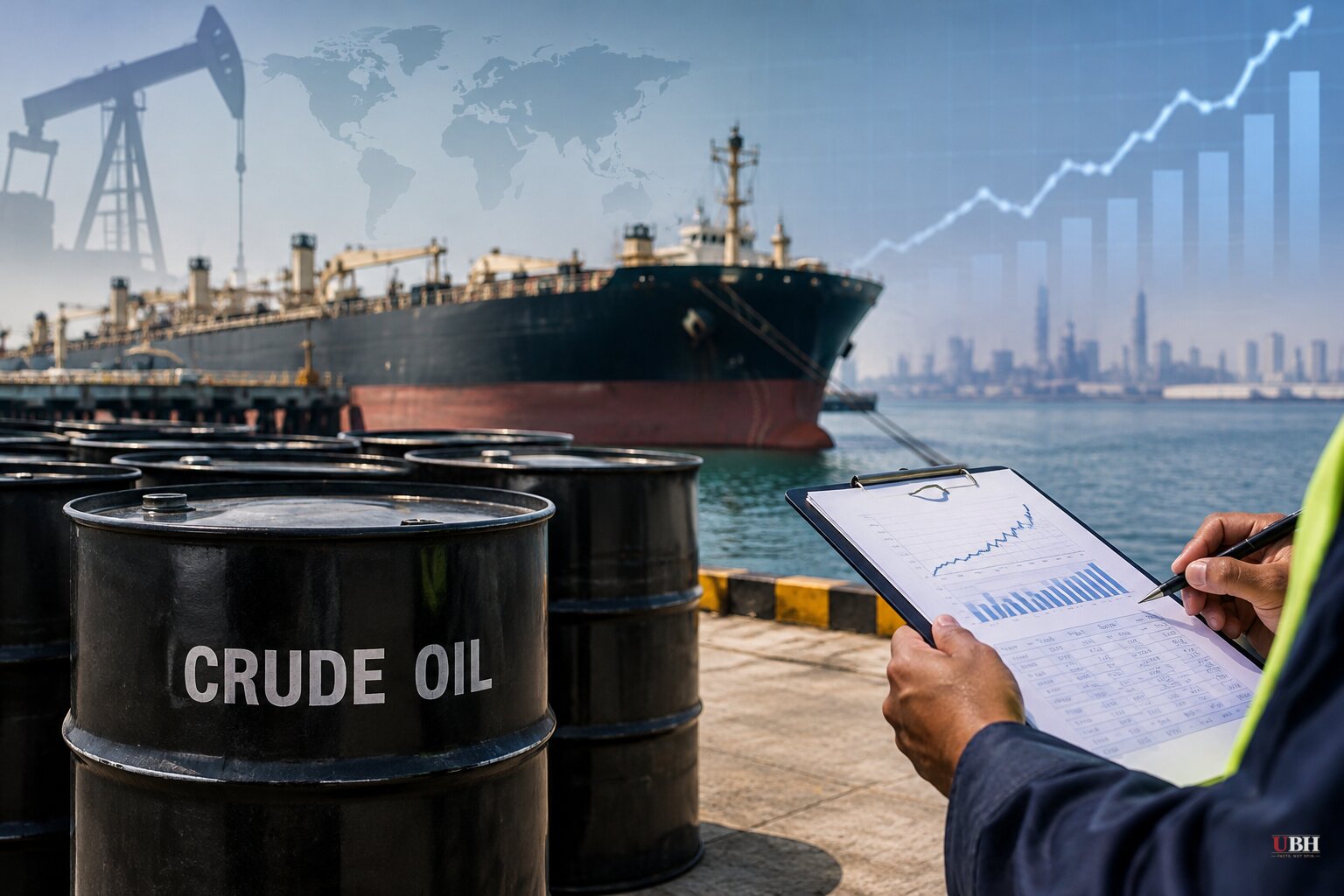
India paid $19.5 billion for crude oil in October, up 87.5% from $10.4 billion a year earlier, according to provisional data from the Petroleum Planning and Analysis Cell (PPAC) released Nov. 18.
The jump is the Iran war's energy shock in one line item. The Paris-based International Energy Agency says the shock will not simply unwind.
India's bill nearly doubled while volumes rose 11%
India imported 23.3 million metric tonnes of crude in October, against 21 million a year earlier. That 11% volume increase explains only a slice of the cost jump. Price did the rest.
PPAC put the Indian crude basket at $119.91 a barrel in October, against $124.77 for Brent. The U.S. Energy Information Administration's figure for Brent is slightly lower, at $123.93, which it says is the highest monthly average since March 2012. In October 2025 Brent averaged $64.54.
The increase accelerated. The import bill rose about 46% over April to September. Brent averaged $103.23 from March to October.
India's net import bill, which counts crude, petroleum products and natural gas minus product exports, rose 60% to $16 billion from $10 billion.
Refiners helped cushion the blow. Export revenue from petroleum products jumped roughly 91% to $6.3 billion, though volumes rose just 5.9% to 5.4 million tonnes. LNG imports fell about 7% in volume to 3,014 million standard cubic metres, yet the LNG bill still rose 8.33%.
Why October spiked
Oil has stayed elevated since the war began and traffic through the Strait of Hormuz, where roughly a fifth of traded oil normally flows, was disrupted. Trade analysis of the oil ministry data points to October's extra jump coming from fear that Washington might resume strikes on Iran after the Nov. 3 U.S. midterm elections. Refiners, including Indian ones, bought extra barrels as a precaution.
The same analysis says Brent has since fallen into a $90 to $95 range after the vote. That figure is not an official benchmark settlement, and the pre-market hours today, Nov. 20, offer no new regular-session price.
The IEA: no road back
The IEA's flagship World Energy Outlook, released Thursday, Nov. 19, runs more than 560 pages and models scenarios based on whether governments hold current policies or change them under crisis pressure.
Executive Director Fatih Birol said the war "delivered a huge shock to the system." He added: "I don't see any credible pathway for the energy world to return to the way it was before." He also warned that "the longer the crisis lasts, the deeper the effects will be."
The report says energy-hungry nations will put security and affordability of electricity first. That helps solar and nuclear. It also strengthens the case for keeping coal as a backup, especially in coal-rich Asia, which went into what the report's coverage calls energy triage when Hormuz was cut off.
In March the IEA coordinated an emergency release of 400 million barrels of crude stocks to steady markets.
The outlook lands during the second and final week of the COP31 climate talks in Turkey. Rachel Cleetus, climate program director at the Union of Concerned Scientists, said at the talks that "the future of the energy system and our climate are inextricably intertwined."
The oversupply argument
Not everyone in the industry reads the price spike as lasting scarcity. Economist Daniel Lacalle wrote this week that an oil executive told him a month ago he was more worried about oversupply than geopolitical risk. Lacalle argues that investors may be mistaking "the price of geopolitical insecurity for evidence of lasting scarcity."
He points to the IEA's November figures: global supply rose 5.3 million barrels a day between August and October, despite attacks on energy infrastructure and tankers. OPEC estimates show OPEC+ members adding about 2 million barrels a day in October alone.
The IEA trimmed its demand estimate only slightly this month while raising its 2027 outlook. Lacalle says that if the geopolitical premium vanishes just as supply recovers, prices could fall faster than many expect, as they did in 2008 and 2009, when monthly average WTI more than halved between July and November 2008. He notes the circumstances then were different.
His point on cost is harder to argue with: barrels are returning, but delivering them is not cheap. Freight rates from the Middle East to Asia remain near multiyear highs, squeezing Asian refining margins. The Pentagon's estimated cost of the broader Iran campaign had reached $47.1 billion, though Lacalle notes that spending is not entirely attributable to protecting oil shipments.
That is taxpayer money, and it is not reflected in any crude benchmark.
Exposure for India
India imports more than 85% of its crude needs. A higher oil bill raises demand for dollars and can weigh on the rupee, which makes dollar-priced imports costlier still. It can also widen the current account deficit and increase subsidy needs for cooking gas and fertilisers.
Retail petrol and diesel prices do not move one-for-one with crude. Taxes, refining costs, marketing margins and oil marketing company decisions all sit in between.
The IEA identifies a possible release valve: a resolution of the Hormuz crisis alongside expanding oil and LNG supply could push prices down. The open question for importers like India is whether the October peak was the top, and whether the November Brent slide to the low $90s holds or reverses if Hormuz tensions flare again.
Sources used for this briefing
6 links from 6 independent newsrooms (syndicated copies of the same report count once)
These are the sources it draws on, linked so you can verify.


