
Unbiased headlines. Facts, not spin.
Unbiased Headlines is an independently owned news organization. We bring you the facts, not opinions, written fresh from 110+ named sources. Sources linked so you can verify it yourself.
 energy
Major Story (7/10)
Event date: November 18, 2026 ·
Brent Heads for Third Weekly Loss at $92.77 Even as Houthi Missiles Hit Riyadh and Two Tankers Hit Mines
Since the U.S. strike on Iran's Qeshm Island on Tuesday, Nov. 17, the shooting has not stopped. Oil prices have been moving less than the headlines would suggest.
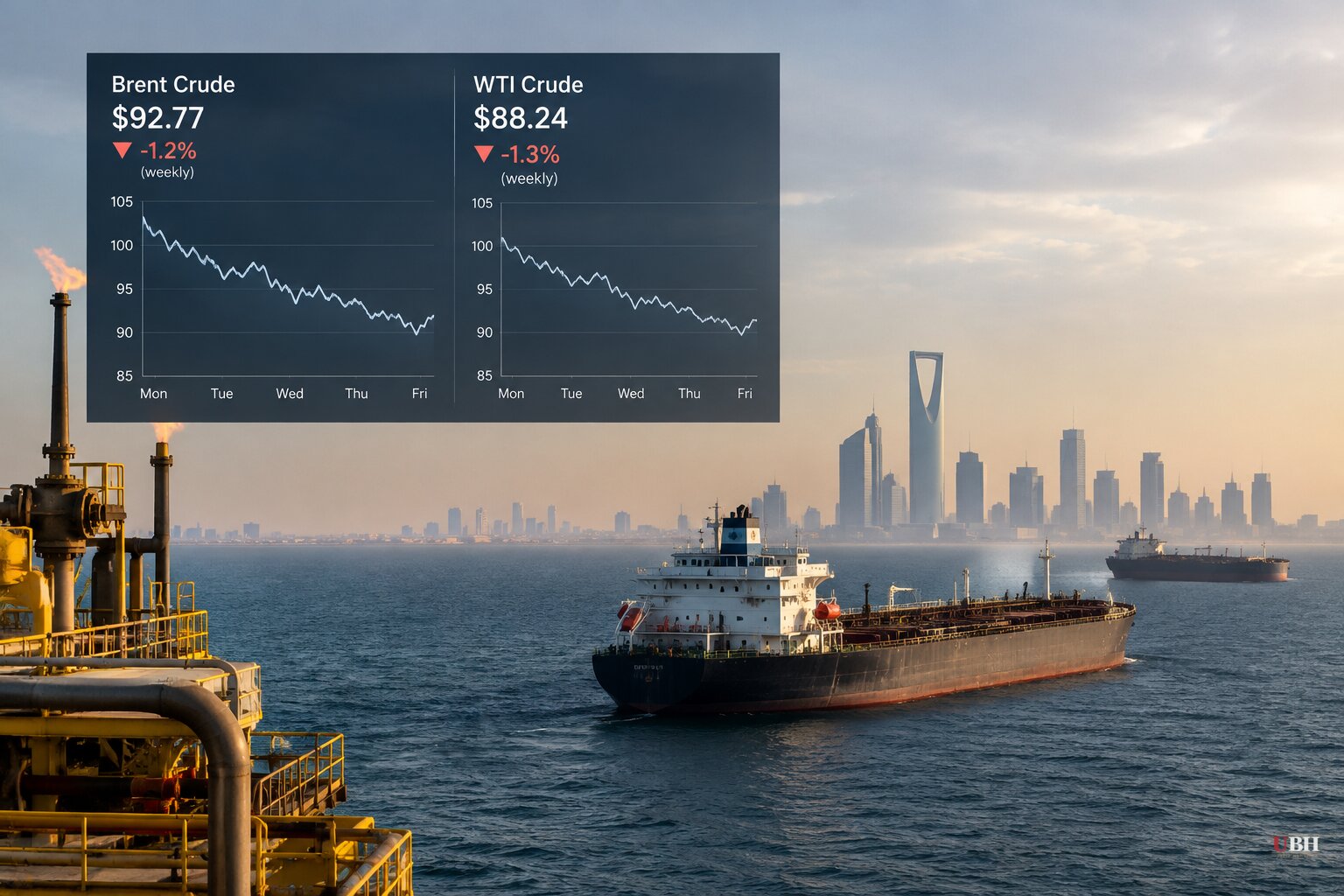
Brent crude futures rose 79 cents, or 0.9%, to $92.77 a barrel by 0404 GMT today, Friday, Nov. 20. West Texas Intermediate for December climbed 25 cents to $83.46. The more-active January WTI contract gained 71 cents to $83.15. All of that is Asian-session futures trading. U.S. cash-market trading has not opened for the day.
Both benchmarks settled little changed on Thursday. For the week, Brent is set to fall 3.5% and December WTI almost 6%. That would be the third weekly decline in a row for both.
Riyadh and the mines
The Iran-aligned Houthi movement fired missiles at Riyadh, the latest strike on the Saudi capital in the kingdom's war with the group.
Separately, Iran's Revolutionary Guards Navy said in a statement carried by state media on Thursday that two oil tankers hit naval mines in the Strait of Hormuz and "exploded" and "are burning." The claim comes from the Iranian military itself. No independent confirmation of the vessels or their condition has been published.
"Concerns over Middle Eastern crude oil supplies have resurfaced due to attacks on Riyadh by the Houthis, prompting buying," said Satoru Yoshida, a commodity analyst at Rakuten Securities.
UOB Group analysts said in a client note that Iran's attacks on tankers transiting Hormuz are "running at roughly one incident per day in November." They said that still adds a meaningful geopolitical risk premium to the market.
Why the price is still falling
The weekly slide traces to expectations of a supply surplus. Crude shipments through the strait have returned to roughly pre-war levels, according to the market reporting behind this week's price moves. Persian Gulf crude exports had already recovered to 15 million barrels a day in October, and the International Energy Agency raised its fourth-quarter global supply forecast.
U.S. stockpiles added to the pressure earlier in the week. The American Petroleum Institute reported crude inventories up 5.3 million barrels in the week ended Nov. 13, against market expectations for a decline. Gasoline stocks rose 5.12 million barrels.
Broader markets are also weighing on crude. Asian shares fell on Friday and are heading for their worst week since 2020. "Supply disruptions remain a risk, but near-term demand concerns tied to the AI trade unwind and broader risk-off sentiment are weighing on prices," Saxo analysts said in a note.
Competing readings of Hormuz
The market is holding two views at once. One says flows are back and the war's supply damage is fading. The other, from LSEG analysts earlier this week, says normalization of Hormuz flows "is still not possible under current conditions." LSEG pointed to vessel data showing the strait is not operating normally despite the recovery elsewhere.
A reported Goldman Sachs forecast sits firmly in the second camp. The bank raised its 2027 Brent forecasts to a range of $105 to $140 a barrel on supply risks, according to Economic Times. That is far above today's price. The range is wide, and the forecast has not been independently confirmed here.
The longer-run picture
The IEA said on Thursday that the Middle East conflict has caused the biggest disruption ever to global oil and gas trade. The agency added that world oil demand could fall by more than 4% by 2035 if governments speed up electrification, efficiency and fuel-switching measures in response.
Russia adds another variable. Ukrainian drone attacks have cut Russian refineries' combined crude processing volumes by 45% since late October, according to a Reuters report on Wednesday. Russian President Vladimir Putin said Thursday that Moscow would hit back hard after Ukraine struck the Crimea bridge for a third time this week. He also said he was dropping any idea of a moratorium on attacking energy sectors and shipping.
What comes next
OPEC+ ministers will hold a series of meetings on Nov. 29 to decide the group's 2027 output policy. Yoshida said expectations that coordinated production cuts will continue are also supporting prices. If the cartel holds back supply while Hormuz traffic stays near pre-war levels, the surplus the market is pricing in may not arrive.
Sources used for this briefing
6 links from 6 independent newsrooms (syndicated copies of the same report count once)
These are the sources it draws on, linked so you can verify.


