
Unbiased headlines. Facts, not spin.
Unbiased Headlines is an independently owned news organization. We bring you the facts, not opinions, written fresh from 110+ named sources. Sources linked so you can verify it yourself.
 energy
Major Story (8/10)
BAAJA Permitting Bill Heads to a Narrow House Majority Over Tribal, Environmental Objections
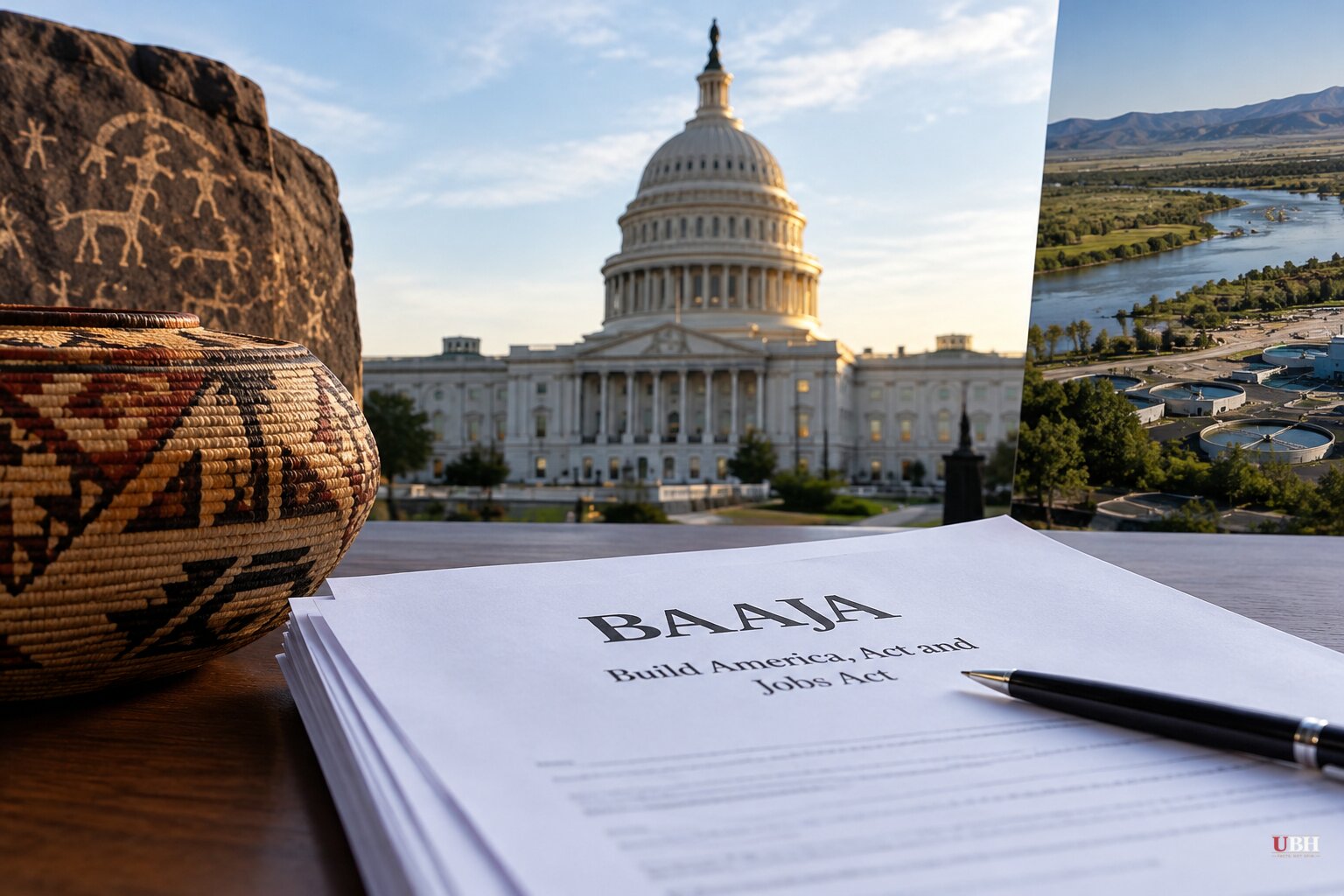
Since the Senate voted 73-25 on Nov. 9 to open debate, the Bipartisan American Affordability and Jobs Act has cleared the chamber 62-33 late Thursday, Nov. 19. Next is the House, where it still has to survive.
The margin was only just above the 60 votes needed to beat a filibuster. Fourteen Democrats and independent Sen. Angus King of Maine, who caucuses with Democrats, voted yes. Twenty-eight Democrats voted no. Two Republicans also voted against passage.
A split inside Democratic delegations
The Democratic split ran through individual states. Senators from Arizona, Colorado, Delaware, Hawaii, Minnesota, Nevada, New Mexico, New York and Virginia divided their votes, according to National Review's John R. Puri.
The bill was written by Republican Sens. Shelley Moore Capito of West Virginia and Mike Lee of Utah, and Democratic Sens. Sheldon Whitehouse of Rhode Island and Martin Heinrich of New Mexico. President Trump urged senators on Truth Social to back it, calling it a "BIG WIN for U.S. ENERGY INDEPENDENCE and DOMINANCE."
Capito said passage was an important step in answering Americans' concerns about affordability.
What the bill does
BAAJA limits legal challenges under the National Environmental Policy Act, the Clean Water Act, the National Historic Preservation Act and the Endangered Species Act. It is meant to speed review of power plants, grid upgrades, pipelines, mines and data centers.
It also restricts the president's ability to discriminate among energy sources. That could stop the Trump administration from blocking renewables, and it could stop a future Democratic president from revoking oil and gas pipelines.
On data centers, the bill covers facilities drawing at least 20 megawatts. They would have to cover the cost of additional power they need and post financial guarantees for the cost of building or upgrading facilities. Heinrich said the requirement is "by statute, not a suggestion, an actual law."
The bill does not address data center air pollution or water use.
Josh Freed of the center-left Third Way think tank said the permitting system had created "an enormous amount of delays and increasing costs, so we weren't building things."
Tribal Nations object
The sharpest organized opposition comes from Tribal leaders. They say Division B, Title III, which amends Section 106 of the National Historic Preservation Act, weakens Tribal consultation requirements for sacred sites and culturally significant places.
The National Congress of American Indians has repeatedly called for Title III to be withdrawn. It argues the bill fails to protect Tribal sovereignty and the government-to-government relationship.
Sen. Alex Padilla, D-Calif., voted no. He said he supports many provisions, including transmission streamlining he helped write, but that the bill "threatens Tribal sovereignty" and could allow destruction of ancestral lands "without adequate legal recourse." California has 109 federally recognized Tribes.
Padilla also said the bill asks senators to rely on assurances from Trump, who he said "just weeks ago said he would not approve any wind projects." In his view, it lacks enforceable safeguards for fair treatment of renewables and against resumed offshore drilling off California.
Green groups divided
Environmental groups landed on opposite sides. Evergreen Action said the bill would help build cheap, clean energy "faster and at scale."
The Union of Concerned Scientists said the shortcuts "will mean more pollution and less transparency for already overburdened communities, with questionable upsides for renewable energy."
The Great Lakes PFAS Action Network warned the bill could lock in discharges of PFAS "forever chemicals" by making it harder to set limits. "The whole role of government is to protect its citizens, and this bill will not do that," said the group's Sandy Wynn-Stelt.
Sen. Jeff Merkley, D-Ore., said before the vote that he would oppose the bill because it would speed natural gas pipelines and LNG export terminals and limit tools to challenge projects. He praised its transmission and data-center provisions. He has also voiced doubt that the Trump administration would let wind and solar projects proceed on equal terms with fossil fuel projects.
The House math
The bill, S. 5653, now goes to a House where Republicans hold only a slim majority. The narrow Senate margin could make passage there difficult.
Puri argued that the bill's passage shows Congress legislating without handing the president waiver authority, a point supporters of the bill have embraced.
No House vote has been announced. Whether House Republicans take up the Senate text as written, or amend it and send it back, will decide if the Tribal and environmental objections get another hearing.
Sources used for this briefing
6 links from 6 independent newsrooms (syndicated copies of the same report count once)
These are the sources it draws on, linked so you can verify.


