
Unbiased headlines. Facts, not spin.
Unbiased Headlines is an independently owned news organization. We bring you the facts, not opinions, written fresh from 110+ named sources. Sources linked so you can verify it yourself.
 energy
Major Story (7/10)
Event date: November 18, 2026 ·
WTI Is Down More Than 5% on the Week at $82.81 as Surplus Forecasts Outweigh Hormuz Attacks
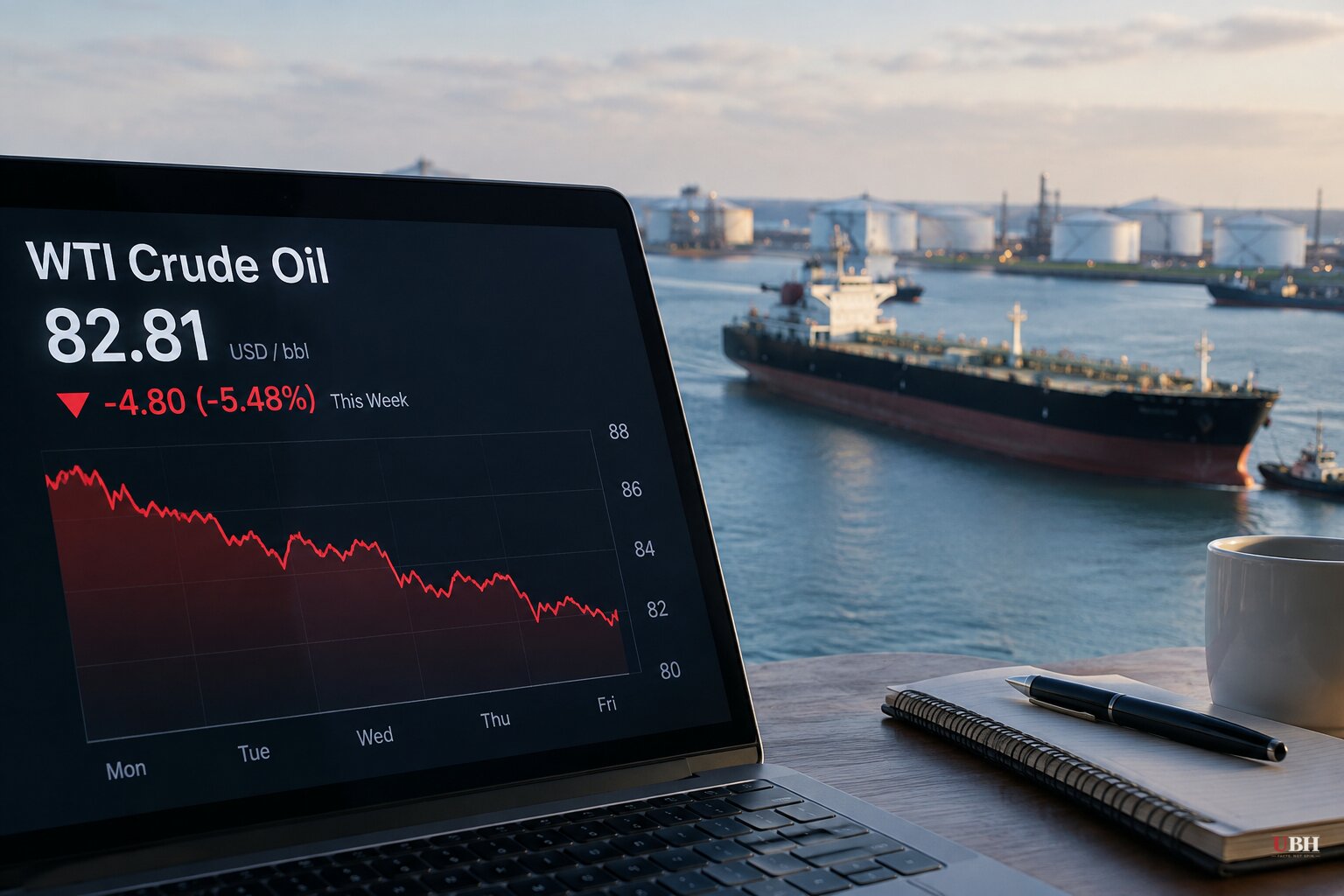
Since Hormuz transits collapsed to 9.8 million barrels a day at the start of the war in March, the market has spent months pricing scarcity. This week it priced the opposite. At 00:48 GMT Friday, January West Texas Intermediate futures were at $82.81, down $4.80, or 5.48%, for the week.
The expiring December WTI contract is down roughly 7%. Brent is on track to lose about 5%, which would be a third straight weekly decline.
The supply numbers behind the slide
The International Energy Agency's November report says global supply rose by 2.3 million barrels a day in October to 105.4 million. The agency expects the market to swing back to surplus in the fourth quarter, with a larger surplus possible in 2027.
The IEA puts the increase between August and October at 5.3 million barrels a day, despite attacks on energy infrastructure and tankers. OPEC's own estimates show OPEC+ members adding roughly 2 million barrels a day in October alone.
The U.S. Energy Information Administration says shipments through major Middle East chokepoints rose 19% in the third quarter. The agency says companies leaned on smaller vessels and ship-to-ship transfers, and producers made greater use of existing infrastructure. U.S. inventories are building as well.
JPMorgan's Natasha Kaneva puts Middle East oil transits at 20.7 million barrels a day last week, against 24.7 million before the war. Kpler data show flows averaging about 70% of the pre-war level over the same stretch. Non-Middle East crude flows are up 1.5 million barrels a day from a year ago.
Attacks continue, prices don't follow
The violence has not stopped. Yemen's Houthis fired missiles at Riyadh. Iranian state media reported two tankers struck naval mines in Hormuz and were burning.
The Iranian Revolutionary Guard Corps Navy warned tanker owners that the U.S.-backed southern passage had been mined and that cooperating with U.S. military officials would put their vessels at risk.
On Tuesday, Tehran targeted Bahrain for the third time in under a week. A U.S. military official said American warplanes hit an Iranian missile launch site on Qeshm Island.
Iran's President Masoud Pezeshkian said Tehran is seriously pursuing an exit from the "neither war nor peace" situation through diplomacy, according to the semi-official Iranian Students News Agency. Qatar said mediation efforts remain ongoing.
The case that the premium will return
Not everyone reads the slide as settled. Ryan McKay, senior commodity strategist at TD Securities, said some risk premium should be priced back in as tensions grow, and that flow data point to a notable drop in volumes in recent weeks.
Tankertrackers.com, which monitors vessel movements, says the number of empty tankers sailing to collect Middle East crude is sliding. That could jeopardize the revival in regional flows that has weighed on futures.
Bloomberg described a recent pattern of Friday gains on weekend escalation fears, followed by sharp early-week declines when those fears fail to materialize.
What the barrels cost
The price on the screen leaves out the expense of moving the oil. Economist Daniel Lacalle wrote in a commentary that Middle East-to-Asia freight rates remain near multiyear highs and are squeezing Asian refining margins. He also wrote that U.S. maritime protection is costly and not captured by crude benchmarks.
Lacalle cited a Pentagon estimate that the broader Iran campaign had reached $47.1 billion. He noted that figure is not entirely attributable to protecting oil shipments. Taxpayers are covering that security bill whatever Brent does.
Lacalle also relayed an oil executive's worry that oversupply, not geopolitics, is the bigger risk. He pointed to the 2008-09 collapse, when monthly average WTI prices more than halved between July and November 2008.
CNN's analysis said oil spent every day of October above $100 on expectations of renewed U.S. and Israeli strikes, peaking at $114 on the last trading day of the month. It said prices then fell $25 as President Donald Trump backed away from renewed attacks before the midterms and voters handed Democrats a sweeping win. CNN called the political link undeniable but incomplete, given the shift to a market producing more crude than it consumes.
Other supply risks, and what comes next
Ukraine's drone campaign has cut combined Russian refinery crude processing by 45% since late October, Reuters reported. That loss is currently being overshadowed by steady Gulf exports.
On the charts, FXEmpire's technical read puts the September 4 low of $80.72 as the level that would reaffirm the downtrend in January WTI. A move above the $88.49 swing top would turn the trend up.
The next scheduled catalyst is the OPEC+ ministerial meeting on November 29, where ministers will discuss production policy for 2027. Weakness in global stock markets is also feeding concerns that slower economic activity could weigh on demand.
Sources used for this briefing
7 links from 7 independent newsrooms (syndicated copies of the same report count once)
These are the sources it draws on, linked so you can verify.


