
Unbiased headlines. Facts, not spin.
Unbiased Headlines is an independently owned news organization. We bring you the facts, not opinions, written fresh from 110+ named sources. Sources linked so you can verify it yourself.
 energy
Major Story (7/10)
Johns Hopkins Study Projects U.S. Grid Equipment Shortfalls Starting With Copper as Soon as 2027
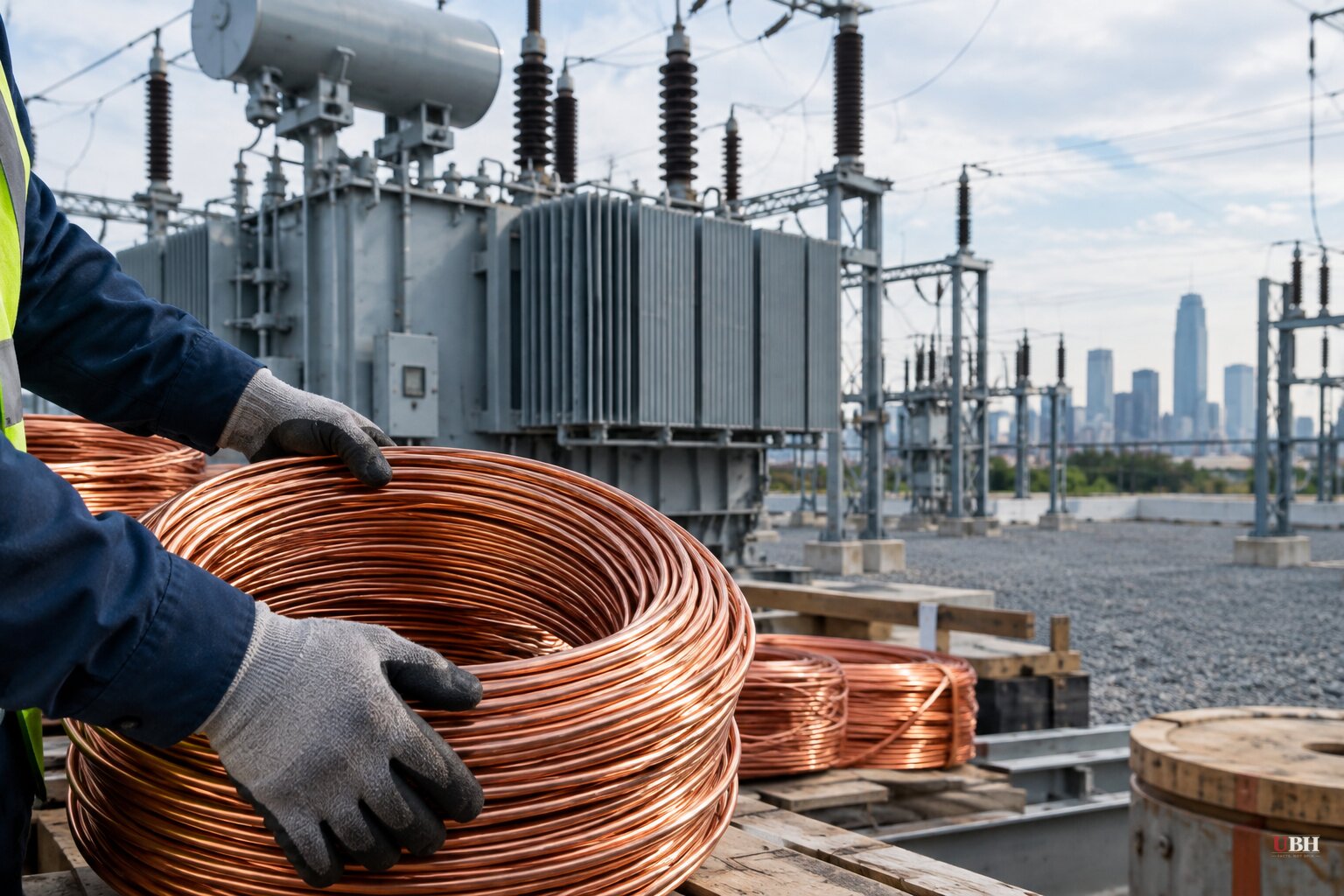
Data centers are racing to connect to the grid, and a new study points to a hard constraint on that buildout: the hardware needed to plug those facilities in.
Researchers at Johns Hopkins University project that the U.S. could begin running short of the equipment that connects new power plants and data centers to the grid as early as next year. The study, published in Cell Reports Sustainability, finds shortages of transformers and converters becoming acute by 2030.
"This type of equipment was taken for granted but without it, you can build a data center or a power plant but it won't be powered because you cannot connect it to the grid," said Yury Dvorkin, a Johns Hopkins associate professor who conducted the study with PhD candidate Boyu Yao, in a university release.
The numbers in the study
U.S. power use historically grew 1% to 2% a year. The study projects a 21% jump by 2030 as AI data centers, electric vehicles and broader electrification pile on. Data centers alone could account for as much as two-thirds of the expected equipment gap.
In a high-demand scenario, the U.S. falls almost 15% short on transformers and 30% short on other critical grid equipment over the next four years. The researchers also modeled a trade disruption, a drop of up to 70% in materials from unstable trading partners. That widens the transformer gap to about 25% and the shortfall in other equipment to 36%.
Under modest demand growth, transformer supply holds. The country would still come up about 16% short on other grid-supporting equipment.
The raw materials are copper, steel, nickel, aluminum and manganese. The researchers found the U.S. is at risk of running short of all five over the next four years. Copper goes first, as early as next year. Steel and nickel will be nearly impossible to source by 2030.
These are modeled scenarios, not observed shortages. How closely real supply chains will track them is not established.
Waits are already long
The wait for a newly manufactured transformer has grown from roughly six months to more than two years over the past four years. Large power transformers also use grain-oriented electrical steel, which is produced at one U.S. mill.
Wood Mackenzie analyst Ben Boucher has said lead times for generator step-up transformers passed 160 weeks in the first quarter of 2026, up from an average of 143 weeks in 2024. He also said high-voltage transformers took about a year to arrive in 2020 and 2021. "Equipment availability is becoming the biggest concern for developers as they value time to market so highly," Boucher said.
Wood Mackenzie projects U.S. data center capacity rising from about 24 gigawatts to 110 gigawatts between 2026 and 2030. It projects the data center electrical equipment market growing from $20 billion in 2025 to $65 billion in 2030.
Prices have moved too. The Bureau of Labor Statistics producer price index for transformer manufacturing is up 86% from January 2020 to September 2026. GE Vernova reported an electrification equipment backlog of $42.2 billion at the end of September, up 60% in a year.
The $1 trillion question
JPMorganChase estimates the grid needs about $1 trillion in investment through 2035. In September, the Department of Energy committed $1.9 billion to 31 projects meant to squeeze more power out of existing lines and lower costs. That is a fraction of the bank's figure.
More than 70% of U.S. transmission lines are over 20 years old, according to Columbia Business School. The National Electrical Manufacturers Association projects demand will grow more than 50% by 2050.
The International Energy Agency said this week that global data center electricity use could roughly double to about 1,000 terawatt-hours a year by 2030. It listed overtaxed supply chains, community resistance and limited grid headroom as choke points. The agency said copper, power cables and transformers are already in short supply. It also said peak power demand could climb 40% to 50% by 2035.
Permitting fix versus hardware limits
JPMorganChase's argument runs through policy. In a Nov. 17 post, Heather Zichal, head of the bank's Center for Energy and the Environment, said the firm supports the Bipartisan American Affordability and Jobs Act. She said it would streamline permitting, help lower the cost of capital and reform how the grid is planned, expanded and used. Zichal wrote that new power generation and transmission infrastructure "can take years to connect, permit, and build."
The Johns Hopkins study describes a different bottleneck: physical equipment and the metals that go into it. The researchers point to real-time load sensors, recycling materials from retired transformers and more standardized designs as ways to stretch the supply that exists.
The study says the likely result for businesses and households is higher electricity bills and more frequent outages. The first checkpoint is copper, which the researchers say could run short as early as next year.
Whether faster permitting can deliver new capacity if transformers take more than two years to arrive is the open question for any grid-spending plan.
Sources used for this briefing
7 links from 6 independent newsrooms (syndicated copies of the same report count once)
These are the sources it draws on, linked so you can verify.


