
Unbiased headlines. Facts, not spin.
Unbiased Headlines is an independently owned news organization. We bring you the facts, not opinions, written fresh from 110+ named sources. Sources linked so you can verify it yourself.
 energy
Breaking / Critical (9/10)
Event date: November 19, 2026 ·
Saudi Coalition Strikes Hodeida as Houthis Threaten Jeddah, While Berlin Talks on Iran Ceasefire Stall
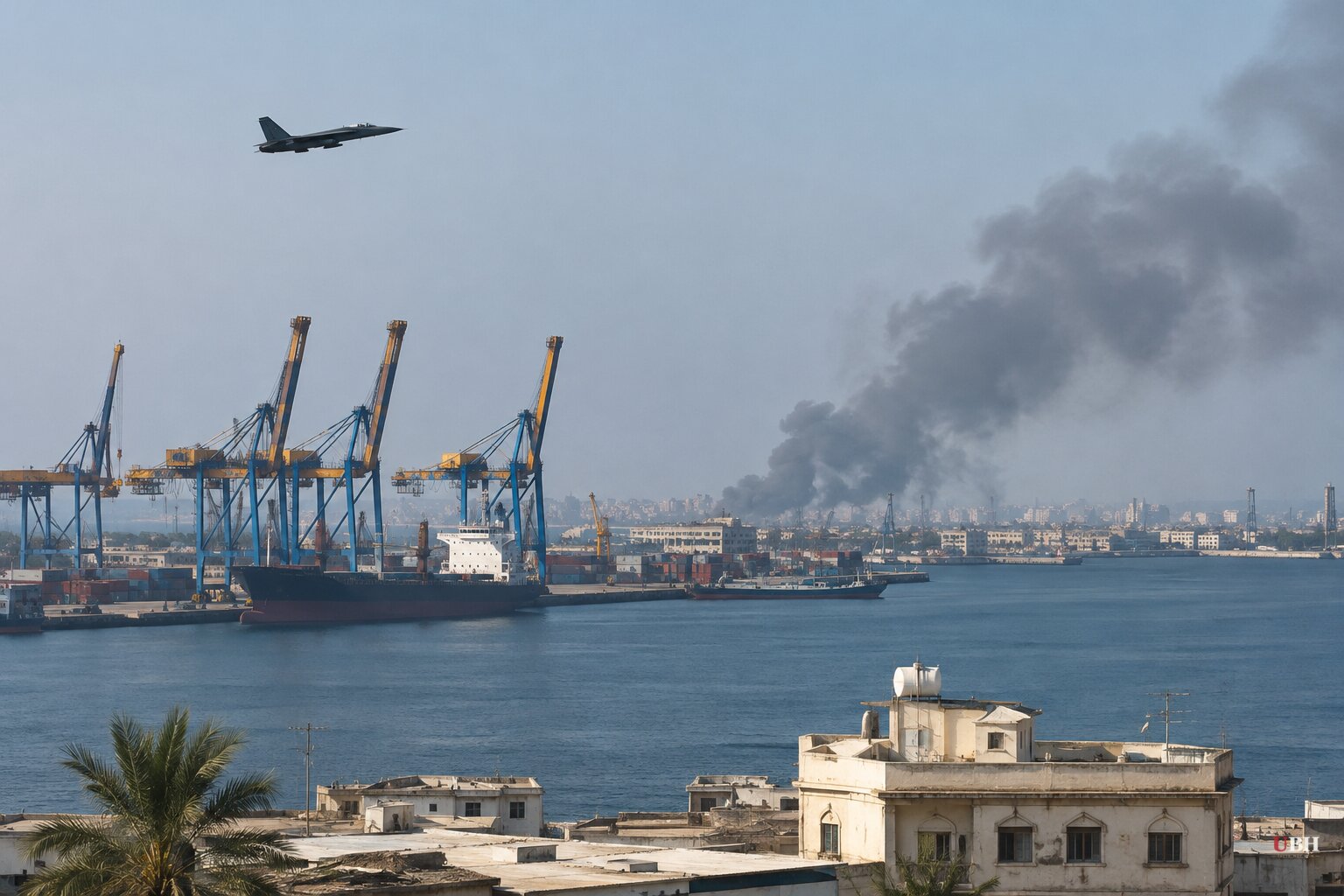
Since the U.S. and Israel struck Iran on Feb. 28, the Strait of Hormuz has stayed largely shut, and this week the fighting is reaching new places: Yemen, Kuwait and the Iranian coast.
Saudi coalition hits Hodeida
The Saudi-led coalition fighting Yemen's Houthis launched what it called a "special operation" on Friday. Targets included the Red Sea port of Hodeida and sites in Sanaa, Saada and Taiz governorates.
Coalition spokesman Turki al-Malki said the Hodeida strikes hit "smuggling operations and the transport of weapons and ballistic missiles." In Sanaa, he said, the coalition hit missile and drone facilities and a supply depot.
The Houthis claim 41 people died in coalition strikes over 24 hours. That figure cannot be independently verified. Houthi-run Al-Masirah TV showed images of a damaged power station in Mocha after an air raid.
The Houthis had vowed to hit Jeddah and other Saudi Red Sea ports if Hodeida was attacked. They also warned airlines that Saudi airspace was "unsafe," and threatened Riyadh's financial district and a power station in Al-Shuqaiq.
Al-Malki said two ballistic missiles were intercepted over Jizan near the Yemeni border, with debris falling in Al-Shuqaiq. The coalition's move comes a day after a Houthi attack on Riyadh's tallest skyscraper.
U.S. strike on Qeshm, Iranian drones on Kuwait
On Tuesday, Nov. 17, a U.S. fighter jet used precision munitions against an IRGC missile launch site on Qeshm Island. A U.S. military official called it a self-defense response to IRGC aggression against American personnel and assets. Iranian provincial official Ahmad Nafisi said the strike damaged no vital infrastructure and no commercial or residential areas.
The Times of India described it as the first U.S. strike on Iran since the Nov. 3 midterms, in which Republicans suffered major losses.
Iran's army answered on Wednesday by targeting Ali Al Salem Air Base in Kuwait with drones, according to Iranian state-run Press TV. Kuwait's army general staff said explosions heard there came from air defenses intercepting incoming attacks. Bahrain, home to the U.S. Fifth Fleet, said it intercepted "a number of Iranian aerial attacks."
A third U.S. carrier strike group has entered CENTCOM's area of responsibility. It is expected to join, at least temporarily, the blockade of Iranian ports and the escorts for commercial ships crossing the strait.
Ships keep burning
The IRGC said a tanker using an "unauthorised" route hit naval mines near Oman's Khasab port on Friday and caught fire. The UK Maritime Trade Operations agency confirmed a tanker on fire 8 nautical miles north of Khasab. It also received a report that an outbound tanker was struck on its port bow by an unknown projectile.
This week Iran also struck an Abu Dhabi National Oil Co. tanker, leaving 11 crew hospitalized and one missing. Indian officials said a gas carrier exploded into a fireball, forcing crew to jump into the water. Oman said it rescued 24 men.
The International Maritime Organization's figures show October had more attacks in the strait than any month since the war began, and November is on pace to exceed it. Those counts are conservative because not every crew reports an attack.
Sanctions up, diplomacy stuck
Treasury's Office of Foreign Assets Control sanctioned four Iranians on Friday: Mojtaba Arabnejad, Mohammad Javad Bavand, Mohammadhossein Servati and Majid Taj. Treasury says they collected proceeds from Iranian oil sales abroad to help Tehran evade sanctions. Arabnejad is linked to Mahan Air and Servati to Sepehr Energy Jahan Nama Pars Company.
A State Department spokesperson told Al Jazeera that the economic campaign has deprived Iran of funding and that pressure will increase in the coming days. The campaign, which Treasury Secretary Scott Bessent has led since August, has been paired with the naval blockade of Iranian ports.
Iranian officials dispute that the squeeze is working. Economy Minister Ali Madanizadeh said on state television that all but one of Iran's land borders remain open despite the blockade. He said monthly consumer price increases have fallen from eight percent to four percent, and he predicted year-on-year inflation would return to the 40-percent range within six to nine months.
IRGC spokesman Hossein Mohebbi said Iran will not accept "a state of neither war nor peace, or a war of attrition." Ahmad Bakhshayesh Ardestani, a member of Iran's parliamentary National Security and Foreign Policy Committee, said the risk of renewed war is high. He said U.S. bases in Bahrain, Kuwait and the UAE could become targets, and that Iranian public opinion is growing more receptive to nuclear weapons. According to him, China and Russia are urging Tehran to move cautiously.
On the diplomatic track, Axios reported, citing two sources, that Trump envoys Steve Witkoff and Jared Kushner met Qatari Prime Minister Sheikh Mohammed bin Abdulrahman Al Thani in Berlin on Thursday. They discussed reviving the ceasefire and restarting nuclear talks, and the sources said no significant progress was made.
Trump said Friday that Iran wants a deal but is unwilling to accept terms he finds satisfactory. CNN reports he prefers sustained economic pressure to a return to full-scale hostilities. Iran has said it will not wait for another U.S. attack before striking.
What comes next is open. The Houthis have set a deadline in practice: they said Saudi airspace could turn unsafe within hours, and their threat list names Jeddah, Riyadh and Al-Shuqaiq.
Sources used for this briefing
7 links from 7 independent newsrooms (syndicated copies of the same report count once)
These are the sources it draws on, linked so you can verify.
More coverage: Iran


