
Unbiased headlines. Facts, not spin.
Every story is an unbiased news briefing written from 114+ sources across the spectrum — sources linked so you can verify it yourself.
 economy
Major Story (8/10)
Event date: October 5, 2026
economy
Major Story (8/10)
Event date: October 5, 2026
Super El Niño Puts 700,000 Tons of Philippine Rice at Risk as Argentina Braces for Floods and Ski Resorts Watch the Sky
Super El Niño Puts 700,000 Tons of Philippine Rice at Risk as Argentina Braces for Floods and Ski Resorts Watch the Sky
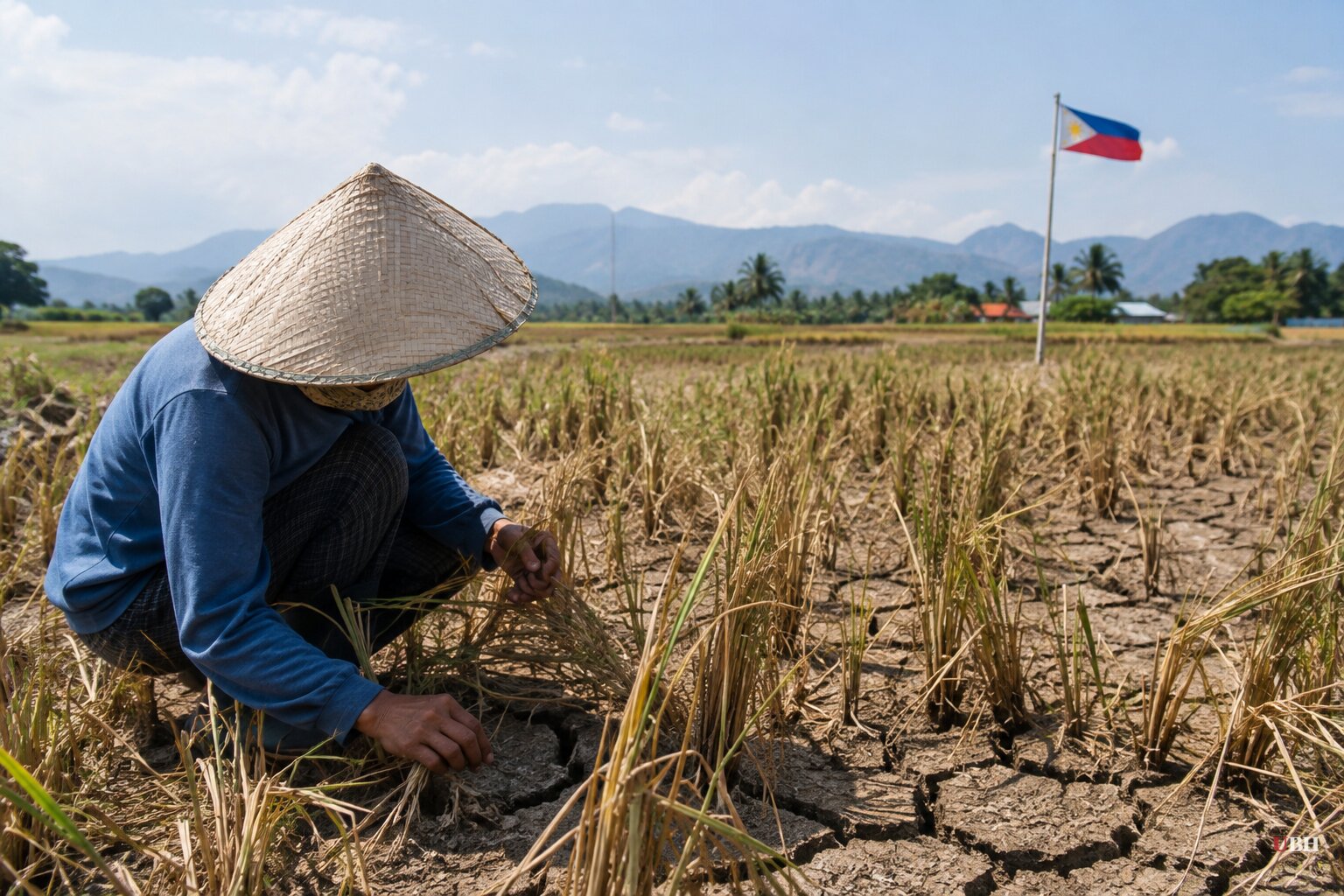
The Philippine Atmospheric, Geophysical and Astronomical Services Administration declared the 2026 Southwest Monsoon officially over on October 5, closing a 128-day rainy season that began May 30. PAGASA, led by Administrator Nathaniel T. Servando, says the monsoon's exit lines up almost exactly with the intensification of an El Niño the agency is tracking toward "Very Strong" status, putting up to 700,000 metric tons of rice production at risk for the Philippines' 115 million people through at least mid-2027.
Three atmospheric shifts drove the monsoon's end, according to PAGASA: a strengthening high-pressure dome over East Asia, a southward-migrating Intertropical Convergence Zone following the autumn equinox, and weakening southwesterly winds that normally carry rain into the archipelago. PAGASA's September 23 advisory put the probability of El Niño persisting through mid-2027 at 97%.
The Numbers Behind "Super El Niño"
According to Science News Explores, daily sea-surface temperatures in the region where El Niños form were already 3.08°C above the 1991-2020 average as of September 21, making this the most intense El Niño ever recorded by that daily measure. Nathaniel Johnson of NOAA's Geophysical Fluid Dynamics Laboratory told the outlet the event hasn't peaked yet and likely won't until sometime in the next few months.
NOAA has not formally declared this El Niño a record-breaker. The agency's newer Relative Oceanic Niño Index, designed to better capture global weather impact, still ranks the 1997-98 El Niño as stronger. But Science News Explores reports that record is also on track to fall, based on a September 10 forecast from NOAA's Climate Prediction Center. Reasonable people can read that lag either way: skeptics might call it bureaucratic foot-dragging, but it's just as plausibly a methodology under live revision producing a conservative call until the data clears. Nothing in the available reporting suggests NOAA is withholding the designation for political reasons.
A University of Chicago Climate Impact Lab report cited by Science News Explores projects the ocean heat driving this event could push global land temperatures up roughly 1.2°C in the coming months, contributing to more than 450,000 additional heat-related deaths by next February.
Argentina Girds for Storms, Not Drought
While the Philippines faces a rice-threatening dry stretch, Argentina is bracing for the opposite problem. The Servicio Meteorológico Nacional has issued short-term alerts for Buenos Aires and the surrounding metro area, warning of heavy rainfall, strong wind gusts, and hail, according to Archyde. The Observatorio Hidrometeorológico de Córdoba has already put that province on alert for severe summer storms.
The World Meteorological Organization has confirmed the consolidation of the event following rising sea-surface temperatures that began in mid-August. Seasonal forecasts now put the odds near 100% that El Niño persists from September 2026 through February 2027, Archyde reported. Argentine civil protection agencies and municipal governments in the littoral and central provinces are revising flood contingency plans, and farmers in Córdoba's agricultural core are monitoring soil moisture and drainage ahead of an expected December peak.
What It Means for Skiers
In the U.S., KSL News reports NOAA puts the odds at 69% that this El Niño surpasses the historical strength threshold tracked since 1950, a pattern that typically favors southern ski resorts in California, Colorado, and Utah. But the outlet is careful not to oversell the forecast. OnTheSnow meteorologists note there have been only three other very strong El Niño events since 1950, which makes long-range snow prediction shaky at best.
KSL points to recent history as the cautionary tale: California was forecast for a warmer, drier 2023 ski season under La Niña, and several resorts broke all-time snowfall records instead. The strong El Niño that followed the record "triple-dip" La Niña winter of 2022-23, when Alta topped 900 inches of snow, didn't come close to matching that season's impact. Pattern recognition only gets forecasters so far.
What's left unresolved is the timing of peak intensity. Johnson told Science News Explores he expects the event to peak "within the next few months," which would put the sharpest global impacts on rice, floods, snowpack, and heat mortality somewhere between now and the traditional November-December ENSO peak. Whether NOAA's Relative Oceanic Niño Index ultimately surpasses the 1997-98 benchmark remains an open technical question the agency has not yet settled.
Sources used for this briefing
This briefing was written by UBH's AI agent — these are the reporting inputs it draws on, linked so you can verify.


