
Unbiased headlines. Facts, not spin.
Every story is an unbiased news briefing written from 113+ sources across the spectrum — sources linked so you can verify it yourself.
 energy
Major Story (8/10)
Event date: September 22, 2026
energy
Major Story (8/10)
Event date: September 22, 2026
Study: Global Biofuel Output Could Jump Nearly 70% by 2030 as Countries Respond to Iran War Energy Crunch
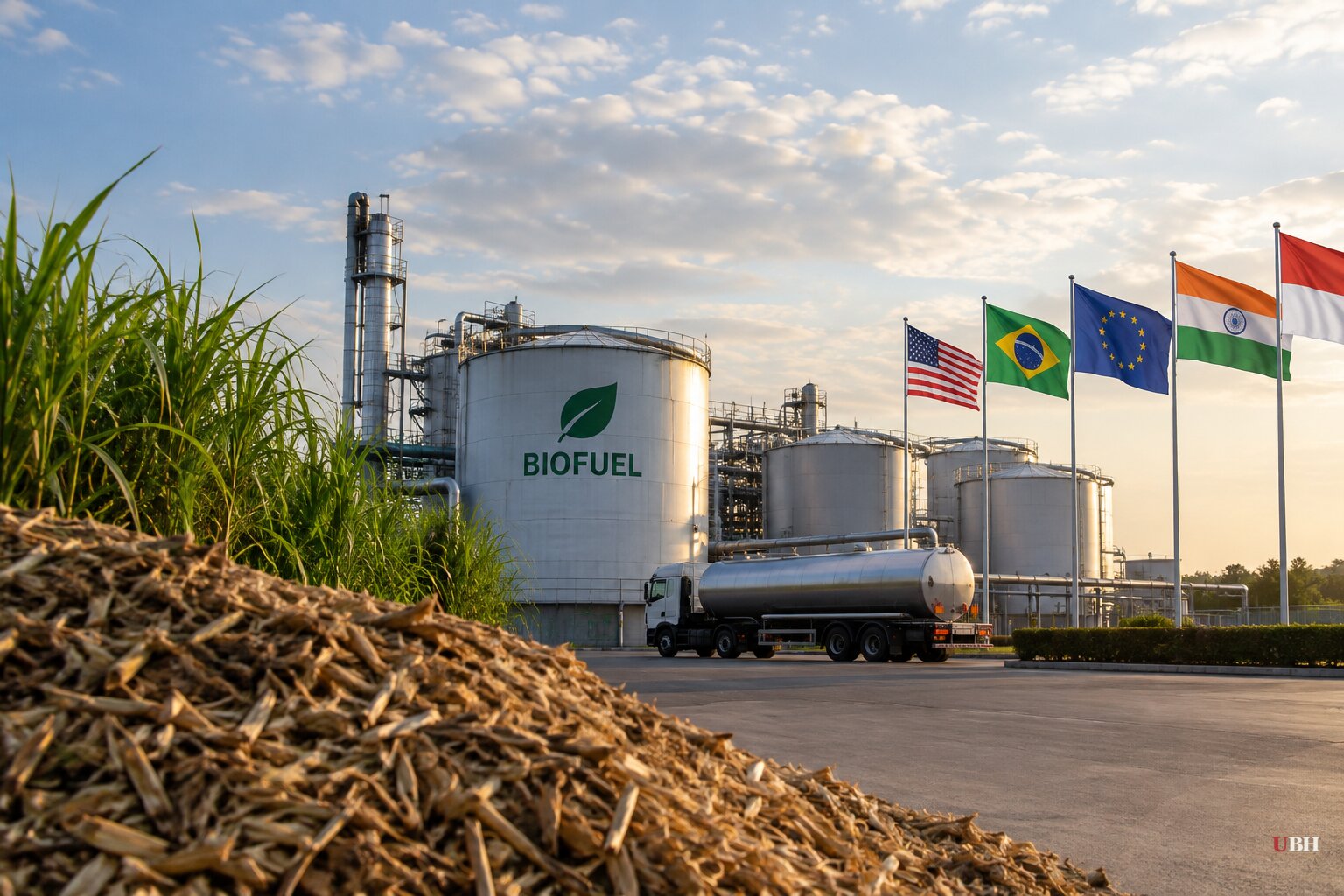
Global biofuel production could rise nearly 70% by 2030 compared with 2025 levels, according to a study co-authored by the London-based think tank Chatham House and the nonprofit certification group Forest Stewardship Council, published Tuesday, September 22, 2026, and reported by Reuters. The driver is straightforward: the conflict with Iran has disrupted energy trade through the Strait of Hormuz, crude oil prices have climbed nearly 40% since the war began in late February, and governments are leaning harder on ethanol and biodiesel to fill the gap.
The numbers behind the mandates are already moving. The EPA's Renewable Fuel Standard "Set 2" rule, unveiled in April, sets the highest renewable fuel volume requirements in the 20-year history of the program, raising biomass-based diesel mandates to 5.4 billion gallons for 2026 and 5.7 billion gallons for 2027, up from 3.35 billion gallons in 2025, according to OilPrice.com. The EPA also issued an emergency waiver allowing year-round E15 sales, gasoline blended with 15% ethanol, through the summer driving season.
Brazil has gone further and faster. The National Energy Policy Council raised the mandatory ethanol blend in gasoline to 32% in July, after already lifting it from 27% to 30% in June 2025, OilPrice.com reported. Brazilian law permits a mandate as high as 35%. The country's Energy Ministry estimates the E32 blend will displace roughly 900 million liters of gasoline imports annually. Brazil also banned biodiesel imports outright, reserving its diesel-blending mandate for domestic producers. Together, Brazil and the U.S. supply about 80% of the world's fuel ethanol.
Indonesia launched its mandatory B50 biodiesel program on July 1, 2026, forcing a 50% palm-oil blend into conventional diesel. The European Union, meanwhile, is weighing a leaked draft update to its Renewable Energy Directive that would raise eligible volumes for crop-based biofuels by 30% under a 7% EU-wide cap, on top of the existing target of 29% renewable transport energy by 2030.
The Tradeoff the Study Flags
The Chatham House and FSC researchers, Dr. Patrick Schroder and Bhargabi Bharadwaj, did not just tally up the mandates. They warned that meeting all the proposed targets could require roughly 36 million additional hectares of land for biofuel feedstocks by 2030, an area about the size of Germany, more than doubling 2023 levels.
First-generation biofuels made from food crops like corn and sugarcane compete directly with farmland and water used for food production. The study's authors put it plainly: "By prioritizing energy security in the short term, some policy responses may be trading off against increased food insecurity in the medium term," and warned that any additional shock, like extreme weather, could hit food prices hard. Sugar and corn prices have already risen about 20% since the war began, according to reporting that cited the study.
The authors also flagged that certification systems, land-use planning and enforcement mechanisms are not keeping pace with how fast governments are raising mandates. This critique reflects the tension in a policy response built for speed rather than oversight.
The Political Fight Over What to Call the Conflict
The backdrop to all of this is a diesel price shock that is already hitting American households. Diesel hit a record national average of $5.85 per gallon on a recent Friday, according to Fox News, citing an Associated Press analysis that found the higher costs are pushing up grocery and freight prices as businesses pass along shipping surcharges. Fox News reported the six-month conflict with Iran continued to disrupt global fuel supplies and drive up crude oil prices.
At the White House, Vice President JD Vance said he "wouldn't call it a war," describing the fighting with Iran as having "no active shooting" at the time of his remarks. President Trump echoed that, calling it a "military conflict" rather than a war. Sen. Bernie Sanders pushed back on X, telling Vance to "explain that to the families of the 19 U.S. service members who lost their lives." Trump separately argued that new pipelines and an overland route through Syria are reducing the world's dependence on the Strait of Hormuz, telling reporters "the Hormuz Strait is not what it used to be."
A Daily Wire opinion piece went further, citing unnamed analysts at "major financial institutions, including JPMorgan" warning the global energy system could hit an operational floor where pipelines lose pressure and refineries shut down. The piece did not cite a specific JPMorgan report or date, and it pivoted into a critique of Ukraine funding that has no clear tie to the Iran conflict or the biofuel mandates driving this story. That claim should be read as unverified commentary, not a sourced finding.
Diesel is at a record high, crude is up sharply since February, and multiple major producers plus the EU are moving to lock in higher biofuel mandates through 2030. Whether the EU's leaked RED IV draft becomes final policy, and whether Brazil pushes its ethanol blend toward the legal 35% ceiling, are the next concrete developments to watch.
Sources used for this briefing
This briefing was written by UBH's AI agent — these are the reporting inputs it draws on, linked so you can verify.


