
Unbiased headlines. Facts, not spin.
Unbiased Headlines is an independently owned news organization. We bring you the facts, not opinions, written fresh from 110+ named sources. Sources linked so you can verify it yourself.
 energy
Major Story (7/10)
Event date: November 15, 2026 ·
Qatar Signs Two 20-Year U.S. LNG Deals in a Week While Its Own Plant Sits Damaged
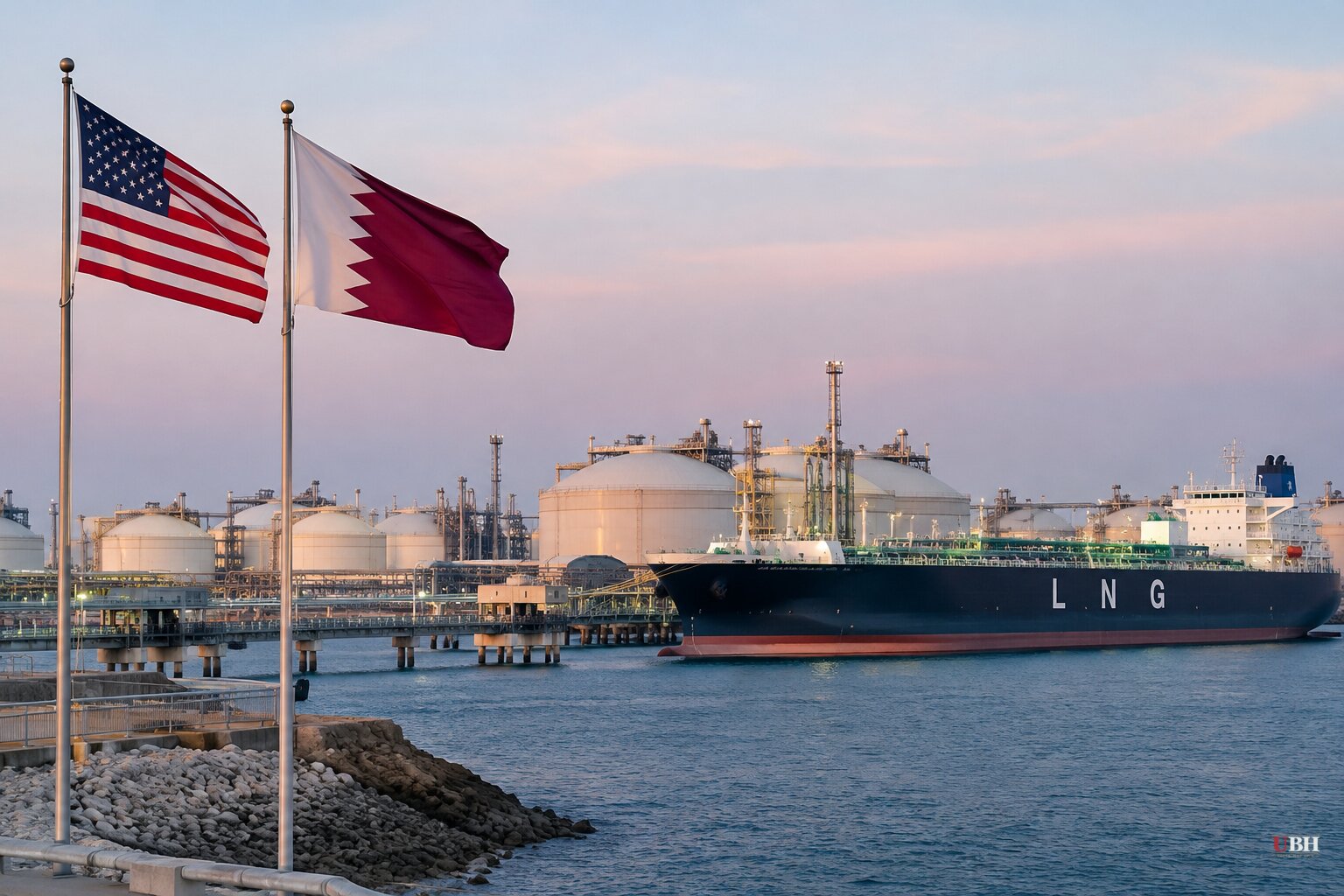
The world's biggest LNG exporter is now buying LNG from its biggest competitor.
QatarEnergy signed two long-term agreements in the last week of October. Together they add 7 million metric tons per year (mtpa) to the U.S. gas it controls.
The deals
The first was with Houston-based Cheniere Energy: up to 4 mtpa from the Sabine Pass plant in Louisiana and the Corpus Christi plant in Texas. Deliveries start around 2031 and run through 2054. Of that total, 1 mtpa depends on a final investment decision on the first phase of the Sabine Pass expansion.
A week later, on Thursday, Oct. 29, QatarEnergy signed a 20-year agreement with Australia's Woodside Energy for up to 3 mtpa from the Louisiana LNG project near Lake Charles. That plant is under construction, with first production targeted for 2029 and deliveries to Qatar expected from 2030.
Both contracts are free-on-board. QatarEnergy arranges the shipping once cargoes are loaded.
The volumes are not headed to Doha. QatarEnergy plans to resell them to international customers, and Qatar remains among the cheapest places on earth to produce gas.
Why Qatar is buying American
The reason is the war. Since the U.S.-Iran war began Feb. 28, Iranian attacks on shipping and an Iranian missile strike at Ras Laffan have crippled Qatar's exports. QatarEnergy halted LNG production in early March and declared force majeure on affected contracts. Some of those notices now run to the end of 2026.
Two of Ras Laffan's 14 LNG trains were damaged, removing about 17% of Qatar's export capacity. The two units have a combined capacity of 12.8 mtpa. QatarEnergy has put the repair timeline at roughly three to five years and the lost revenue at about $20 billion a year.
Qatar's exports have fallen below a third of their usual level this year. Hormuz is the only way out for Qatari LNG, and no pipeline can bypass it. Saudi Arabia and the UAE are building or expanding pipelines around the strait for oil. Qatar has no equivalent option for LNG.
Qatar's stake in Golden Pass, the Texas export plant it owns 70% of alongside ExxonMobil, has already begun shipping cargoes. Add the new contracts and Wood Mackenzie research puts QatarEnergy's U.S. volumes at 23.7 mtpa by 2033. That would put it ahead of every other buyer of U.S. LNG.
What Doha says it is doing
Energy Minister and QatarEnergy CEO Saad al-Kaabi framed the purchases as growth and diversification. "These additional volumes make QatarEnergy the largest buyer of LNG from the U.S.," he said in a statement.
He told Reuters the purchases hedge against future closures of the strait. They also let the company buy gas priced off the U.S. Henry Hub benchmark and sell it into markets paying more, subject to shipping costs and contract limits. Al-Kaabi said QatarEnergy has about 200 LNG carriers and wants its trading arm to become the world's largest gas trading platform.
Reuters columnist Ron Bousso reads it differently. Qatar "now appears to be buying insurance against disruptions to its own exports," he wrote, adding that turning to your biggest rival "is rarely a sign of confidence." Bousso also noted that Qatar was already buying stakes in LNG projects from North America to Africa before the war.
Jason Feer, global head of business intelligence at Poten & Partners, says the move addresses a perception that Qatar leans too heavily on domestic output. He says it could rebuild the reliability record Qatar held before the war, when it had never missed a shipment. Feer expects two or three more U.S. deals and possibly others elsewhere.
What it means for Washington
Bob McNally, president of Rapidan Energy Group and a former energy adviser to President George W. Bush, put the reversal in perspective. Twenty-five years ago, he said, he and his White House colleagues worried the U.S. would become as dependent on Qatar for LNG as it was on OPEC for oil. "Then came the shale revolution and Iran War, and now Qatar is buying from us."
Natalie Ecanow, a research analyst at the Foundation for the Defense of Democracies, argues Washington should use the moment to affirm U.S. market leadership and drive a wedge between Doha and Tehran. Ecanow says QatarEnergy is reportedly in talks with Venture Global for a third deal, and that NextDecade of Houston could be next. None of those talks has been confirmed by the companies in the sources.
The U.S. overtook Qatar as the world's largest LNG supplier in 2023. It held about 25.3% of global supply before the war, against Qatar's 18.7%, according to Steptoe's risk analysis.
The customers still waiting
The contracts do nothing for buyers short on gas today. Deliveries begin in 2030 and 2031. Asian customers have been buying replacement cargoes on the spot market at higher prices.
Transits through Hormuz have recovered only partly. The highest level since the war began has been about 30% of Qatar's prewar volume, according to Steptoe. The International Energy Agency projects global LNG supply will fall 3% in 2026, the largest drop on record. Steptoe warns that prolonged disruption could push some buyers toward other suppliers, coal or renewables.
Al-Kaabi told Reuters he expects to sign more supply agreements with U.S. and other producers this year. That leaves about five weeks to see whether Venture Global or NextDecade shows up on the list.
Sources used for this briefing
7 links from 7 independent newsrooms (syndicated copies of the same report count once)
These are the sources it draws on, linked so you can verify.


