
Unbiased headlines. Facts, not spin.
Unbiased Headlines is an independently owned news organization. We bring you the facts, not opinions, written fresh from 110+ named sources. Sources linked so you can verify it yourself.
 energy
Notable (6/10)
Event date: November 20, 2026 ·
Tracker Says Iranian Tanker 'Khat Shekan' Seen Crossing Hormuz Is a Spoof, as U.S. Blockade Reaches Day 130
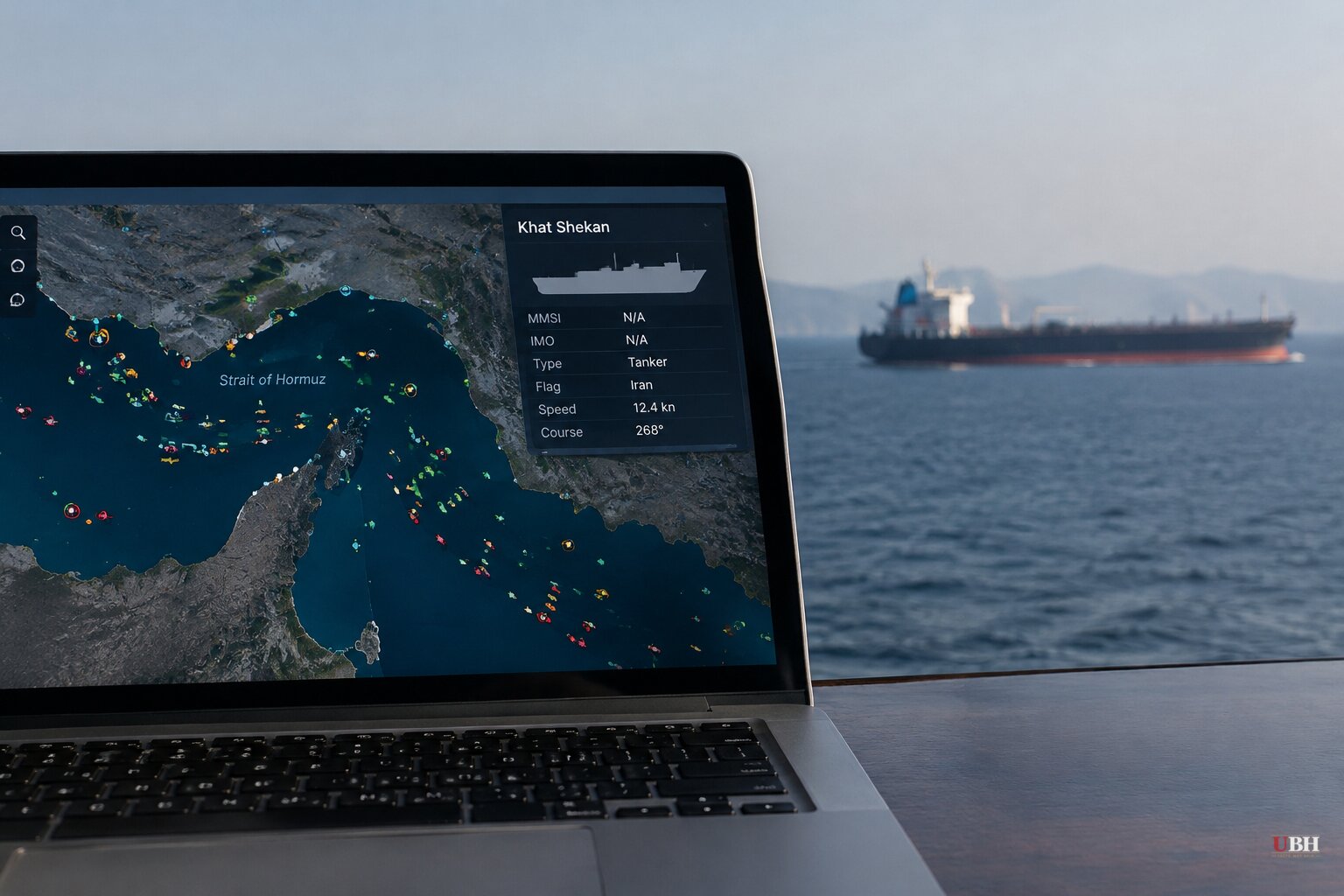
Since the Iran war broke out in late February, and through 130 consecutive days of the U.S. naval blockade of Iranian ports, the latest question is whether Tehran is ready to try to push oil past it. A phantom tanker briefly suggested it was.
MarineTraffic data appeared to show an Iranian tanker called "Khat-Shekan" moving through the Strait of Hormuz. The tracking firm TankerTrackers called it a "spoof" and said the vessel does not exist.
"All of the data supplementing that AIS transmission is wrong and there's nothing on satellite imagery to corroborate those movements," TankerTrackers said in a social media post.
The firm added that the "Iranians know better than to attempt to ship out a VLCC right now given how many were fired upon in recent months."
Why the false signal got traction
The fake transmission landed amid growing speculation that Iran is preparing a convoy. Satellite images and ship-tracking data published in recent days show more than 14 oil tankers gathered around Kharg Island, Iran's key export terminal.
TankerTrackers itself had posted a message reading "BREAKING: Iran appears to be preparing to ship out oil again." It then walked that back as the convoy talk grew, writing: "Wishful thinking. Thats definitely not whats going on."
Separately, United Against a Nuclear Iran said it spotted a ship-to-ship transfer of about 200,000 barrels of Iranian crude, according to Bloomberg. The sanctioned Suezmax tanker Olym was reported alongside the Turkish-owned Hao Fan, which was said to be spoofing its location to appear near Oman.
U.S. Central Command responded that any tanker taking cargo in a ship-to-ship transfer from a vessel under the blockade would also be treated as evading it.
Iran's position
Foreign Minister Abbas Araghchi said Friday: "We are making every effort to export oil and to conduct negotiations, and the blockade must be broken."
Parliamentary speaker Mohammad Bagher Ghalibaf told Al Jazeera on Wednesday that the strait will "never return" to its prewar status. "There are no 'free waters' there, and the 1982 UNCLOS does not apply to the strait," he said. He argued that the waterway is governed by the laws of the two littoral states that border it.
President Donald Trump has called the blockade an "impenetrable steel wall." The U.S. military says it is stopping the Islamic Revolutionary Guard Corps from exporting "billions of dollars in crude oil."
The oil has stopped moving
Kpler data cited by Reuters shows October was the second straight month in which Iran made no crude loadings. Iran was loading about 2 million barrels a day of crude and condensate when the war began. Kpler's data indicates this is the first time since 1979 that Iran has loaded no oil.
Windward's analysis from early November found no AIS-transmitting Iran-linked tanker in the Gulf had shown a draft change indicating a loading since Sept. 17. Fifteen such tankers sit in ballast with nearly 24 million barrels of empty capacity between them. Windward said there is no evidence of where Iran's crude is going instead. It listed three possibilities: onshore storage at Kharg, loading while dark, or capped wells.
In its latest analysis, Windward said Iran does not need the tankers anchored off Kharg to challenge the blockade. It counts 31 laden sanctioned tankers already past the strait, holding in the Arabian Sea within a day's distance of the blockade line.
The strait remains contested
The IRGC keeps claiming attacks on shipping, and CENTCOM has confirmed some. The IRGC said on Friday that an unidentified LNG tanker hit a naval mine on an "unauthorized and dangerous route." It said the ship was escorted by American combat aircraft. It also said four oil tankers were damaged by mines on Thursday. No independent confirmation of those specific claims has been reported.
The IRGC also said it destroyed a U.S. early-warning radar in Bahrain, in retaliation for what it called a U.S. airstrike on a telecommunications tower in the port town of Sirik. CENTCOM denied the radar claim. It said two one-way attack drones launched toward Bahrain were shot down, with no injuries or damage. CENTCOM did not directly address the Sirik claim.
UK Maritime Trade Operations counted six confirmed strikes on vessels in the past seven days. It said roughly 45 percent of the ships involved in incidents are on the PGSA Non-Compliance List. It also said AIS-confirmed Hormuz transits have fallen over the past two weeks, while U.S.-facilitated transits were roughly level.
Iran's claimed pace of attacks is much higher than what UKMTO has confirmed, and UKMTO says some reports are delayed or not filed.
What to watch
The open question is whether any of the 14-plus tankers at Kharg actually moves, and whether CENTCOM treats a ship-to-ship handoff outside the strait as a blockade violation. The warning is already on the record. So is the fact that no verified Iranian blockade run has been reported.
Sources used for this briefing
7 links from 7 independent newsrooms (syndicated copies of the same report count once)
These are the sources it draws on, linked so you can verify.


