
Unbiased headlines. Facts, not spin.
Unbiased Headlines is an independently owned news organization. We bring you the facts, not opinions, written fresh from 110+ named sources. Sources linked so you can verify it yourself.
 energy
Notable (5/10)
Event date: November 11, 2026 ·
Gas Reservation Bill Still Short of Senate Votes as Coalition Raises More Concerns and Labor Says Talks Continue
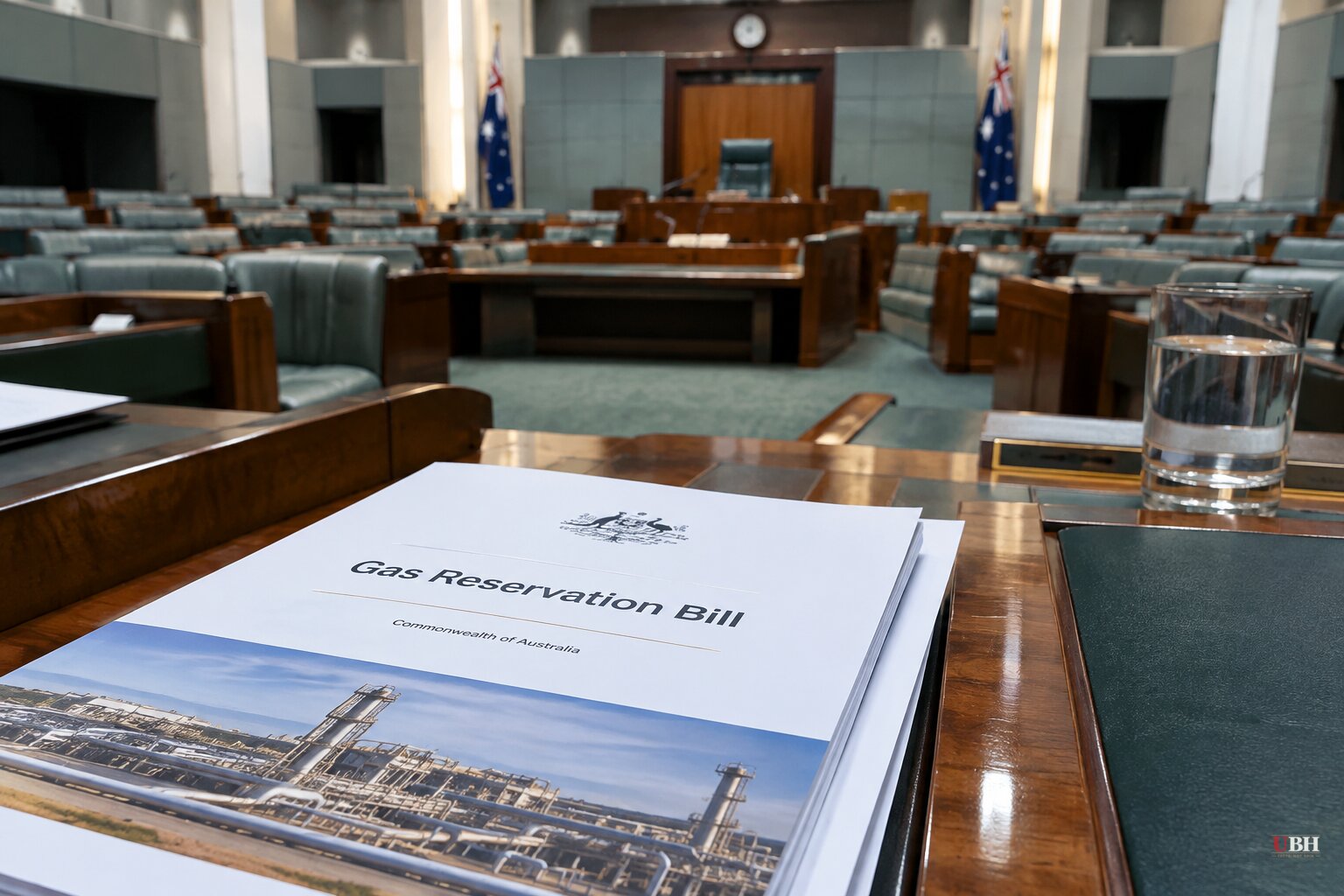
Since Western Australia Premier Roger Cook said on Nov. 18 that Canberra had agreed to set his state's federal gas obligation to zero, the Domestic Gas Reservation Bill has still not locked in the Senate votes it needs. The Coalition has raised more concerns ahead of the vote this week, and the government said on Saturday that negotiations are continuing.
The bill would force LNG exporters to reserve as much as 20% of their supply for the domestic market from 2028. Labor needs the support of either the Coalition or the Greens to pass it in the Senate.
Where the votes stand
The Coalition's position has not changed in substance. Its senators, Kerrynne Liddle and Susan McDonald, wrote in the Senate inquiry report that the opposition "stands ready to support a well-designed gas reservation proposal in the national interest. This, however, is not a blank cheque to pass Labor's current proposal."
They argued that without substantial changes the scheme "risks redistributing existing gas while weakening the investment needed to produce more gas." Their summary said it "risks operating to solely redistribute gas rather than growing supply," which "puts both energy security and affordability at risk."
A West Australian exemption was one of the changes Coalition committee members asked for. Cook's announcement addresses that one. The opposition has since kept raising other concerns.
The Greens are a different problem for Labor. In a dissenting report, deputy leader Steph Hodgins-May called for a tax on gas exports. "Since the cartel of multinational joint ventures began exporting gas from the east coast, gas prices in the national energy market have tripled," she wrote. She added that offshore gas "requires no payment of royalties when extracted."
The bill passed the lower house in October. A Senate inquiry report recommended the upper house pass it, though the Coalition and Greens both attached their own conditions.
What the WA carve-out does
Western Australia is home to the Woodside Energy-run North West Shelf LNG plant and the Chevron-operated Gorgon and Wheatstone LNG facilities. It already runs its own 15% reservation scheme, and it is not linked to the tight east coast gas market by pipelines or shipping.
Since Iranian strikes knocked out Qatari LNG facilities, Australia has reverted to being the world's second-largest supplier. Western Australia accounts for close to two-thirds of its exports.
The amendment separates the west and east coasts and sets the federal obligation for the west to zero, meaning the current 15% state scheme can continue.
The two systems work differently. States require that LNG exporters "must offer" gas, while the federal rules mandate they "must supply." Critics argue that means buyers can force gas prices down to levels they deem uneconomic.
WA's 15% can also be met cumulatively over the life of an LNG project. Canberra's design is annual and intended to create what it calls a "modest oversupply."
Cook said the change will "give us certainty so we can continue to attract investment, bring on new gas supply, and create jobs." He called on all WA senators, "whether they are Labor, Liberal, One Nation or Green," to back the amendment.
Canberra's reversal
The carve-out reverses the position Resources Minister Madeleine King took just days earlier. On Nov. 16 she ignored calls to exempt WA, arguing that the state "is part of our federation, is part of our Commonwealth" and that its inclusion was needed to make the scheme "robust."
That put her at odds with Cook, who said he did not want a federal bill aimed at an east coast shortfall interfering with a WA scheme operating since 2006. King represents the WA electorate of Brand. In May, Cook said she had "assured" him the policy would not harm the state's large LNG industry.
King said on Nov. 16 that senators were "going to face a choice" and that she wanted the bill passed so Australia could "just get on with the job." She also said then that negotiations were still ongoing and that the government "will be working through some amendments." Her office did not immediately respond to a request for comment on the exemption.
Industry reaction
The Western Australia Chamber of Minerals and Energy and Australian Energy Producers welcomed the exemption. The DomGas Alliance, which represents major gas users such as Alcoa and Wesfarmers, attacked it. Spokesperson Mia Davies called the state reservation scheme a "failure" and said gas producers had cumulatively supplied only 8% in 2023-24, the most recent year for which it had data. "An indefinite exclusion cannot be a free pass for exporters at the expense of WA businesses that rely on gas to support more than 460,000 jobs and A$432 billion (US$290 billion or RM1.2 trillion) in economic activity," she said.
The bill has already been softened once under industry pressure. The 20% was originally a minimum and is now a cap. Producers can undershoot the target with the government's approval, and existing contracts with overseas buyers are not affected.
The government says the scheme will put modest oversupply into the east coast grid and push prices down for consumers.
What comes next
Parliament has just two sitting weeks left before the end of the year. The government has said only that talks are continuing.
Sources used for this briefing
7 links from 7 independent newsrooms (syndicated copies of the same report count once)
These are the sources it draws on, linked so you can verify.


