
Unbiased headlines. Facts, not spin.
Unbiased Headlines is an independently owned news organization. We bring you the facts, not opinions, written fresh from 110+ named sources. Sources linked so you can verify it yourself.
 energy
Notable (6/10)
Event date: November 6, 2026 ·
China Indicts Ex-Politburo Member Ma Xingrui as Corruption Purge Spreads Across Defense, Energy and Finance
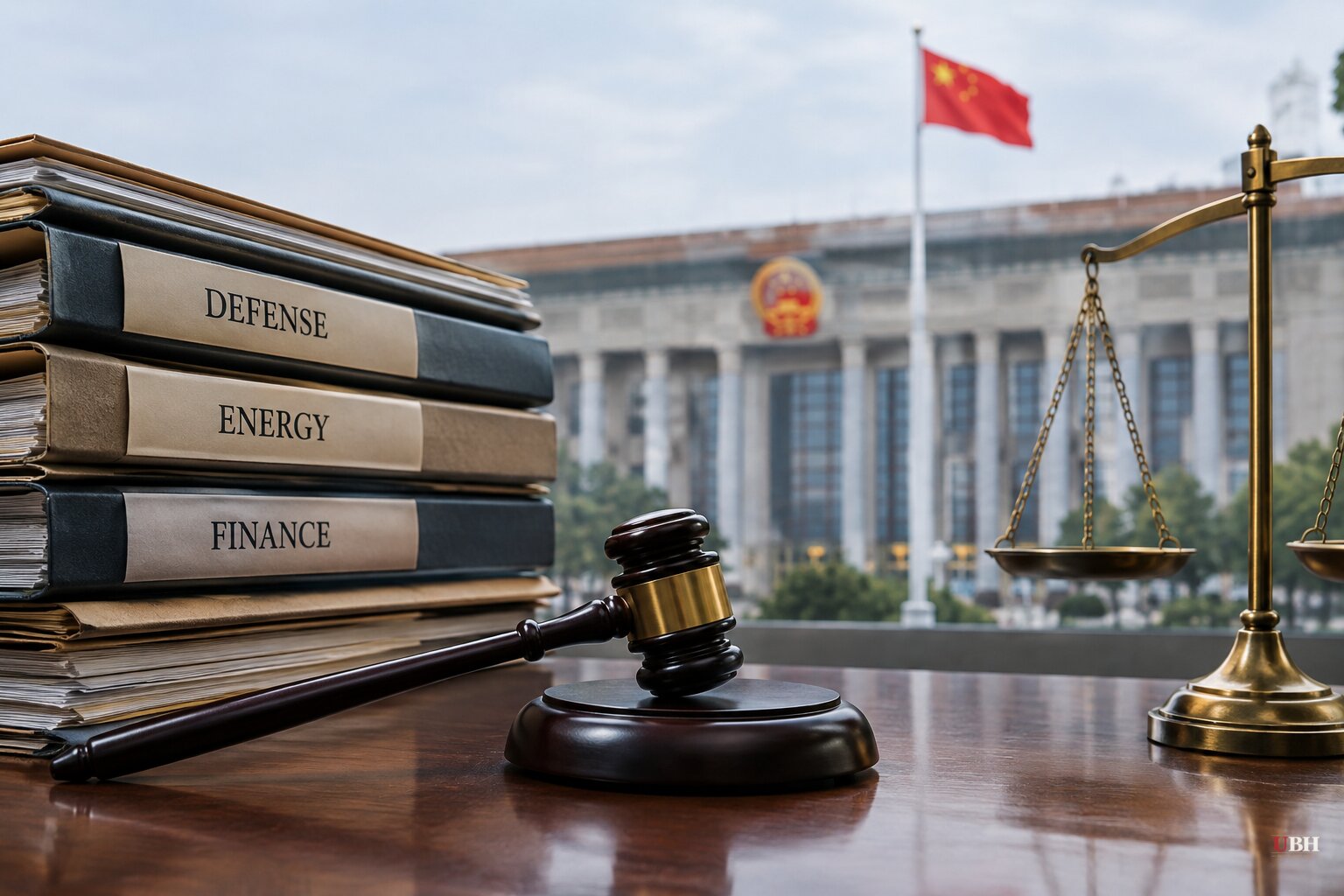
China's anti-corruption machine has spent the first three weeks of November churning out indictments, expulsions and sentences, and the biggest name so far is Ma Xingrui.
Ma, a former Communist Party Politburo member, was placed under investigation in April 2026 and has since been indicted. His career ran through the state aerospace sector. He held senior posts at China Aerospace Science and Technology Corporation (CASC) before moving into government in 2013. He later served as vice minister of industry and information technology, head of the China National Space Administration, governor of Guangdong, and Party secretary of Xinjiang.
A defense-industry web
Mark Cao, a U.S.-based military tech analyst who runs the Chinese-language YouTube channel Mark Space, told The Epoch Times he believes officials under investigation implicated one another. "I believe that during the investigations, they implicated one another, and Ma Xingrui was also named," Cao said.
Su Tzu-yun, a research fellow at Taiwan's Institute for National Defense and Security Research, pointed to the timing of the alleged conduct. Because it dates to Ma's aerospace years, Su said, his case is tied to the wider purge of defense-industry officials.
The Epoch Times tallied several former Ma colleagues who have since been investigated or removed, calling its count incomplete. The list includes ex-industry minister Jin Zhuanglong, former Hunan Party chief Xu Dazhe, ex-CASC chairman Wu Yansheng and Lei Fanpei, a former deputy director of the Central Commission for Military-Civil Fusion Development Office.
After the Party's Fifth Plenum in late October, the Party announced the expulsion of 33 senior officials, according to the Epoch Times. That included several military-industrial executives who had vanished from public view after losing their posts.
Why analysts say Xi has a problem
Su argued that Ma's fall hurts Xi personally because Ma was promoted under his leadership. "The official announcement amounts to acknowledging that he was a typical case of promoting someone despite knowing they had problems," Su said. "This is actually Xi Jinping's biggest headache right now."
Su also suggested the campaign could reflect internal power struggles, with opponents potentially using corruption probes to challenge Xi's authority. That is his reading. No Chinese official has said anything of the kind.
Beijing's own framing is the opposite. The Communist Party presents the crackdown, launched after Xi took power in 2012, as a tool to enforce internal discipline and remove systemic threats to Party rule. Outside observers note it also consolidates control over strategic economic sectors.
The energy and state-firm cases
The Central Commission for Discipline Inspection (CCDI) announced a probe into Fu Chengyu, 75, the former chairman of both Sinopec and CNOOC. The statement alleged "severe violations of discipline and the law" and gave no specifics. That phrase is the standard language for formal investigations that often end in bribery or other economic-crime charges.
Fu joined CNOOC at its 1982 founding, became chairman in 2003, moved to Sinopec in 2011 and retired in 2015. The announcement came days after the 20th Central Committee wrapped its fifth plenary session, which focused heavily on discipline and anti-corruption oversight. Caproasia's running log of announcements also says more than 25 Sinopec executives are under investigation. That figure is not confirmed elsewhere.
A lower-profile case shows how the process moves. On Thursday, Nov. 12, the Supreme People's Procuratorate said Han Song, a former deputy general manager of state-owned China Resources Group, has been indicted on bribery charges. Prosecutors allege he abused his positions and influence to secure benefits for others in exchange for an "exceptionally large amount" of money and valuables.
Han, who spent much of his career at power giant China Huadian, turned himself in to authorities on Feb. 28, 2026. He was expelled from the Party and dismissed from public office in July. Anti-corruption authorities also accused him of "superstitious activities" and of repeatedly accepting banquets and travel arrangements. The case was filed with the Chenzhou Intermediate People's Court in Hunan after an investigation by the National Commission of Supervision.
That is the pattern: self-surrender or detention, Party expulsion, then an indictment in a court the Party-run system has already chosen. The announcements describe allegations, and Han and the other figures who have been indicted or placed under investigation have not had public trials.
A steady drumbeat in November
Caproasia's log of Chinese announcements lists a rapid run of cases through the month:
- Oct. 29: Wang Huimin, a former anti-corruption chief at the China Securities Regulatory Commission, was sentenced to death with a two-year reprieve for taking $65 million in bribes.
- Nov. 1: Li Yunze, head of the National Administration of Financial Regulation, was removed from all Party roles amid an investigation, and former international department chief Liu Jianchao was expelled from the Party.
- Nov. 6: Former China Eastern Air Holding chairman Liu Shaoyong was sentenced to 14 years for taking $10 million in bribes.
- Nov. 11: Ex-China Communications Construction Group chairman Liu Qitao was expelled from the Party.
- Nov. 15: Deputy general manager Liu Chengyun of the same group was placed under investigation.
The cases span the defense sector, energy, banking, regulators, aviation and construction. Those are the industries that build the aircraft, ships, rockets and infrastructure behind Beijing's military and economic ambitions.
What comes next
Ma's case goes to court next, but no trial date has been announced. Fu has not been charged. The CCDI has given no details of what he is alleged to have done. Han's case now sits with the Chenzhou Intermediate People's Court.
It is not yet clear how far this reaches. If Su is right that the defense-sector purge points back to officials Xi himself elevated, the next round of announcements will show whether the Party's investigators stop at the executive level or keep moving up.
Sources used for this briefing
4 links from 4 independent newsrooms (syndicated copies of the same report count once)
These are the sources it draws on, linked so you can verify.


