
Unbiased headlines. Facts, not spin.
Unbiased Headlines is an independently owned news organization. We bring you the facts, not opinions, written fresh from 110+ named sources. Sources linked so you can verify it yourself.
 energy
Major Story (7/10)
Appeals Court Pauses EPA Permit for Iowa Lead Azide Blast; Justice Department Says Army May Not Need It
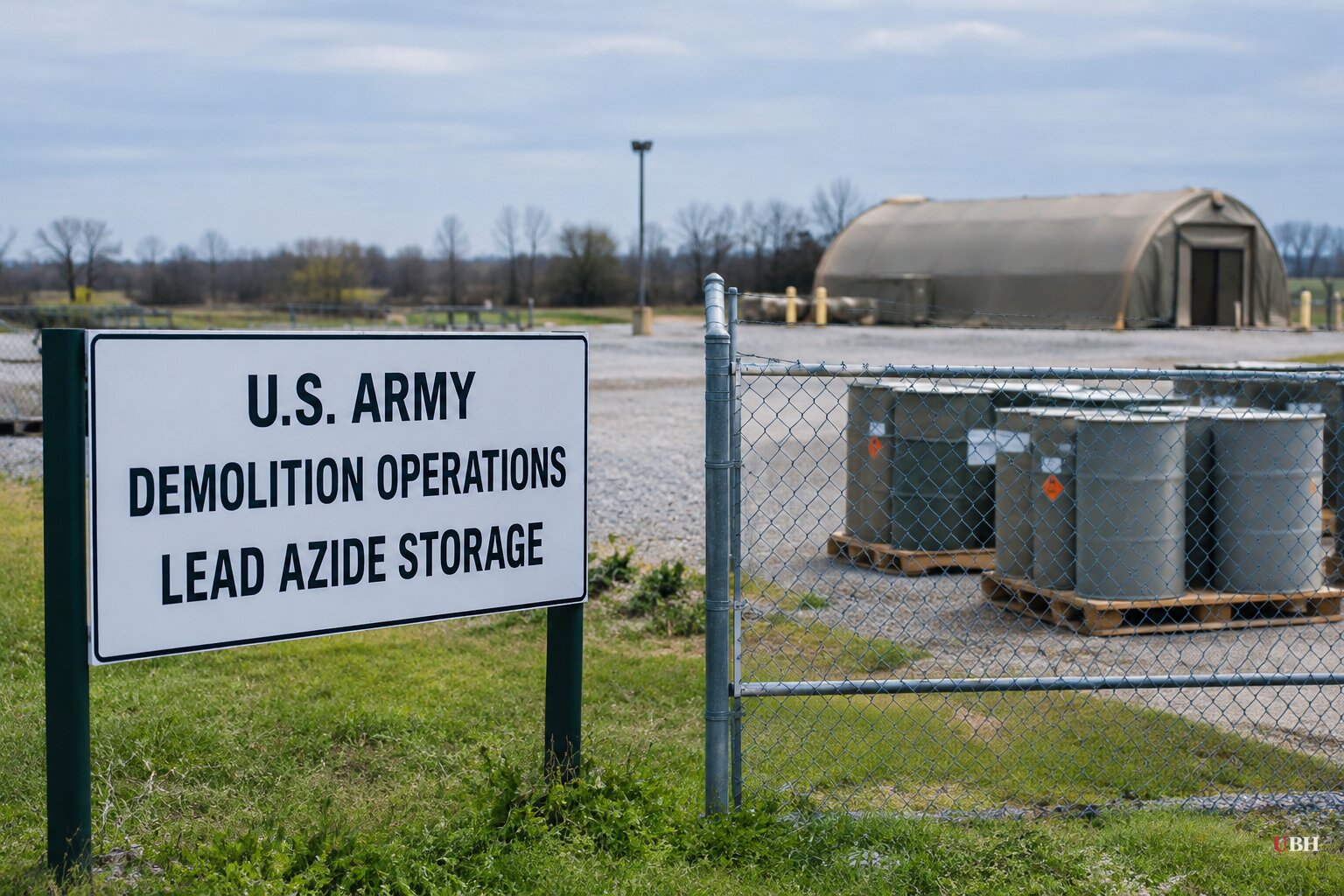
Since the Army found degraded lead azide during stockpile surveillance in March, its plan to destroy 68 drums of the explosive at the Iowa Army Ammunition Plant has moved through public meetings, an EPA permit, and now a federal court fight. As of today, Saturday, Nov. 21, the detonation is set for Monday, Nov. 23, and its legal footing is unsettled.
The court order
Late Thursday, Nov. 19, the U.S. Court of Appeals for the Eighth Circuit issued an administrative stay of the emergency permit the EPA granted the Army on Nov. 13. The stay lasts until the court rules on an emergency motion from the Iowa Environmental Council and the Sierra Club Iowa Chapter, which are represented by Earthjustice.
The groups filed their petition Thursday. They say the permit lacks adequate protections for health and the environment, that the EPA did not properly weigh less dangerous alternatives, and that it was issued without the public notice and comment they say the rules require.
"The Army can't detonate under the permit while the permit is stayed," said Thien Chau, an Earthjustice attorney. The court had not published a schedule for its ruling as of Friday. Chau said the groups expect a decision before Monday.
Justice Department points to an emergency exception
On Friday, Justice Department lawyers filed a notice on behalf of the EPA saying they will oppose the groups' motion to keep the permit on hold. The notice added that EPA regulations authorize the Army, which is not a party to the case, "to implement waste treatment activity without an EPA permit" in qualifying emergencies involving "an immediate threat to human health, public safety, property, or the environment."
The government said it will file its full response by Sunday, Nov. 22.
The notice did not say whether the Army plans to use that exception. An Army Sustainment Command spokesperson did not answer when asked Friday whether the Army would proceed while the stay is in place.
Chau called the provision "an extraordinary and extreme backstop" and said the groups "strongly urge" the Army not to rely on it. Cody Smith of the Iowa Environmental Council said detonating without the court's approval would be unlawful.
Why the Army wants it done
The 68 drums hold nearly five tons of lead azide, which the groups put at 9,700 pounds. The material was stored for more than 20 years in a bath of ethanol and water. The Army says it degraded and recrystallized, leaving it sensitive to friction and shock.
The EPA's permit finding says that condition presents an "imminent and substantial endangerment to human health and the environment." The Army's community FAQ says packing and transporting the drums "poses an unacceptable risk of accidental detonation."
EPA documents show officials considered neutralizing the drums' contents with other chemicals. They rejected it because handling the drums would raise the probability of an accidental, fatal detonation.
Acting Army Secretary Adam Telle moved the blast from Friday, Nov. 20, to Monday, calling it the "latest possible moment prior to a forecasted temperature drop, which would risk further destabilization of the material." The permit itself allows detonation between Nov. 13 and Feb. 11, 2027.
The plume
The Army says the blast will involve two rapid, consecutive detonations and produce a dust plume "which will contain some lead." It expects the plume to linger no more than an hour, depending on wind. Nearly 400 people live in Middletown. Thousands more sit in the plume's modeled path, and notifications went to communities as far as 100 miles away. Plume modeling shows the affected area could reach parts of Illinois, depending on weather.
The groups say a release of lead into air, water and soil cannot be fixed afterward. In their emergency motion, their attorneys wrote that the detonation "poses a significant risk of irreparable harm that cannot later be remedied." They also argue that the EPA "cannot rely on conditions for sampling and clean-up as a substitute for preventing the harmful release in the first place."
The Army, the EPA and the Department of Health and Human Services said in a joint statement that officials have been planning since March and are "prepared to take the most extreme mitigation measures available to ensure there is no risk to the public." EPA Region 7 Director Jim Macy made the same commitment in a letter to Gov. Kim Reynolds on Friday.
State response
Reynolds said she asked Telle to delay the detonation after public concern grew. On Friday evening she activated the State Emergency Operations Center to coordinate state, federal and local agencies.
Some lawmakers have objected to the short gap between the Army's public announcement and the scheduled date. The Army held an Oct. 15 community meeting on a detonation sometime in late November. Residents got notice of a Friday date only days before.
What comes next
The Eighth Circuit has to decide on the groups' emergency motion, with the government's full response due Sunday. If the stay holds through Monday, the open question is whether the Army invokes the emergency exception the Justice Department cited or waits for the court.
The Army has not said which it will do.
Sources used for this briefing
7 links from 7 independent newsrooms (syndicated copies of the same report count once)
These are the sources it draws on, linked so you can verify.


