
Unbiased headlines. Facts, not spin.
Unbiased Headlines is an independently owned news organization. We bring you the facts, not opinions, written fresh from 110+ named sources. Sources linked so you can verify it yourself.
 energy
Major Story (7/10)
Iran Begins Rolling Power Cuts Sunday as War Damage Cuts Gas Supply Ahead of Winter
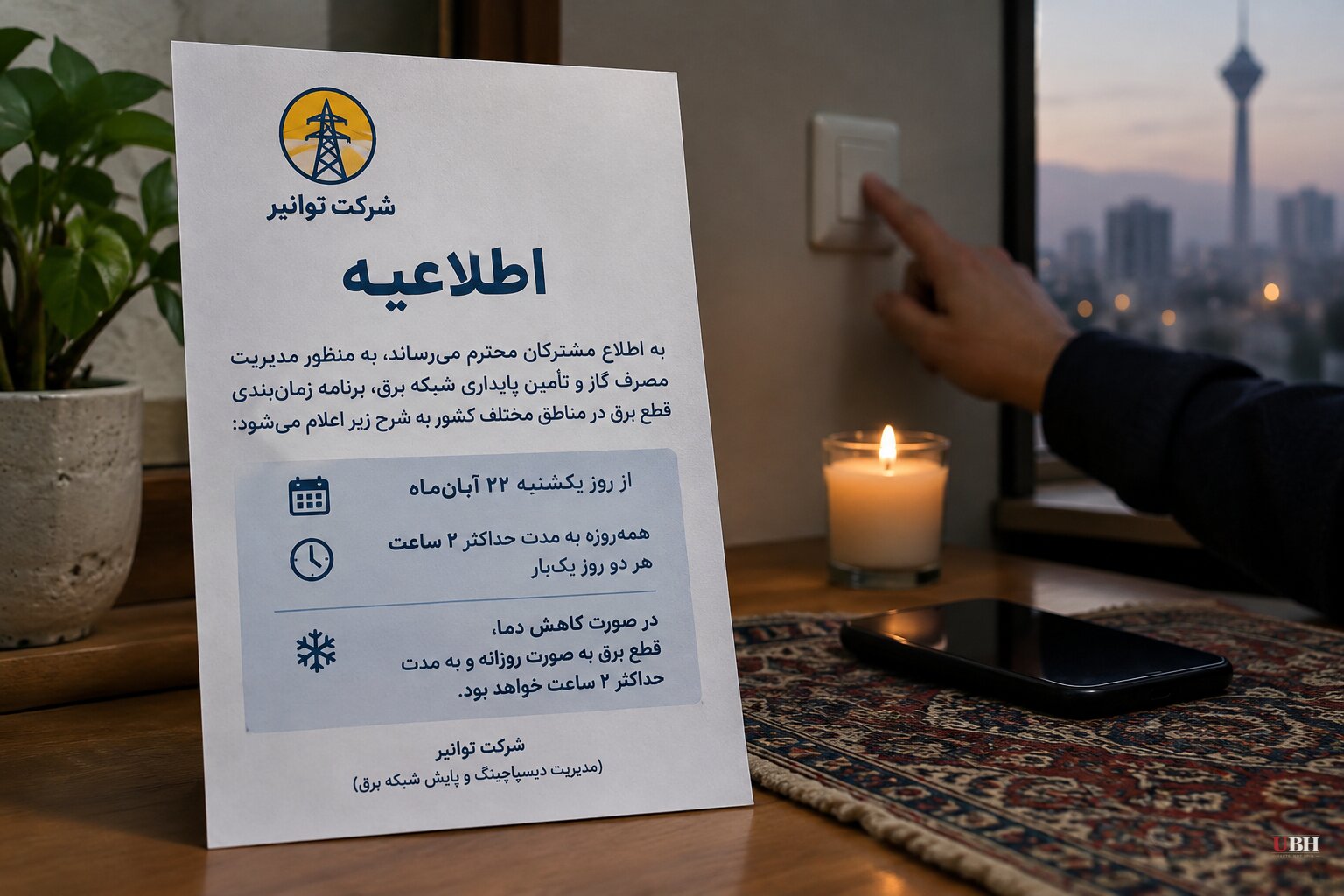
Nearly nine months after US and Israeli strikes began on Feb. 28, the war has reached Iranian light switches: rolling power cuts begin today, Sunday, Nov. 22, the first day of the Iranian month of Azar.
Mohammad Allahdad, head of Iran's national electricity company Tavanir, announced the plan on state television on Saturday. "Given the country's fuel supply conditions, the electricity sector will be forced to impose distribution restrictions from Sunday," he said.
What the cuts look like
Allahdad said outages will run about two hours every two days in most areas. They could climb to two hours a day if the weather turns colder, depending on location.
The burden is designed to fall on households, shops and other non-productive users. Factories and production units are supposed to keep their supply, he said.
The final timetable was not ready as of Saturday. Tavanir is expected to publish a schedule by province before the cuts begin.
Allahdad also warned that customers whose consumption is far above the set pattern could be cut off for several weeks.
The gas numbers
Most of Iran's electricity comes from gas-fired plants. According to Allahdad, as relayed by Radio Farda, about 230 million cubic meters a day of gas production capacity was lost to war damage, and roughly 100 million cubic meters a day remains unavailable. He said output is still below last year's level and that fueling power stations will get harder in the coming months.
Officials have also floated a potential daily gas supply deficit of up to 430 million cubic meters this winter, according to Iran International. Gas shortages have already disrupted the steel and cement industries.
President Masoud Pezeshkian addressed the problem on Saturday. "The attack on the country's gas infrastructure has aggravated the situation, and we should therefore expect difficulties this winter," he told the ISNA news agency.
Not a new problem, but an earlier one
Iran holds some of the world's largest oil and gas reserves and still cannot keep up with domestic demand. Rolling blackouts hit Tehran and other cities in the winter of 2024-25 and again in the summer of 2025. Causes cited include ageing plants, subsidized prices and high demand, plus years of underinvestment partly tied to decades of Western sanctions.
The difference this year is timing. The cuts arrive earlier in the season than in recent years, as heating demand starts to climb.
There is also a dispute over how to read the first outages. Electricity industry spokesman Ehsan Zabihzadeh said text messages sent to some Tehran customers announcing two-hour cuts concerned grid repairs, not the fuel shortage, according to Persian-language media. Allahdad's own announcement ties the rationing to fuel supply.
Pressure beyond the grid
Electricity is one of several strains on households. Iranian authorities have capped subsidized bread purchases in at least three provinces, Markazi, Khuzestan and Zanjan. Once a household's monthly quota runs out, it pays more than five times the price, RFE/RL reported, citing Iranian media on Nov. 18. There was no public announcement, and neither bakers nor customers were briefed. Officials have given conflicting explanations, and economists and even hard-line media have criticized the move.
One student said a directive bars schools from switching on heating until mid-December. Truck drivers are waiting overnight at fuel stations for diesel allocations. Flour shortages have led some bakeries in Ghiamdasht to limit customers to two loaves. A cream cheese product in Malard rose from 1.6 million to 2.5 million rials in a week, a jump of more than 56 percent, a resident told the outlet.
The statutory monthly minimum base wage is about 166 million rials, roughly $62, excluding allowances.
The war around it
The rationing lands while the military and diplomatic picture remains unsettled. On Saturday evening Iran's Revolutionary Guards said they had hit US radars in Bahrain. Bahrain said an Iranian attack set fire to an industrial site.
Shipping through the Strait of Hormuz was about 65% below pre-war levels in the week to Nov. 18, according to the UK Maritime Trade Operations centre, after a series of tanker attacks.
President Trump told Fox News on Nov. 21 that he wants a "permanent" deal that no future president could reverse. He told Israel's News 12 he is "not rushing to make any decisions on Iran."
Tehran's position is that the strikes are the cause of the energy squeeze. Pezeshkian's remarks point directly at the gas infrastructure attacks. The record on the grid says the strain was already there before February.
What decides the next few weeks is the weather and the timetable. Tavanir's provincial schedule is due before the cuts begin, and Allahdad has said the ration could double to two hours a day if temperatures drop.
Sources used for this briefing
7 links from 7 independent newsrooms (syndicated copies of the same report count once)
These are the sources it draws on, linked so you can verify.


