
Unbiased headlines. Facts, not spin.
Unbiased Headlines is an independently owned news organization. We bring you the facts, not opinions, written fresh from 110+ named sources. Sources linked so you can verify it yourself.
 energy
Major Story (8/10)
Houthis Fire Missile and Drone at Saudi Arabia, Saudi Coalition Says, as Riyadh Hunts for Interceptors Beyond the U.S.
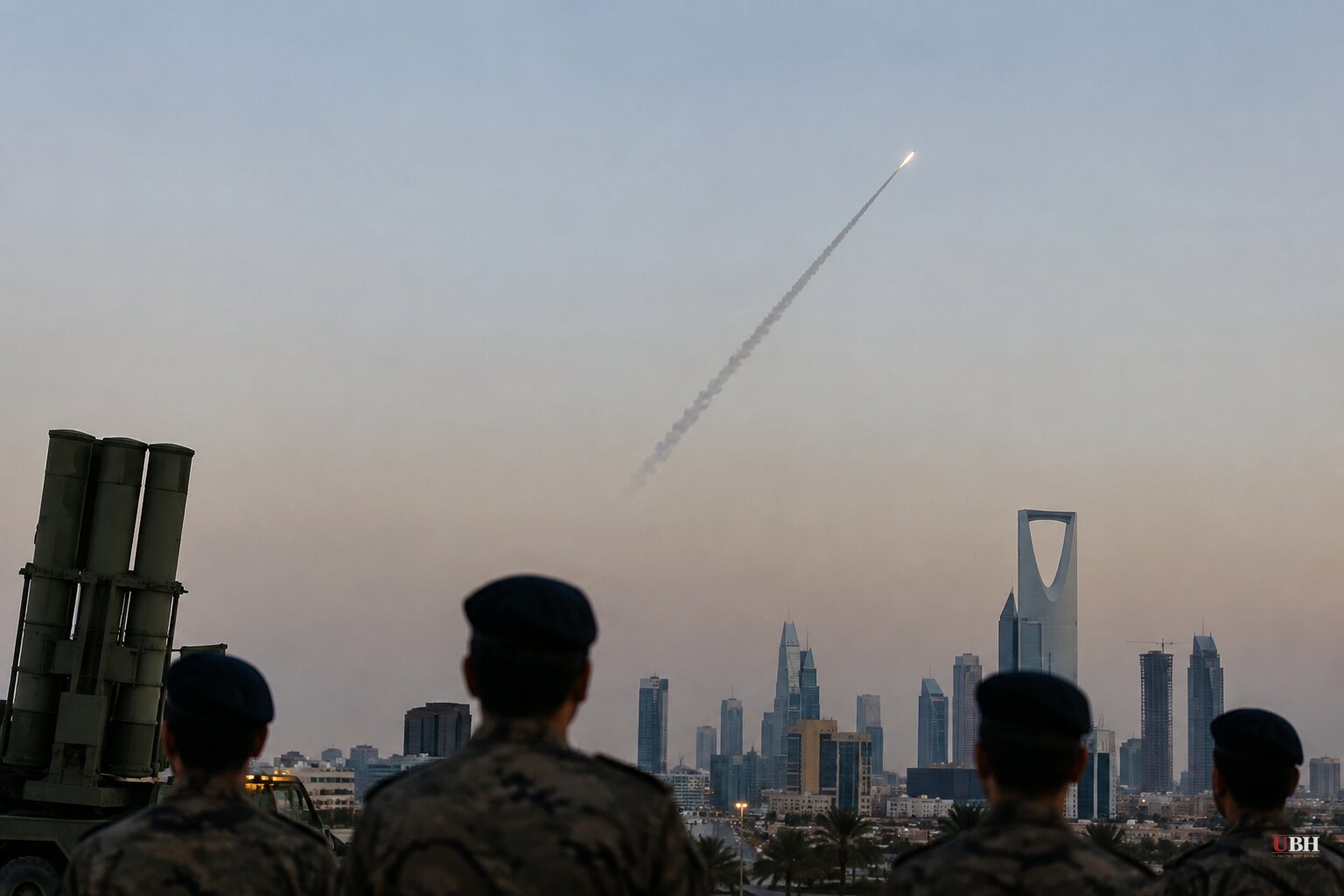
Since U.S. and Israeli airstrikes on Iran began the war on Feb. 28, the fighting has spread well beyond Iranian soil. Over the weekend the Gulf's second front, the Houthi campaign against Saudi Arabia, flared again alongside the Iranian strike on Bahrain.
Houthi fire toward Saudi Arabia
The Saudi-led Coalition to Support Legitimacy in Yemen said its air defenses "intercepted and destroyed a ballistic missile" launched by the Yemen-based Houthis late Saturday. The missile was headed for Saudi Arabia's western region, home to some of the kingdom's energy refining and export infrastructure.
On Sunday the coalition said on X that it "intercepted and destroyed a drone launched by the Houthi terrorist militia toward the Riyadh area." The coalition did not report damage or casualties from either launch.
Bahrain and the tankers
Bahrain's Interior Ministry said an Iranian strike hit a civilian industrial facility and started a fire. Two people were hurt, a Bahraini citizen and a Pakistani resident. Bahrain hosts the U.S. Navy's Fifth Fleet.
Iran's state media said the Islamic Revolutionary Guard Corps fired missiles and drones at U.S. military facilities there. A separate Iranian report claimed the IRGC shot down a U.S. MQ-9 drone. U.S. Central Command had not responded to requests for comment on either claim, and the drone claim is unconfirmed.
The United Kingdom Maritime Trade Operations reported that two tankers near Oman were struck Saturday by unidentified projectiles. Iran has imposed curbs on vessels moving through the Strait of Hormuz, which remains a major sticking point in talks with Washington.
Tehran says it still wants a deal
Foreign Minister Abbas Araghchi told the Iran newspaper that the June Islamabad Memorandum of Understanding between President Donald Trump and President Masoud Pezeshkian "is no longer on the table and has no implementation relevance."
He added that the commitments the U.S. accepted in that document, and the principle that carrying them out can lead to a final agreement, "are still accepted by both sides." So Tehran is declaring the paper dead while keeping its contents alive as a template.
Saudi Arabia shops for air defense
The volume of fire explains the scramble. Officials say Iran has launched more than 7,000 drones and missiles at Persian Gulf countries over nine months of war. The International Institute for Strategic Studies found that more than 1,000 of them targeted Saudi Arabia in the first two months alone.
The kingdom is among the biggest buyers of American arms, with purchases accounting for more than a tenth of total U.S. arms exports. Its interceptor stockpiles have been drained by earlier rounds of fighting, and it is now looking elsewhere to refill them.
Before the war, Riyadh signed a $3.2 billion missile defense deal with South Korea. That sits alongside an arsenal built mainly on American PAC-3 Patriot and THAAD missiles. After a tenuous U.S.-Iran ceasefire took hold and the Houthi fight resumed in July, Saudi Arabia signed a deal with Ukraine for low-cost counter-drone systems. It has also sought help from Greece, Pakistan, Turkey, the United Kingdom and Egypt.
The math is brutal. Lockheed Martin personnel describe a standard "shoot-shoot-look" doctrine, with two interceptors fired at each incoming projectile. That doubles the depletion rate relative to the number of attacks. Saudi Arabia's layered defense, which includes at least six high-altitude THAAD batteries, complicates the simple 2-to-1 ratio.
Saudi startups see an opening. SR2 Defense Systems formed a partnership in early February with Utah-based Vector to produce cheap, expendable one-way drones. Co-founder Lucien Ziegler, a longtime venture capital executive in the kingdom, said "the conflict changed the urgency, and how fast our partners wanted to move." He said interceptors are becoming a priority on the company's development road map.
Oil keeps sliding anyway
Markets are not pricing in the weekend's violence. Brent crude fell 3.4% last week and U.S. crude dropped 5.2%, the third straight weekly decline. Traders pointed to strong Middle East flows and rising U.S. inventories.
That leaves a gap between the battlefield and the price screen. Missiles are still being fired at Saudi energy territory, tankers are being hit near Oman, and Tehran says the main diplomatic framework is dead. Meanwhile Riyadh is spending billions to find cheaper ways to stop each incoming drone.
Sources used for this briefing
3 links from 3 independent newsrooms (syndicated copies of the same report count once)
These are the sources it draws on, linked so you can verify.


