
Unbiased headlines. Facts, not spin.
Unbiased Headlines is an independently owned news organization. We bring you the facts, not opinions, written fresh from 110+ named sources. Sources linked so you can verify it yourself.
 energy
Major Story (7/10)
Experts Urge California to Revive Buy-and-Rent-Back Coastal Program as King Tides Begin
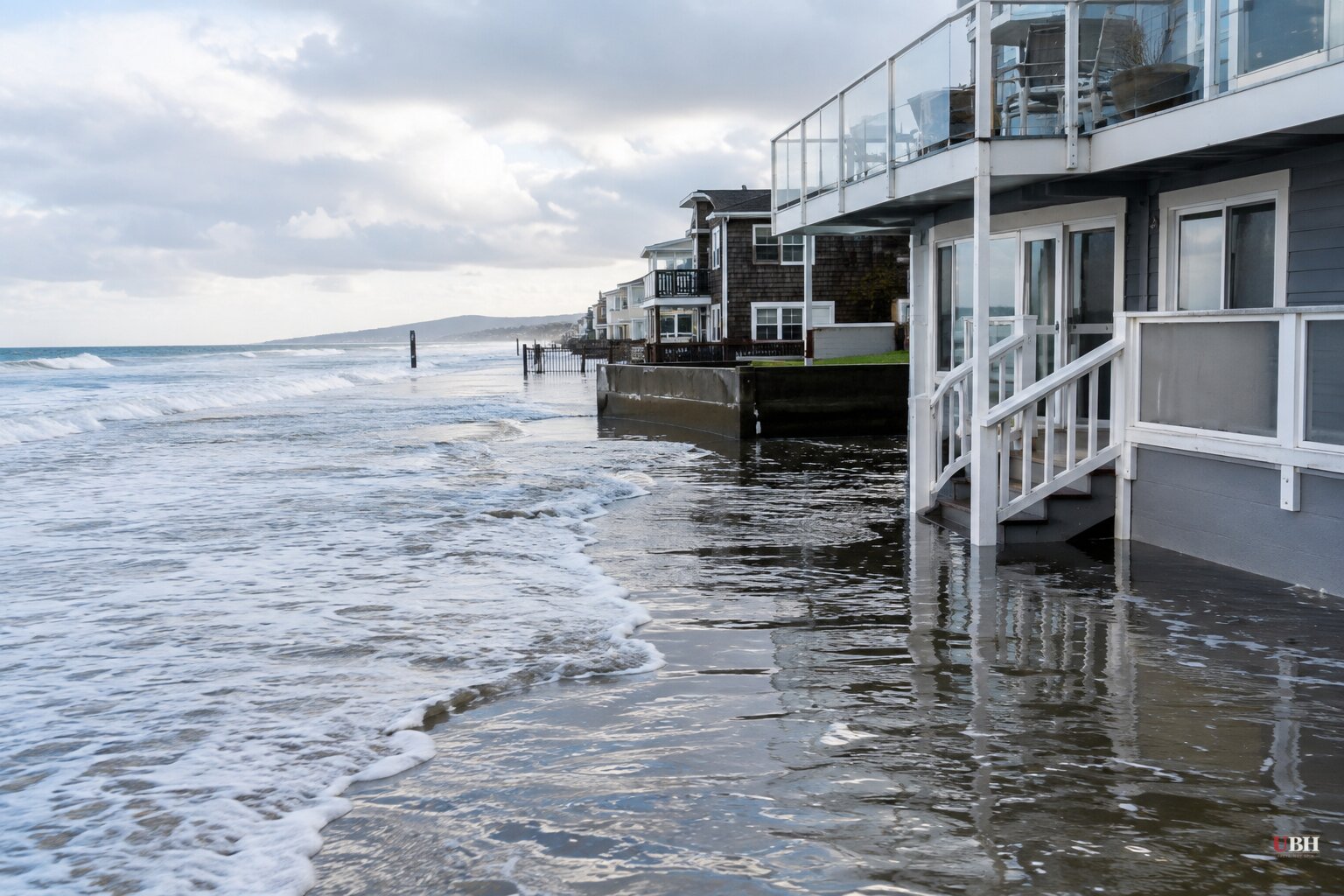
Gov. Gavin Newsom vetoed buy-and-rent-back legislation that had won widespread support in the Legislature. The state has relied on emergency fixes since. The first weeks of a record-breaking El Niño are now testing them: tidal flooding, shattered boardwalks, and waves chewing at the shoreline.
Forecasters say exceptionally high king tides begin today, Sunday, Nov. 22, and last through Black Friday. Big swells and rain are also possible in that window.
The proposal
The idea is simple. Instead of spending millions of taxpayer dollars on seawalls, sandbags and berms that will inevitably wash away, help local governments buy properties at risk of falling into the ocean in the next decade or two.
The government then rents those properties at market value to recoup costs. Once flooding becomes untenable, officials could demolish the properties and perhaps restore the area as a public beach, a marsh or some other form of natural protection from the sea.
Experts say the plan only works while there is still time.
Where the bills stood
The buy-and-rent-back strategy won widespread support in the state Legislature when the bills were proposed in 2021 and 2022, but the legislation was ultimately vetoed by Newsom.
Sen. Ben Allen (D-Santa Monica) proposed the idea in 2021 through Senate Bill 83. The voluntary program would have given homeowners the chance to move on their own terms and sell their beachfront properties while they still have value, Allen said. Taxpayers, in turn, wouldn't be burdened with the costs of cleaning up after an emergency.
From January through September of 2021, Allen's proposal sailed through every committee in the state Legislature and received a 33-2 vote of approval in the Senate. The bill went to Newsom's desk with no registered opposition, but after weeks of silence, it was quietly vetoed amid a batch of other rejected legislation.
"We don't want this to be a net loss to taxpayers. In some cases it could even be a gain. ...The whole idea of this proposal is: It pays itself off because we're getting on top of this early," Allen told fellow lawmakers in 2021.
What the experts say
Climate adaptation experts say it's not too late to try again, and that even a pilot program could be game-changing. A.R. Siders, a nationally recognized expert on community relocation at the University of Delaware's Disaster Research Center, said the case for the legislation has not changed.
"What was great about this proposal is still great about this proposal," Siders said. "This is a real opportunity for California to take leadership on this. ...It's low risk, too: It sounds expensive, but the cost of buying a few properties is not that high in the grand scheme of how much money we pour into disaster response."
An oft-cited study by the National Institute of Building Sciences found that society as a whole saves at least $6 in avoided costs for every $1 spent to acquire or demolish flood-prone buildings before disaster hits.
The money at stake
At least $8 billion to $10 billion in property along the California coast could be underwater by 2050, with an additional $6 billion to $10 billion at risk during high tide, according to legislative analysts, who sounded the alarm in 2019. They reported that any action, or lack of action, within 10 years could determine the fate of the state's iconic shoreline.
The trade-offs
The matter remains a tough balancing act. There are only so many ways to protect critical infrastructure, homes, beaches and neighborhoods from the rising sea, and each option comes at a cost and is fraught with controversy.
Seawalls tend to be the default response for a community facing disaster. While seemingly effective in protecting homes and infrastructure, they essentially kill beaches, disrupting the natural migration of the shoreline and drowning out the sand in front of the wall until it narrows or vanishes altogether.
Adding sand to an eroding shoreline has also become a go-to response, but this race against nature requires constant upkeep and lasts only as long as the sand stays on the beach.
Managed retreat means creating a proactive, orderly process to relocate properties and critical infrastructure far enough from the water to make room for the next few decades of sea level rise. This option often pencils out as the most cost-effective and forward-thinking, but the logistical challenges of translating short-term interests, such as preserving property values, into long-term planning have been a political nonstarter.
What happens next
The king tides and El Niño storms this week will show how much of the coast is already exposed.
Sources used for this briefing
1 link from 1 independent newsroom (syndicated copies of the same report count once)
These are the sources it draws on, linked so you can verify.


