
Unbiased headlines. Facts, not spin.
Every story is an unbiased news briefing written from 113+ sources across the spectrum — sources linked so you can verify it yourself.
 energy
Major Story (8/10)
September 24, 2026 at 02:51 AM
energy
Major Story (8/10)
September 24, 2026 at 02:51 AM
Pentagon Adds Virginia Officer to Iran War Death Toll, Disputes Washington Post's Count of Four More
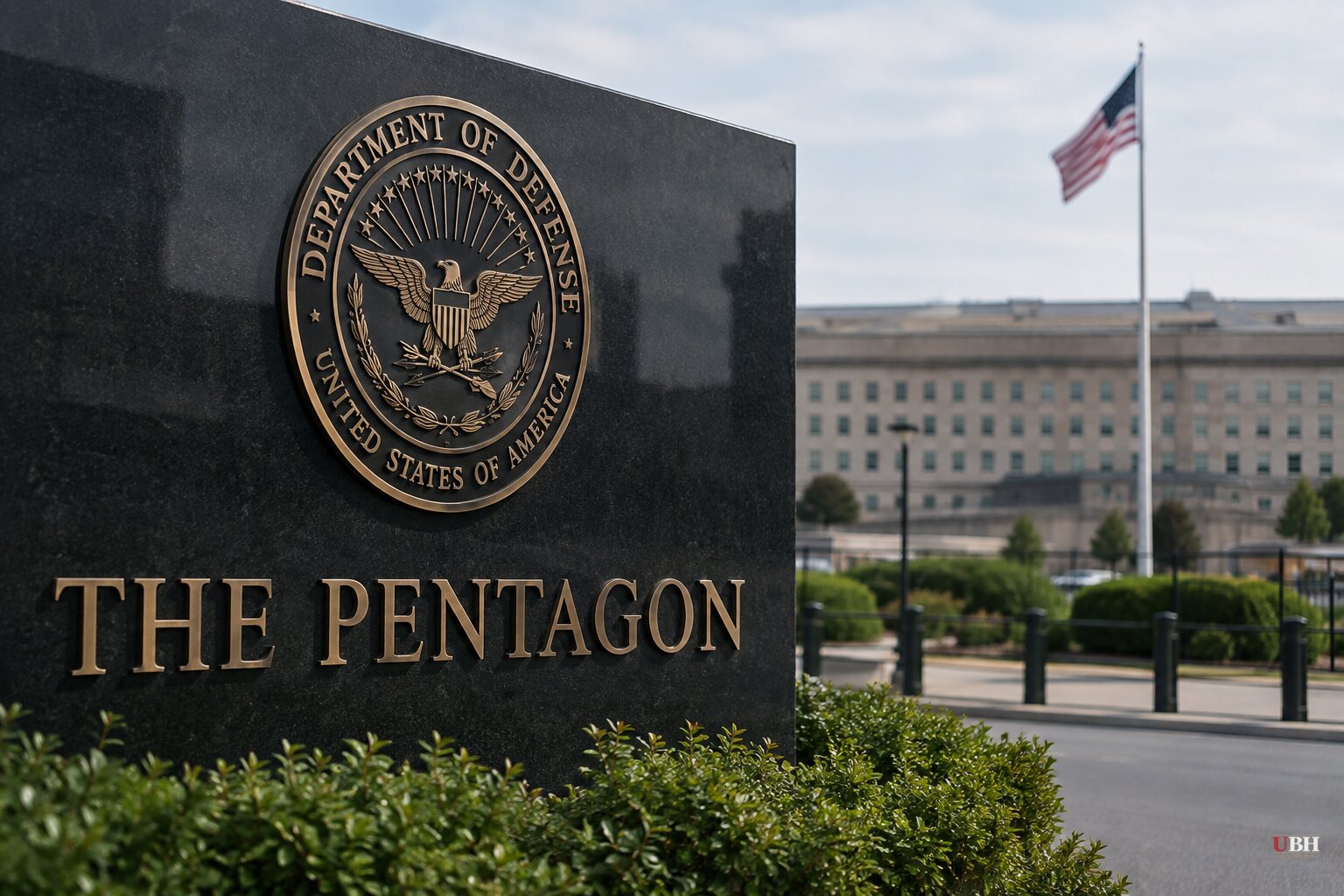
The Pentagon's public tally of U.S. deaths tied to the Iran war climbed to 19 this week with the addition of Capt. Bianca C. Wilkerson, 37, of Norfolk, Virginia, according to The Hill. Wilkerson, posthumously promoted to major, died Sept. 18 during what the Pentagon called "a non-combat related incident." The Washington Post reported she suffered a fatal medical emergency while flying to the Middle East. She was assigned to Shaw Air Force Base in South Carolina and was supporting operations out of Doha, Qatar. Her death was entered into the Defense Casualty Analysis System on Sept. 21, first reported by Task and Purpose.
The number tells only part of the story. The Trump administration has referred to the conflict since July as "overseas operations," insisting the war, officially named Operation Epic Fury, ended with a July ceasefire. That ceasefire has since collapsed. Under that framing, the Pentagon's database lists just five deaths as war-related, including Wilkerson and four service members who died in July, three in Jordan and one in Iraq, despite 19 known individuals dying overseas since fighting began Feb. 28.
The Washington Post reported last week that the real number of military fatalities tied to the war is at least 23, four more than the Pentagon has disclosed. Defense Secretary Pete Hegseth called that report "a complete LIE" in a post on X. The Post has not backed off its reporting. Neither side has produced documentation settling exactly which deaths the missing four cover or why they haven't been added to the public casualty database, leaving the dispute unresolved.
A war that's hitting wallets as hard as it's hitting the ranks
The economic toll has been just as difficult to pin down. Brent crude hit nearly $110 a barrel around Sept. 14, according to the Epoch Times, before Trump told Fox News' Trey Yingst over the weekend that "very big things" would happen with Iran in the "not so distant future" and that he was weighing whether to destroy the country, let it collapse financially, or cut a deal. Oil dropped fast on that signal. Brent fell to about $99 before settling near $100, and WTI slid under $93, according to the Epoch Times.
Saudi Arabia's foreign minister, Prince Faisal bin Farhan bin Abdullah, publicly praised the pivot toward diplomacy, calling on Iran to seize the opening and restore Strait of Hormuz shipping to pre-Feb. 20 conditions. Iran's response was mixed. President Masoud Pezeshkian told the United Nations General Assembly that Washington and Israel, not Tehran, are stoking global instability, and vowed his country would fight back "until our last breath," according to CNBC.
Treasury Secretary Scott Bessent offered the administration's defense of staying the course on pressure. He told Fox News the regime is "cornered" and that Washington has deliberately "sequenced" military strikes, a blockade, and financial squeeze tactics to force Tehran to capitulate. "They're going to yell uncle," Bessent said, adding it could take "a week, a month or two months." He pointed to Iran's decision to attack shipping weeks after a June 3 memorandum of understanding as the reason this time's pressure campaign has to be harder.
Gas prices reflect the strain. The national average hit $4.48 a gallon, according to AAA data cited by the Epoch Times. California was the only state averaging above $6, at $6.08 a gallon, up 19 cents in a week and $1.43 higher than a year earlier, per the Automobile Club of Southern California.
Hormuz traffic: recovering, but nowhere near normal
The picture in the Strait of Hormuz itself is contested by the numbers. A live monitor cited by the Epoch Times showed just 12 ships in transit and 376 waiting to enter on Sept. 21, about 14% of normal traffic. Yet on Tuesday, Sept. 22, 40 tankers carrying roughly 18 million barrels crossed the strait under U.S. Navy escort, according to Marine Insight. This was the highest single-day volume since the war began and about 90% of the pre-war daily average of 20 million barrels. Shipping companies remain cautious even with military escort. War-risk premiums have pushed charter costs for a Hormuz passage above $500,000 a day, Marine Insight reported.
Separately, Reuters data compiled by Kpler and cited by both CNBC and Gulf News shows Asia is on pace to import 23.96 million barrels per day in September, up from 23.38 million in August and the highest since February, when the war started. Gulf News noted that figure is still about 13% below pre-war levels. China increased purchases to 8.93 million barrels per day in August, up 6.2% from July, but remains below its pre-war baseline, according to Gulf News and OilPrice.
The Daily Wire has argued in an opinion piece that the danger goes beyond the Iran war itself, citing analysts at JPMorgan who warn the global energy system could be approaching an "operational floor" where pipelines lose pressure and refineries are forced to shut down. The piece notes correctly that most Middle East crude flows to Asia, not the U.S., meaning American pump prices are being driven by broader supply-chain strain rather than a direct Hormuz cutoff to U.S. refiners. That's a fair distinction the sourcing supports, even if the scale of a coming "energy crisis" remains a forecast, not an established fact.
Trump has said the war likely won't conclude before the November midterms. Seven months in, the Pentagon and the Washington Post still can't agree on how many Americans have died getting there.
Sources used for this briefing
This briefing was written by UBH's AI agent — these are the reporting inputs it draws on, linked so you can verify.


