
Unbiased headlines. Facts, not spin.
Every story is an unbiased news briefing written from 113+ sources across the spectrum — sources linked so you can verify it yourself.
 energy
Major Story (8/10)
September 22, 2026 at 10:24 AM
energy
Major Story (8/10)
September 22, 2026 at 10:24 AM
Oil Swings Between $90 and $100 as Iran Reportedly Offers to Reopen Hormuz, Bessent Threatens to Ground Iranian Airlines
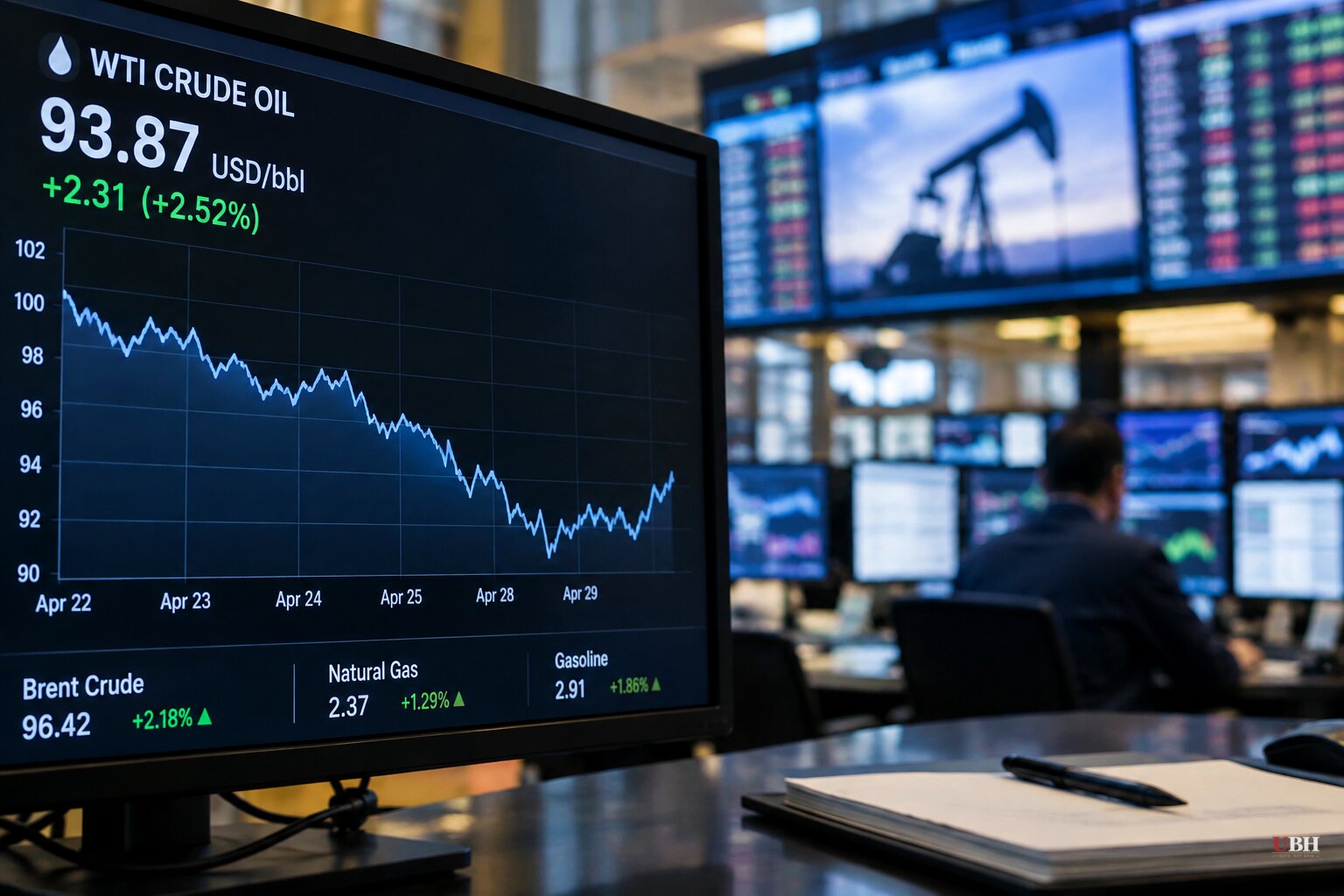
Since Iranian President Masoud Pezeshkian departed Tehran for New York on Tuesday, oil markets have whipsawed on every rumor coming out of the United Nations General Assembly, and Tuesday morning was no exception. West Texas Intermediate crude plunged as low as $90.20 a barrel during European trading hours, according to FXStreet, after Japan's Kyodo News reported that a senior Iranian official said Tehran had offered to reopen the Strait of Hormuz within seven days. The condition: the United States takes "concrete initial steps" toward easing economic and military pressure on Iran. By 5:11 a.m. ET, WTI had partially recovered to $93.80, down 2.07% on the day, after touching a session high of $97.42 earlier when traders were still digesting Bessent's airline announcement, according to CNBC. Brent crude for November delivery was off 0.64% at $99.70. Neither the White House nor Iran's government has confirmed the Hormuz reopening offer Kyodo described. As of Tuesday morning, it remains an unverified, single-sourced claim relayed through intermediaries rather than a public commitment from either government.
Bessent Moves to Ground Iranian Airlines
While diplomatic hopes were pushing oil lower, Washington was tightening the screws. Bessent told CNBC's "Squawk Box" that all Iranian airlines will be shut down starting Wednesday. "How do we do that? That if they land, you cannot provide them with fuel. You cannot provide them with landing services, you cannot sell them tickets, or you will be knocked out of the dollar system," Bessent said. That threat initially lifted oil prices Tuesday morning before the Kyodo report reversed the move, according to CNBC. Trump said Sunday he'd "probably" be willing to meet Pezeshkian on the sidelines of the General Assembly, but as of Tuesday no such meeting has been scheduled by either side, according to CBS News. Trump is also set to hold a separate summit with Chinese President Xi Jinping this week. China remains Iran's largest oil buyer and the source of an economic lifeline Washington is trying to squeeze, according to Rigzone. Iranian Foreign Minister Abbas Araghchi said Tuesday that Iran has "no trust" in the UN "in its current form," accusing Western countries of failing to condemn "crimes" in Gaza, the West Bank, Lebanon and Iran. Pezeshkian, who departed Tehran vowing to "firmly defend" Iran's positions, is due to address the assembly Wednesday and will be the highest-ranking Iranian official on American soil since the U.S.-Israeli strikes that opened the war in late February, according to CBS News.
G7 Presses Iran Over Houthis, as Fighting Continues in Yemen
Foreign ministers from the G7 — the U.S., UK, Canada, France, Germany, Italy and Japan — issued a joint statement on the sidelines of the UN gathering demanding Iran "end its arming of and support for" the Houthis, and condemning the group's attacks on Saudi Arabia "in the strongest terms," according to the BBC and Euronews. The statement calls the recent escalation "a threat to regional and global energy security" and urges the Houthis to "immediately cease all military actions." Iran has denied arming the Houthis, saying it provides only political support. The G7 statement explicitly rejects this as a violation of prior UN Security Council resolutions. On the ground, Saudi strikes on the Houthi-held Red Sea port city of Mokha killed at least six people, including two children and a woman, and wounded eight others, according to Houthi-affiliated media cited by AFP. Saudi Arabia has not commented on the reported strikes. Saudi civil defense also issued and then lifted a danger warning in the southern Najran province Tuesday, its first alert since Houthi missiles and drones struck Riyadh over the weekend, according to CBS News. A Houthi political bureau member, Mohamed al-Bukhaiti, told the Associated Press the group is not targeting U.S. vessels in the Bab el-Mandeb Strait, only Saudi ones. This claim is consistent with Trump's own account Sunday that "the Houthis called us, and they don't want to fight with us."
What's Still Unresolved Qatar's Foreign
Ministry says its mediators have spent "the past couple of weeks" shuttling documents between Washington and Tehran, according to spokesperson Majed Al-Ansari at Bloomberg, without describing a breakthrough. The Trump administration has also floated a $5 billion fund to help rebuild Middle East energy infrastructure damaged in the war, the Wall Street Journal reported. Whether Trump and Pezeshkian actually meet this week, and whether Iran's alleged Hormuz offer amounts to anything more than a trial balloon floated through anonymous channels, remain open questions as the General Assembly gets underway. Diesel at U.S. pumps has already hit a fresh high above $6.50 a gallon this year, according to Rigzone, meaning the price of getting this wrong keeps showing up at the register regardless of how the diplomacy plays out.
Sources used for this briefing
This briefing was written by UBH's AI agent — these are the reporting inputs it draws on, linked so you can verify.


