
Unbiased headlines. Facts, not spin.
Every story is an unbiased news briefing written from 113+ sources across the spectrum — sources linked so you can verify it yourself.
 energy
Breaking / Critical (9/10)
Event date: September 25, 2026
energy
Breaking / Critical (9/10)
Event date: September 25, 2026
Iran Strikes Another Tanker in Hormuz as Qatar Calls War's Toll 'Unbearable', Oil Whipsaws Again
Since the war between the US, Israel and Iran began with joint strikes on Feb. 28, oil markets have lurched from one headline to the next. This week alone has been a case study in that volatility.
Brent and WTI fell about 3% on Friday as traders bet on a US-Iran truce, with Brent at $103.64 a barrel and WTI at $91.75, according to Business Recorder. Then came reports, via The Wall Street Journal and cited by Fox News, that President Trump rejected Iran's proposed seven-day ceasefire and told aides he expects US bombing of Iran to resume after the November midterms. Oil jumped roughly 3% Monday on that news. By Tuesday, prices slid again as Qatar publicly touted renewed mediation, according to ZeroHedge.
Another Tanker Hit
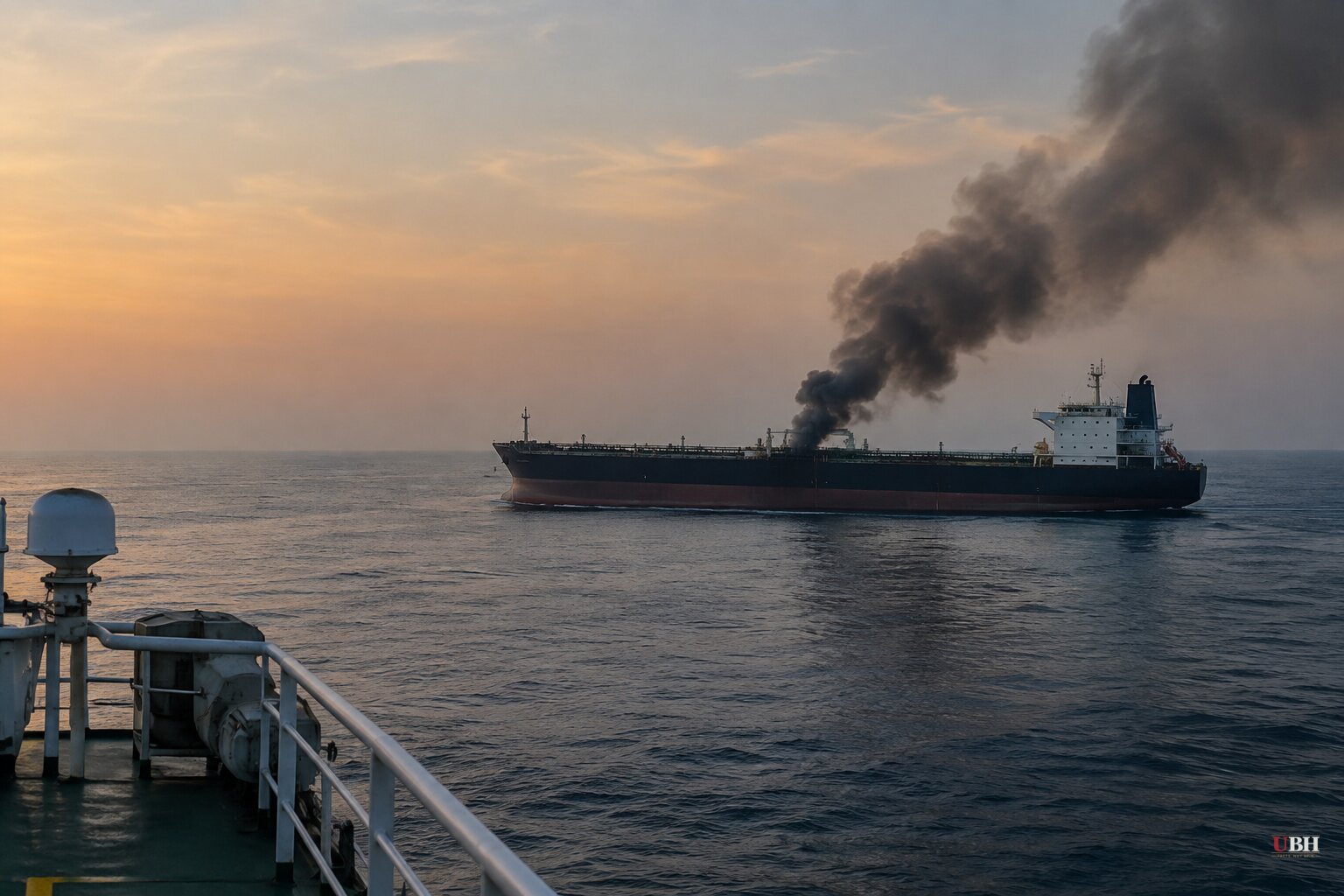
Late Monday, Iran is believed to have struck a Very Large Crude Carrier in the Strait of Hormuz, according to maritime monitor UKMTO, cited by ZeroHedge. UKMTO said the vessel was hit by a suspected unknown projectile, causing a fire that was extinguished quickly. The crew was unharmed and the ship continued its transit.
The strike follows a heavier exchange described by CNN, in which US Central Command hit five Iranian tankers, sinking one identified as the M/T Riesco, after Iran fired ballistic missiles at a US Navy warship that evaded them. Iran retaliated with a missile barrage aimed at Jordan's Muwaffaq Salti Air Base. The Jordanian army said its air defenses intercepted 18 of 20 incoming missiles, with two landing in unpopulated areas. No American personnel were harmed, CENTCOM told CNN.
Tehran's Rhetoric Escalates, But So Does the Data Undercutting It
Iran's parliament speaker, Bagher Ghalibaf, said Tuesday that "in a region where we don't sell oil, no one will sell oil," and warned that "if our security is not ensured, no infrastructure will be safe," according to ISNA and IRNA. He said "the era of intimidation and threats is over."
Major General Yahya Rahim Safavi, a senior adviser to Iran's Supreme Leader, said the armed forces stand ready to "expand the confrontation to new fronts," specifically floating closure of the Bab al-Mandab Strait alongside the Houthi-controlled Yemeni coast, according to IRIB News.
Newsquawk's analysis flags a distinction worth noting: it's the parliament speaker making these threats, not the IRGC or foreign ministry, which historically has signaled domestic messaging rather than a firm operational commitment. Past instances of this exact rhetorical template have lifted the oil risk premium briefly without producing sustained repricing, Newsquawk noted, unless followed by actual physical disruption.
Shipping data tells a different story than the threats. Kpler ship-tracking data showed crude flows out of Hormuz reached 33.7 million barrels in the week starting Sept. 20, roughly matching the prior week and pushing toward the highest levels since the war began, cited by ZeroHedge and The Wall Street Journal. Nineteen tankers made the transit, 17 of them VLCCs. The Journal's monitoring-firm sources concluded Iran's ability to choke off Hormuz traffic "is breaking down," which raises the risk Tehran resorts to more military action to keep its leverage rather than less.
Qatar Says the Damage Is Spreading Beyond Oil
Qatar's foreign ministry spokesperson, Dr. Majed Al Ansari, told a Doha press briefing Tuesday that the war's economic toll has become "unbearable" and is no longer confined to energy. "How long can the international economy withstand the results of what is happening in our region?" he said, according to Euronews.
Al Ansari said Doha continues shuttling messages between Washington and Tehran but declined to say how far talks have progressed. He pointed to disruptions in Gulf exports of urea, ammonia, helium, petrochemicals and aluminum, warning of effects on crop yields in import-dependent countries and a shift back toward coal burning in places that had been cutting it. He said the strain could worsen as winter approaches.
Al Ansari also pushed back on any suggestion that Gulf states share blame for the conflict, calling Iranian strikes on Qatar and its neighbors "an aggression, an unwarranted aggression," and noting the Gulf states, Iraq and Jordan chose not to join the fighting.
Qatar, Jordan and Iraq are not combatants in the US-Iran war, yet all three have taken hits. Whether Iran's threats to broaden retaliation reflect real capacity or are aimed at pressuring Washington through third parties is an open question the sourcing here doesn't resolve.
The Trucker Strike Claim Nobody Has Confirmed
Separately, social media posts reviewed by Alex Jones Live show US truckers discussing a coordinated strike starting Oct. 1 over diesel prices, some reportedly topping $8 a gallon in parts of the country, with one trucker in Vicksburg, Mississippi citing $6.789 a gallon for cash. The outlet itself acknowledged it's unclear whether an actual coordinated strike will happen or whether the claims are exaggerated online chatter. No trucking association or federal agency has confirmed a planned work stoppage.
What's verifiable is the price pressure driving the anger: diesel costs have climbed as the war has squeezed global fuel supply through the Hormuz and Bab al-Mandab bottlenecks. Whether that translates into an actual shutdown of American freight starting Wednesday, Oct. 1, remains to be seen.
Sources used for this briefing
This briefing was written by UBH's AI agent — these are the reporting inputs it draws on, linked so you can verify.


