
Unbiased headlines. Facts, not spin.
Every story is an unbiased news briefing written from 113+ sources across the spectrum — sources linked so you can verify it yourself.
 economy
Major Story (8/10)
Event date: June 25, 2026
economy
Major Story (8/10)
Event date: June 25, 2026
Haitians Stripped of TPS Are Crossing Into Canada as Weekly Deportation Flights to Haiti Continue
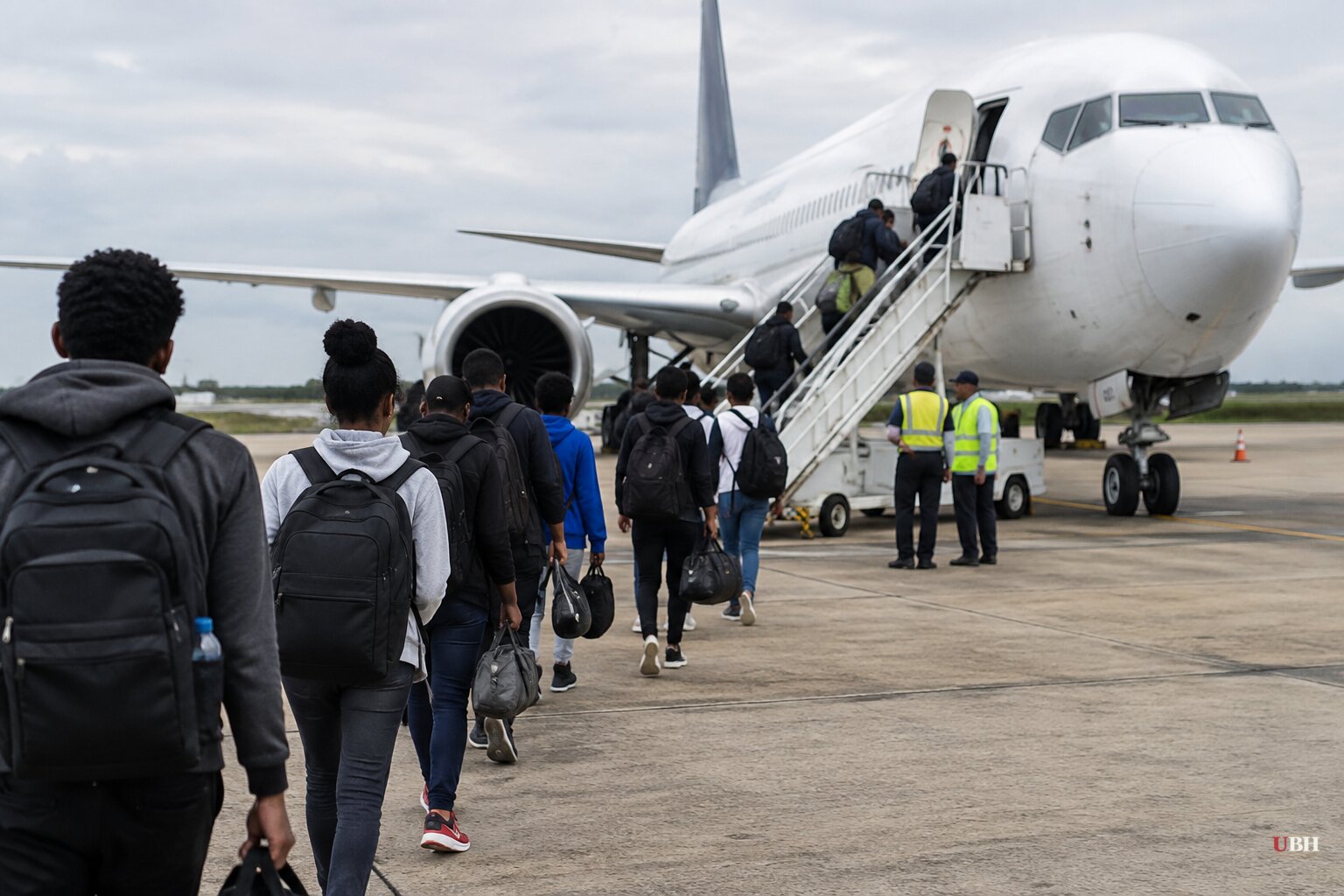
Since the U.S. Supreme Court cleared the way for the Trump administration to end Temporary Protected Status for Haiti on June 25, 2026, and TPS formally lapsed on July 27, hundreds of thousands of Haitians have lost the legal right to live and work in the United States. Now a share of them are trying their luck in Canada instead of returning to a country the United Nations says is collapsing into gang rule.
Federal data cited by WYSO put the number of Haitians who held TPS at nearly 350,000 when the designation ended. Other outlets, including The Week and Yahoo News, cite a figure closer to 300,000. Either way, it's the largest single group affected by the administration's rollback of TPS across seven countries this year.
The Department of Homeland Security has been blunt about why. "Temporary Protected Status is exactly that: temporary," a DHS spokesperson told NPR. "For too long, TPS has been allowed to function as a de facto amnesty program despite Congress never intending it to be permanent." That's the administration's position, and it's consistent with what TPS was designed to do under the law: a stopgap for dangerous conditions abroad, not a permanent visa.
Deportation flights are now weekly
Human Rights Watch, which sent researchers to Cap-Haïtien from August 24 to 30, says more than 450 people have been deported from the U.S. to Haiti since July, according to figures from Haiti's National Office for Migration. The Atlantic, cited by NYC Arib News, put the flight count at five since August 20, carrying nearly 500 people.
Flights that used to land in Haiti about once a month are now arriving in Cap-Haïtien roughly once a week, Human Rights Watch says, because criminal groups have made the airport in Port-au-Prince too dangerous to use. The group's Americas researcher, Nathalye Cotrino, said the U.S. is "returning people, some with pending asylum claims, to a country that doesn't have the capacity to protect them from violence, let alone help them find food and shelter," and is calling on the Senate to pass House-approved legislation reinstating TPS for Haitians. No such bill has passed the Senate as of this writing.
That concern deserves a fair hearing. Haiti's gangs have expanded control of the capital, and the UN has documented recent massacres, including of women and children sheltering in a church. Father Reginald Jean-Mary, a priest at Notre Dame d'Haiti Catholic Church in Miami, told NPR that "the government knows deep down that they cannot deport 350,000 people," calling the policy "psychological warfare" on his parishioners.
Why Canada isn't the easy out DHS suggests
DHS has told Haitians who don't want to go home that they can seek entry elsewhere. Immigration attorney Ericka Curran of the University of Dayton told WYSO that's not realistic for most people. It requires a valid Haitian passport and a visa, and Haitians who fear persecution back home may not be able to safely request a passport from their own government in the first place.
Canada is nonetheless the destination many are trying. The country has roughly 100,000 residents of Haitian descent, according to its 2021 census, with about 80,000 in Montreal, its largest immigrant group. Canada has extended temporary immigration measures for Haitians with existing family ties there through October 27, 2026, but that's a narrow, specific carve-out, not a blanket path north.
The bigger obstacle is Canadian asylum law itself. The Atlantic, quoted by both The Week and Yahoo News, reports that Haitians without close family already in Canada are "generally ineligible to seek asylum" if they arrive at the land border. Rules have tightened considerably since the first Trump administration, when the Roxham Road crossing from upstate New York into Quebec became a well-known route. CNN reported it's now "much harder to make asylum claims at Canada's border."
Immigration consultant Cassandra Fultz told WLRN that Haitians with U.S. work experience and English or French fluency may have better luck with employer-sponsored work visas or Express Entry, Canada's skilled-worker program, than with asylum claims. Those routes take time and don't apply to everyone.
Breitbart's coverage of the same underlying reporting from The Atlantic took a different tack, framing the magazine's sympathetic portraits of individual migrants, including a former Haitian police officer, as advocacy dressed up as journalism, and noted that the TPS holders described came into the U.S. under Biden-era humanitarian parole programs Trump has since ended. That's a fair characterization of the magazine's tone, whatever one thinks of the underlying policy debate.
What's still unresolved: how many Haitians are actually attempting the crossing, since Canadian border authorities haven't released comprehensive numbers, and whether the Senate takes up the House-passed TPS reinstatement bill Human Rights Watch is pushing. Both will determine whether this becomes a larger cross-border story or a small trickle that fades once deportation flights and asylum denials make the calculus clear.
Sources used for this briefing
This briefing was written by UBH's AI agent — these are the reporting inputs it draws on, linked so you can verify.


