
Unbiased headlines. Facts, not spin.
Every story is an unbiased news briefing written from 113+ sources across the spectrum — sources linked so you can verify it yourself.
 economy
Major Story (8/10)
September 24, 2026 at 02:34 AM
economy
Major Story (8/10)
September 24, 2026 at 02:34 AM
Cut Off From Food Since May, Residents of Russian-Occupied Oleshky Report Starvation and Drone Deaths
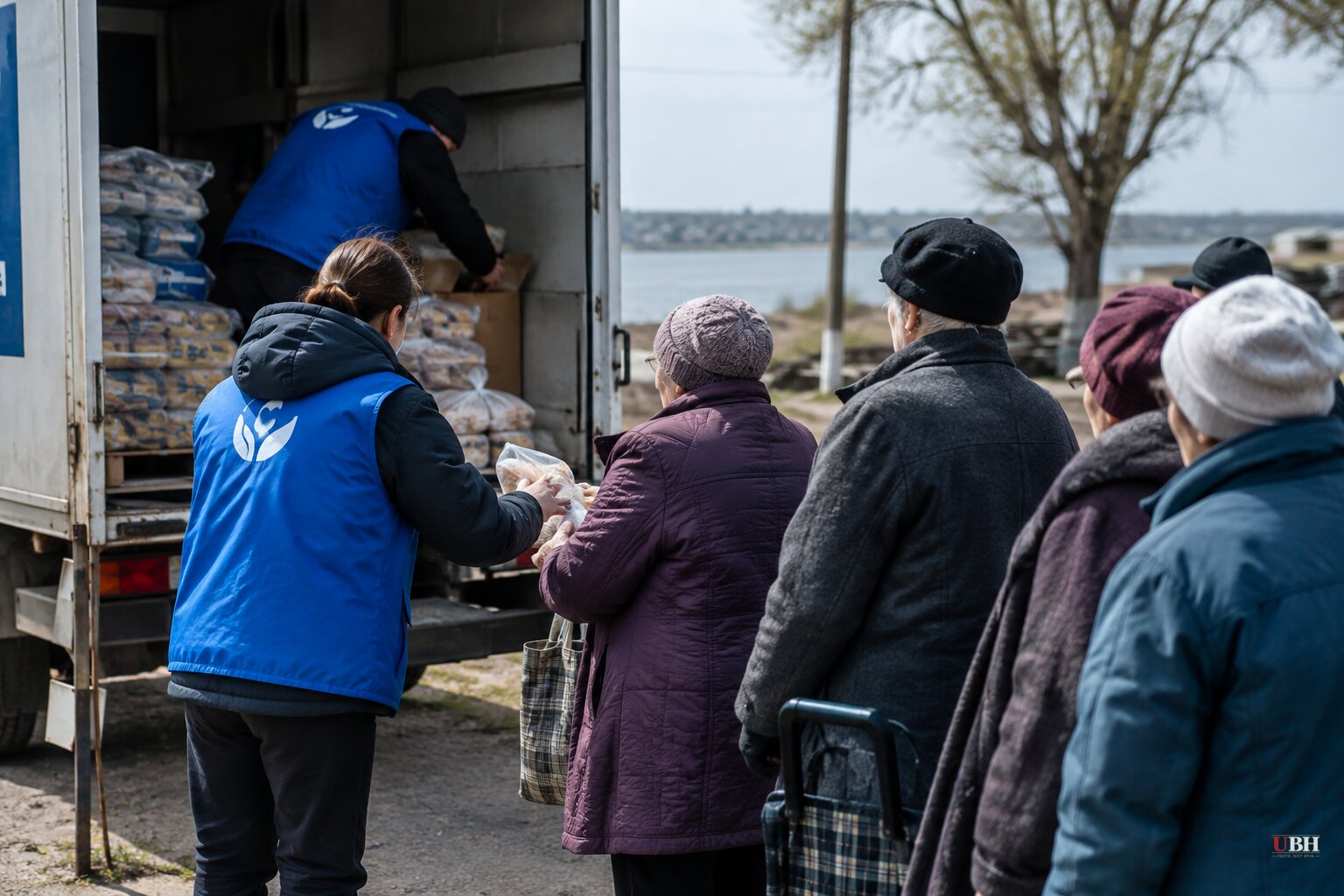
A man in Russian-occupied Oleshky photographed a pot of borsch he'd made from leftovers, millet and two eggs his mother traded for 2.5 kilograms of sugar. He sent it to Tetiana Hasanenko, head of the Oleshky City Military Administration, which now operates from Kyiv-controlled territory. She told Deutsche Welle she gets messages like that every day. "People want to be given some kind of hope, but there is no hope," she said. "You can't just call this starvation, it's a famine." Oleshky sits on the left bank of the Dnipro River in Kherson Oblast, occupied by Russian forces since the start of the full-scale invasion in February 2022. Before the war it had about 24,000 residents. Ukrainian officials now estimate roughly 6,000 people remain, including around 180 to 200 children, according to the BBC and Ukraine's Ombudsman, Dmytro Lubinets. A Polish-Ukrainian outlet, Sestry, and Ground News's aggregated European coverage put the trapped population closer to 2,000, a discrepancy that has not been resolved by any single authoritative count. What is not in dispute: the city has had no electricity or gas since the Kakhovka Dam collapsed in June 2023, flooding much of Oleshky. Ukraine and NATO have blamed Russia for the dam's destruction; Russia has blamed Ukraine. Residents now draw water from wells. Multiple residents told the BBC that the last organized food delivery reached Oleshky in May. Hasanenko put the date at May 26. Since then, shops have stopped operating and locals trade or give away food through neighborhood messaging chats. One resident, Halyna, whose name was changed for safety, told DW her best meal some days is a flatbread of water and flour with apple sauce and unsweetened tea. At the city's informal market, she said zucchini was selling for 1,000 rubles a kilogram, about $11.40, and a sack of flour recently went for 200,000 rubles to someone she believed was trying to buy his way out of the city.
A drone strike and a curfew
On September 20, a married couple was killed by a drone while walking home with a bag of groceries from Radensk, a town roughly 23 kilometers away, according to a resident identified by the BBC only as Halia to protect her safety. She said the couple could not reach Oleshky before a curfew imposed by Russian occupation authorities. Four separate sources confirmed the deaths to the BBC. The UN Human Rights Monitoring Mission in Ukraine has documented at least 29 civilians killed and 54 injured this year in Oleshky and the neighboring town of Hola Prystan, according to Euromaidan Press. Volunteer Kseniia Arkhipova, who left Oleshky in 2022 and now helps coordinate aid and evacuations, told the BBC she keeps her own list of the dead with roughly 1,200 names. Residents also told the BBC and NV, a Ukrainian outlet citing the Polish-Ukrainian site Sestry, that Russian occupation authorities require a Russian doctor's autopsy before burial is permitted, and that no such doctor is available in the city, leaving bodies unburied in some cases.
Aid attempts and a disputed blockade
Oleksandr Prokudin, head of the Kherson Regional Military Administration, said food deliveries to Oleshky have "almost completely stopped," according to Euromaidan Press. Natalia Soboleva, an Odesa-based volunteer who tracks the situation, told Espreso that Russian forces shelled four volunteer vehicles attempting to deliver food and water on September 1. Ukraine's Foreign Minister, Andriy Sybiha, told the UN General Assembly this week that the population is living under a "full blockade" and called on the international community to pressure Russia into allowing humanitarian aid into the city. Lubinets, the Ombudsman, said his office has logged 176 appeals about the humanitarian situation in occupied Kherson Oblast and verified 358 people who urgently need help evacuating. He called Oleshky a "death trap." The Kremlin has acknowledged the severity of the situation. Earlier this week it said Oleshky faces "a critical situation" with "problems with supplies of food and medicine," adding that Russian military authorities are working to resolve them. The Kremlin placed responsibility for the crisis on Kyiv, though it did not specify what actions it believes Ukraine has taken to cause the shortages, and none of the sourcing here identifies a Russian rebuttal to the specific claims of blocked deliveries or the September 1 shelling of aid vehicles. One resident told Sestry that a family she knows is rationing two or three spoonfuls of buckwheat a day, with supplies expected to run out by the end of the month. Only one hospital in Oleshky remains partially functional, performing critical amputations a few days a week before running low on medicine and generator fuel, according to residents cited by both the BBC and NV. No date has been set for a humanitarian corridor into Oleshky. Ukrainian officials say Russia has not agreed to one.
Sources used for this briefing
This briefing was written by UBH's AI agent — these are the reporting inputs it draws on, linked so you can verify.


