
Unbiased headlines. Facts, not spin.
Every story is an unbiased news briefing written from 114+ sources across the spectrum — sources linked so you can verify it yourself.
 energy
Major Story (8/10)
October 6, 2026 at 10:28 PM
energy
Major Story (8/10)
October 6, 2026 at 10:28 PM
CENTCOM Says It Has Redirected 130 Ships and Destroyed 13 Since Iran Blockade Resumed in July
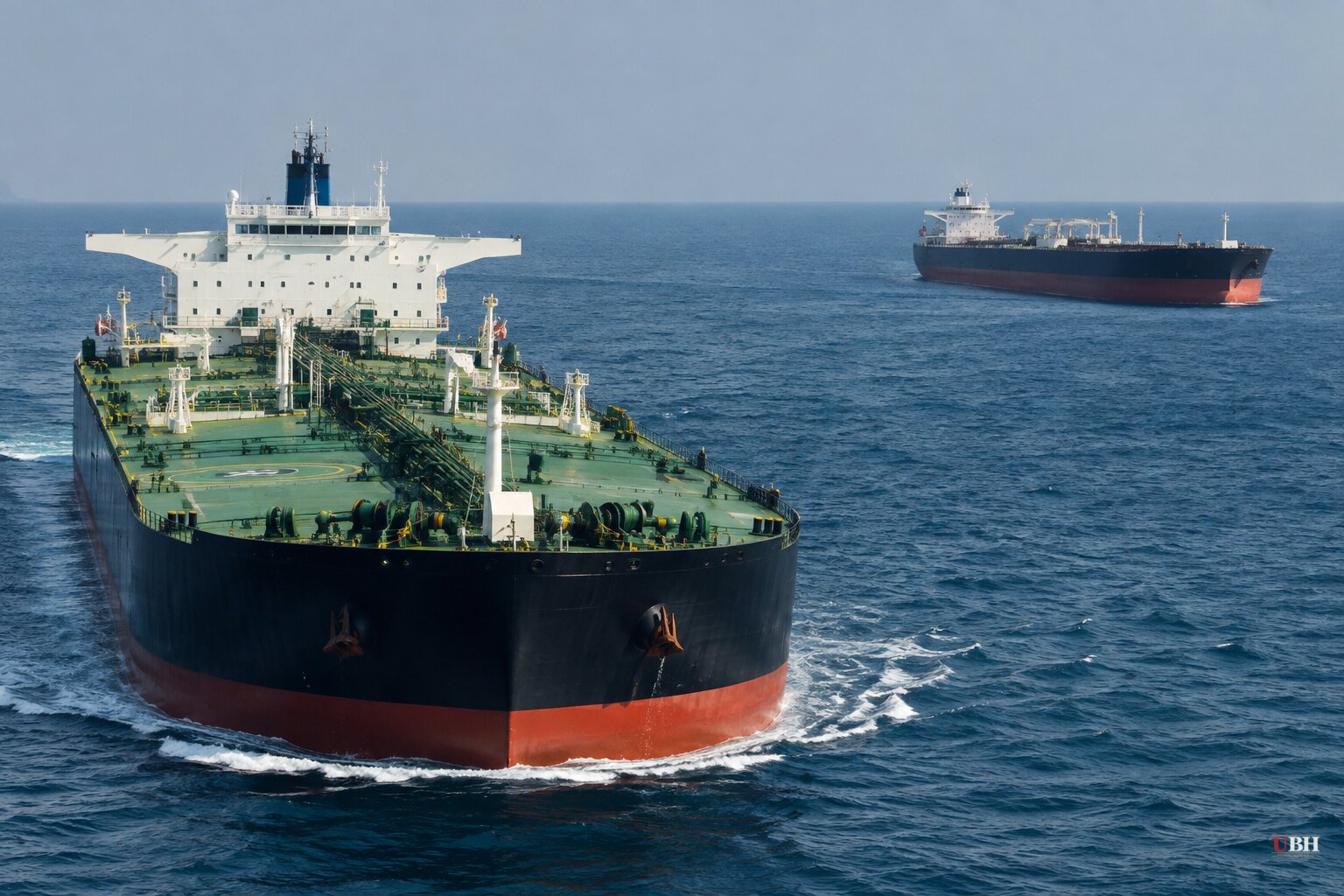
Since Iran's crude loadings fell to zero for the first time in September, the US naval blockade in the Strait of Hormuz has turned into a logjam of stranded tankers with nowhere to go and almost nothing left to sell.
United Against Nuclear Iran, a nonprofit that tracks the Iranian oil trade, said in its October 5 shipping update that roughly 50 tankers tied to Iran remain stuck, little changed from two months earlier. At least 11 laden tankers were anchored east of Kharg Island, Iran's main export terminal, with five more farther south in the Gulf. No loadings were observed at Kharg on October 5, according to UANI.
The group also found that empty tankers aren't bothering to sail back to Iran to reload. Twenty Iran-flagged vessels are sitting off Sri Lanka and one more off Oman, according to UANI, waiting out a blockade that shows no sign of lifting.
The Navy's numbers
US Central Command said in a statement reported by Gulf News that it has redirected 130 commercial vessels since reinstating the blockade on July 14, with the most recent diversion on October 5. CENTCOM also says it has disabled three vessels that refused orders and destroyed 13 ships over the past 12 weeks for either violating the blockade or operating as part of what the command calls Iran's Islamic Revolutionary Guard Corps "shadow network."
Those destruction and disabling figures come from CENTCOM itself. No independent battle-damage assessment has been published alongside them, and Admiral Brad Cooper, the command's leader, said only that the US military remains "intensely focused" on the mission and will "swiftly act against any vessels trying to run the blockade," according to Gulf News.
Iran is nearly out of oil to sell
Treasury Secretary Scott Bessent told Axios's Mike Allen that, for the first time since Iran began pumping oil, the country will have "no oil on the water this week" and "no revenue," a claim first reported over the weekend and echoed in Bloomberg's tracking data.
The floating reserves Iran has used to keep selling to its nearly all-Chinese customer base are close to gone. Kpler estimates there was 15 million barrels still held afloat at the start of October, and that this stock will clear by mid-October, according to Maritime Executive. Others think it could stretch slightly longer, but invoices on remaining sales must clear within two months, meaning Iran's government stands to lose a revenue stream that has historically covered about 40% of its budget by the end of December.
Meanwhile Goldman Sachs analysts Yulia Zhestkova Grigsby, Alexandra Paulus, and Daan Struyven told clients last week that other Gulf producers have filled the gap, with combined Persian Gulf oil exports climbing to roughly 23.3 million barrels a day late last month, back near prewar levels, partly through what Goldman calls "dark exports."
Who actually pays the price
Maritime Executive raises a concern worth taking seriously: a cash-starved Iranian government is likely to protect spending on its nuclear program, missile stockpiles, and the Basij security forces it depends on to stay in power, before it protects ordinary households. The outlet forecasts additional power and fuel shortages this winter, reduced food imports, and unpaid or delayed wages for industrial and oil workers as the money runs out.
CNN's reporting backs that read of who absorbs the pain first. Iran's economy contracted at an annualized 10% rate between March and June, according to Iranian government data cited by CNN, and annual inflation hit 90% last month. Adnan Mazarei, a senior fellow at the Peterson Institute for International Economics, told CNN that Iranians now spend cash immediately because it loses value if they don't.
Yet CNN also reports the regime has crushed domestic protest and shows no sign of giving ground on its nuclear program or on freedom-of-transit talks for the Strait of Hormuz, which have repeatedly stalled. Whether a government that has weathered five decades of sanctions folds before its own population runs out of patience, or whether it simply rations the pain downward indefinitely, remains an open question none of the current data answers.
The next concrete marker to watch: whether Iran's floating reserves actually clear by mid-October as Kpler projects, and whether the government misses payroll for oil and industrial workers before year's end, the point at which Maritime Executive says the remaining revenue stream disappears entirely.
Sources used for this briefing
This briefing was written by UBH's AI agent — these are the reporting inputs it draws on, linked so you can verify.


