
Unbiased headlines. Facts, not spin.
Every story is an unbiased news briefing written from 110+ sources across the spectrum — sources linked so you can verify it yourself.
 energy
Major Story (8/10)
Event date: September 18, 2026
energy
Major Story (8/10)
Event date: September 18, 2026
Bessent Calls New York Trade Talks With China 'Successful' Four Days Before Xi's Washington Visit
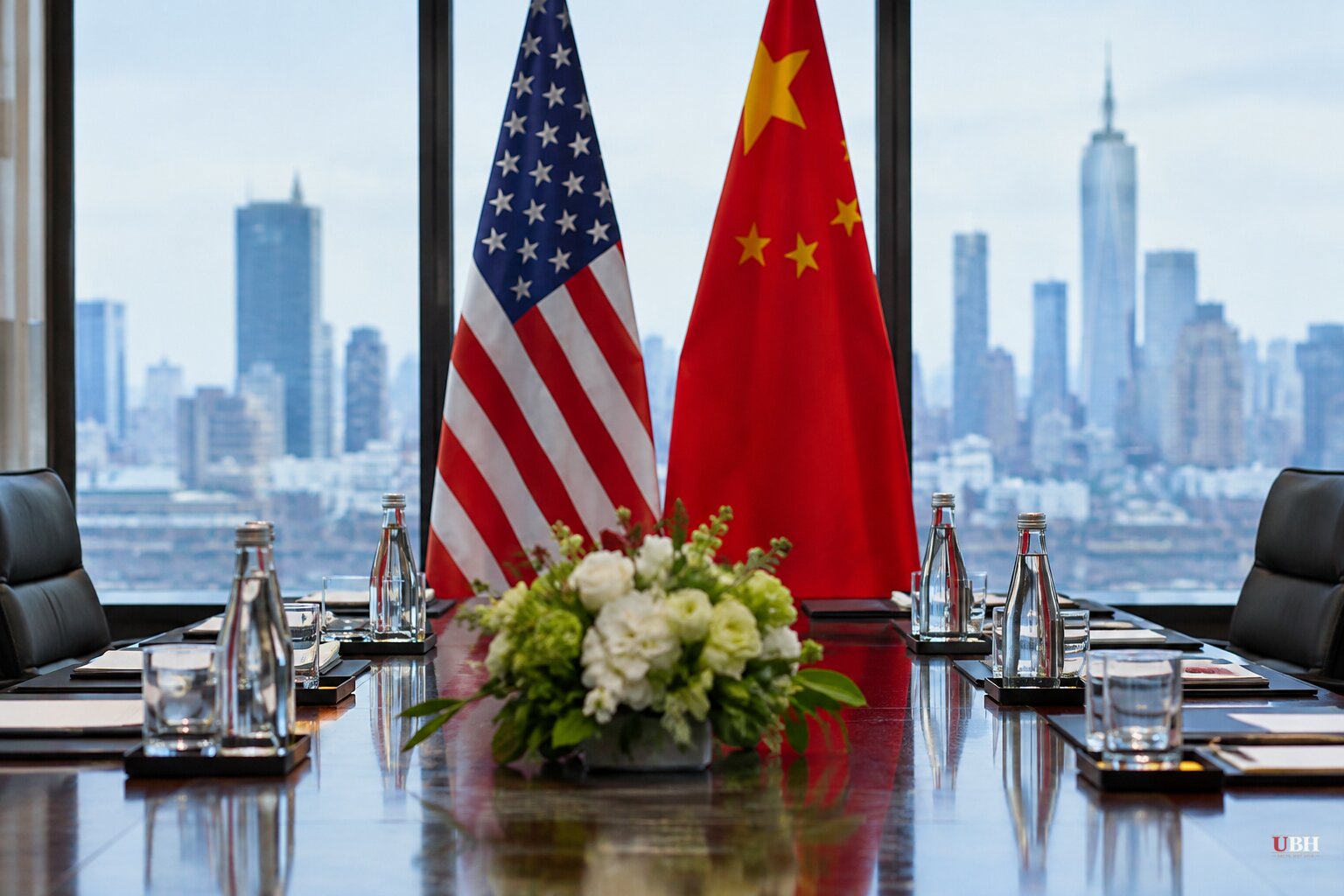
Treasury Secretary Scott Bessent met Chinese Vice Premier He Lifeng in New York today, and afterward Bessent told reporters the talks were successful and that the two sides agreed to meet again, according to the Korea Times. He gave no further details. U.S. Trade Representative Jamieson Greer said the session was meant to lay groundwork for the summit between President Donald Trump and Chinese President Xi Jinping, scheduled for September 24 and 25 in Washington, according to Ground News.
The centerpiece of the negotiations is energy. China imposed a 15% tariff on U.S. liquefied natural gas in February 2025 in retaliation for American tariffs on Chinese goods, according to Crypto Briefing. The effect was total: U.S. LNG shipments to China went from 64 vessels in 2024 to zero, and shipments fell 71.7% year-over-year to just 0.1 million tonnes in the first seven months of 2026, leaving the U.S. supplying a mere 0.2% of China's total LNG imports, according to Egypt Oil & Gas.
Reuters reported on September 18, cited by AgroLATAM, that Washington and Beijing are discussing folding an LNG tariff rollback into a broader package covering roughly $30 billion in goods, potentially including agricultural purchases. No final agreement has been announced, and both governments have kept expectations vague, per Crypto Briefing.
The market didn't wait for politicians. On September 14, ten days before Xi's scheduled arrival, China Gas Holdings signed a 20-year supply agreement with Houston-based Venture Global for 500,000 metric tons of U.S. LNG annually starting in 2030, according to IDN Financials. That deal brings Venture Global's total long-term commitments to China Gas to 2.5 million tonnes per year. China Gas Chairman Liu Ming Hui called it part of the company's push to build "an international energy trading hub." The 15% Chinese tariff on U.S. energy products remains in place for now, even though Beijing suspended a separate 24% tariff on other U.S. goods for one year, per IDN Financials.
The trade file isn't limited to gas. A senior U.S. official said on September 18 that Chinese rare earth mineral flows have "fallen short of Washington's expectations," according to Ground News, a pointed complaint given Beijing's earlier pledges to keep those materials moving to American industry. Financial ties to Tehran are also on the table: Bessent sanctioned three Chinese banks for dealing with Iran, and the broader U.S.-China trade truce is set to expire November 10. Secretary of State Marco Rubio and China's Wang Yi discussed the Middle East on September 17.
The hawkish counterpoint
Not everyone reads the run-up to the summit as a thaw. Gordon Chang, a senior fellow at the Gatestone Institute, told Fox News on Sunday that Xi "keeps on talking about going to war against us" and is preparing Chinese society, both civilian and military, "for battle." Chang argued Trump needs to get tougher on Beijing regardless of what happens at the trade table.
Chang's warning leans partly on a Wall Street Journal report, relayed by Fox News, that Chinese entities allegedly supplied Iran with satellite imagery of a U.S. airbase in Jordan before an attack that killed three American service members this summer. The claim has not been confirmed by the U.S. government and no formal accusation or charge has followed. It remains an allegation from anonymous sourcing in the Journal's reporting. Chang, whose think tank has consistently argued for a harder line on Beijing, is an interested voice in this debate, not a neutral referee, and his read on Xi's intentions is his own assessment rather than a confirmed U.S. intelligence finding.
The friction is real even without accepting Chang's framing. Xi spent late August and September touring Beijing's own Middle East diplomacy, hosting Jordan's King Abdullah II, meeting Vladimir Putin and Iran's Masoud Pezeshkian at the Shanghai Cooperation Organization summit in Bishkek, and then visiting Cairo, where he pitched a four-point Middle East security plan that never mentioned the United States but repeatedly warned against "external interference," according to Breitbart. Breitbart's read, that the plan is aimed squarely at reducing American influence with Israel's allies, is the outlet's own interpretation. Xi's public remarks, per Chinese state media Xinhua, spoke only of regional actors remaining "masters of their own affairs."
What's confirmed: Bessent and He Lifeng agreed to keep talking, no tariff numbers have been finalized, and the rare earths and Iran-sanctions disputes are unresolved heading into the summit. The next concrete marker is September 24 and 25 in Washington, when Trump and Xi meet in person and either produce an announced tariff deal or leave the $30 billion package and the LNG tariff question exactly where they are now, unresolved and unofficial.
Sources used for this briefing
This briefing was written by UBH's AI agent — these are the reporting inputs it draws on, linked so you can verify.


