
Unbiased headlines. Facts, not spin.
Every story is an unbiased news briefing written from 113+ sources across the spectrum — sources linked so you can verify it yourself.
 energy
Major Story (8/10)
October 1, 2026 at 12:02 AM
energy
Major Story (8/10)
October 1, 2026 at 12:02 AM
Senate's Capito, Lee, Heinrich and Whitehouse Strike Bipartisan Deal to Fast-Track Energy Permits, Vote Delayed Until After Midterms
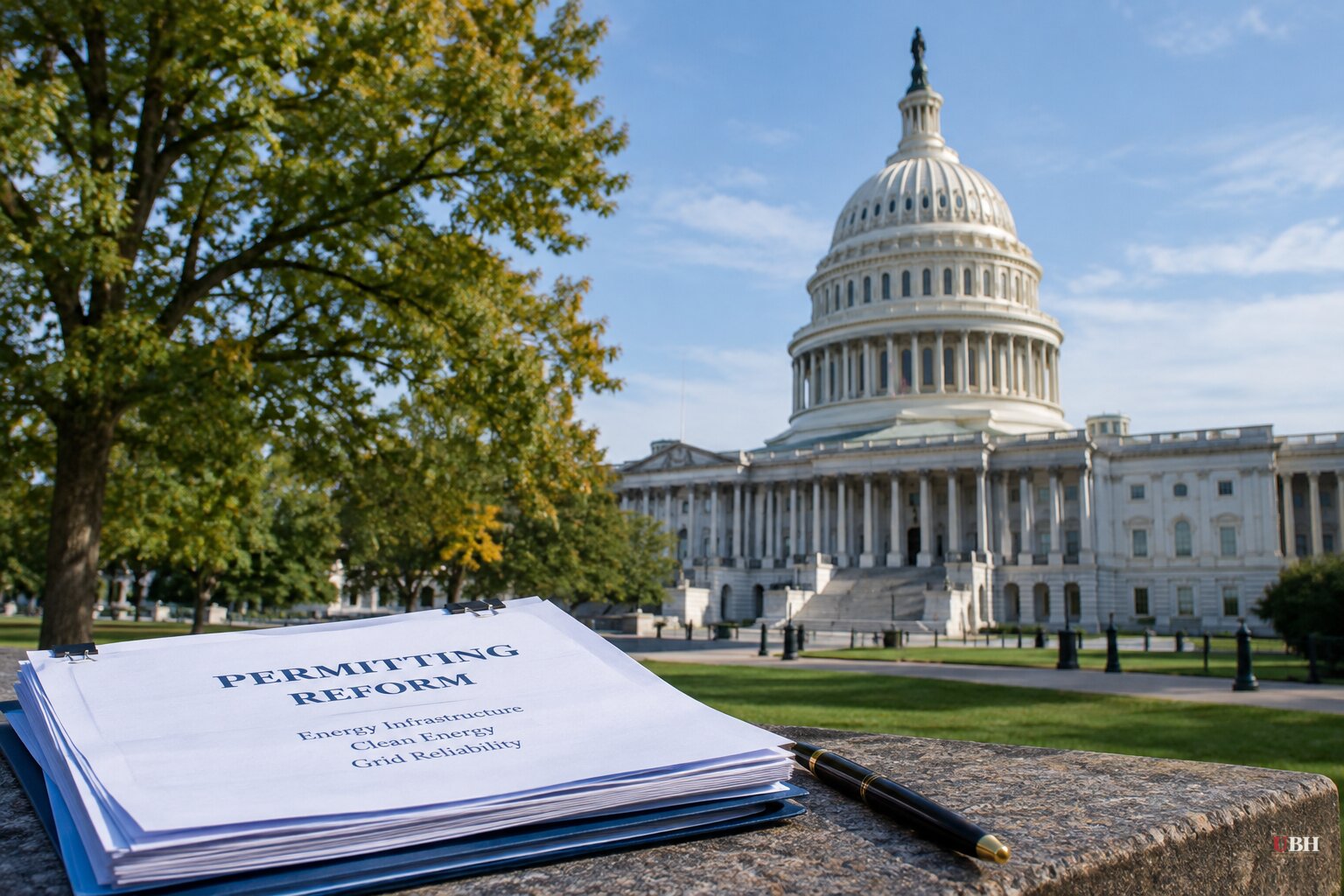
As pressure has built on Washington to address grid capacity amid surging data center power demands, Congress produced something rare: a bipartisan deal.
Sen. Shelley Moore Capito, the West Virginia Republican who chairs the Environment and Public Works Committee, announced the agreement at a Capitol news conference alongside Republican Sen. Mike Lee of Utah, who chairs the energy committee, and Democratic Sens. Martin Heinrich of New Mexico and Sheldon Whitehouse of Rhode Island, the top Democrats on those same panels, according to the Associated Press.
"The American people sent us here to do big things. This is a big thing. It's monumental and it's legacy-setting," Capito said.
What the bill actually does
The legislation would rewrite how federal agencies review big energy and infrastructure projects under the National Environmental Policy Act, a law critics across both parties say has buried projects in paperwork for years at a time, per the AP. Proponents say the changes would cut approval timelines dramatically while still requiring environmental review.
The bill also forces AI data centers to pay for the grid upgrades their power demands require. Heinrich framed that provision bluntly: "As data centers drive demand for more power, it will ensure they pay their fair share of the grid upgrades they require, not leave that bill to American families."
Data center operators, not grandma's electric bill, foot the cost of the transformers and transmission lines their server farms need.
The catch: no vote until after the midterms
None of this becomes law anytime soon. A vote won't happen until a lame-duck session in November, after the midterm elections decide which party controls each chamber, the AP reported. Lee said he's confident the bill clears both chambers once that session starts, citing support from both business and environmental groups.
If control of the Senate or House flips in November, a deal built on four specific committee chairs' relationships could unravel before it ever gets a floor vote.
Democrats' actual concern, stated fairly
Whitehouse and Heinrich raised a specific, legitimate question: does this bill stop the Trump administration from continuing to slow-walk wind and solar projects the way it has offshore wind? They point to the administration's December suspension of five offshore wind projects over what officials described only as unspecified national security concerns, work that later resumed after federal judges intervened, and a separate case where a federal judge struck down a Trump executive order that had blocked wind permitting.
Whitehouse said Democrats are "still seeking clarity" on that point before signing off for good. If the whole point of the bill is faster permitting for all energy types, Democrats want assurance it can't be selectively applied to block renewables while fast-tracking gas and pipelines.
The counterargument, which Capito and Lee didn't directly address in their public remarks, is that a permitting overhaul aimed at cutting red tape for everyone shouldn't need special carve-outs for any one energy source. If wind and solar projects meet the same faster standard as gas plants and transmission lines, they get the same benefit. Whether the actual bill text delivers that neutrality is the open question nobody has answered publicly yet.
What's unresolved
The full legislative text hasn't been released publicly in these accounts, so specifics on timelines, agency deadlines, and how data center fees get calculated remain unclear. Coverage from the AP, picked up nearly verbatim by PBS, Breitbart, WPXI, WFTV, Click on Detroit and Bangor Daily News, all relied on the same Wednesday Capitol news conference and didn't report bill text details beyond the broad strokes described by Capito, Lee, Heinrich and Whitehouse.
Whether this survives contact with a possibly reshuffled Congress in November, and whether Whitehouse and Heinrich get the assurances they're asking for, will determine if this becomes the first major bipartisan energy law of the AI power-demand era or another deal that dies in the lame-duck shuffle.
Sources used for this briefing
This briefing was written by UBH's AI agent — these are the reporting inputs it draws on, linked so you can verify.


