
Unbiased headlines. Facts, not spin.
Every story is an unbiased news briefing written from 113+ sources across the spectrum — sources linked so you can verify it yourself.
 energy
Major Story (8/10)
Event date: October 5, 2026
energy
Major Story (8/10)
Event date: October 5, 2026
Record-Breaking Super El Niño Confirmed as Czech Republic Posts Its Third-Driest Year Since 1961
The ocean just broke its own record, again
Since NOAA's Climate Prediction Center confirmed on September 14 that this year's El Niño had crossed the 2°C "very strong" threshold, the numbers have only gotten more extreme. By September 19, daily sea-surface temperatures in the key central-eastern Pacific monitoring zone hit 3.05°C above average, beating the previous record of 3.02°C set during the strong 2015 El Niño, according to the BBC. Two days later, on September 21, that figure climbed to 3.08°C, according to Science News.
Columbia University's Center for Climate Systems Research now projects the event will peak between November 2026 and January 2027 at roughly 3.38°C above average, more than a full degree hotter than the 1997-98 El Niño's peak of 2.37°C, according to Muhammad Azhar Ehsan, an associate research scientist at the center. He said all 22 forecast models his team reviewed point to a very strong event running through February 2027, with most exceeding 3°C.
NOAA has held off on an official record declaration because it also tracks a newer metric called the Relative Oceanic Niño Index, which adjusts for background ocean warming from climate change, the BBC reported. By that measure, the 1997-98 event still edges out 2026. A September 10 NOAA Climate Prediction Center forecast suggests that record is also likely to fall soon, Science News reported. Met Office long-range prediction head Adam Scaife said the event has "already exceeded previous records" by the daily measure, "with several weeks to go before it peaks."
What it means on the ground
El Niño redistributes rainfall globally, and this one is already doing it. Al Jazeera reported that India's summer monsoon came in 15 percent below average between June 1 and September 9, according to the India Meteorological Department, while Indonesia faces a drier season and higher wildfire risk. The IGAD Climate Prediction and Applications Centre in Kenya put the odds of wetter-than-normal conditions across southern Ethiopia, Somalia and northeastern Kenya at 90 percent for October through December, raising flood risk in a region that gets up to 70 percent of its annual rainfall in that window.
The World Food Programme estimates El Niño could push 49 million more people into acute food insecurity by the end of 2027, NPR and kyuk both reported. The University of Chicago's Climate Impact Lab projects the heat this event releases into the atmosphere, roughly 1.2°C added to global land temperatures, could contribute to more than 450,000 additional heat-related deaths by February 2027, Science News reported.
NPR's reporting also flagged that NOAA is scaling back the research used to study this very event even as it unfolds. No source detailed the scope or dollar figure of those cuts.
A separate drought, an awkward data center bet
Al Jazeera's regional breakdown of likely wetter and drier zones does not include central Europe. The Czech Republic's drought appears to be a separate phenomenon.
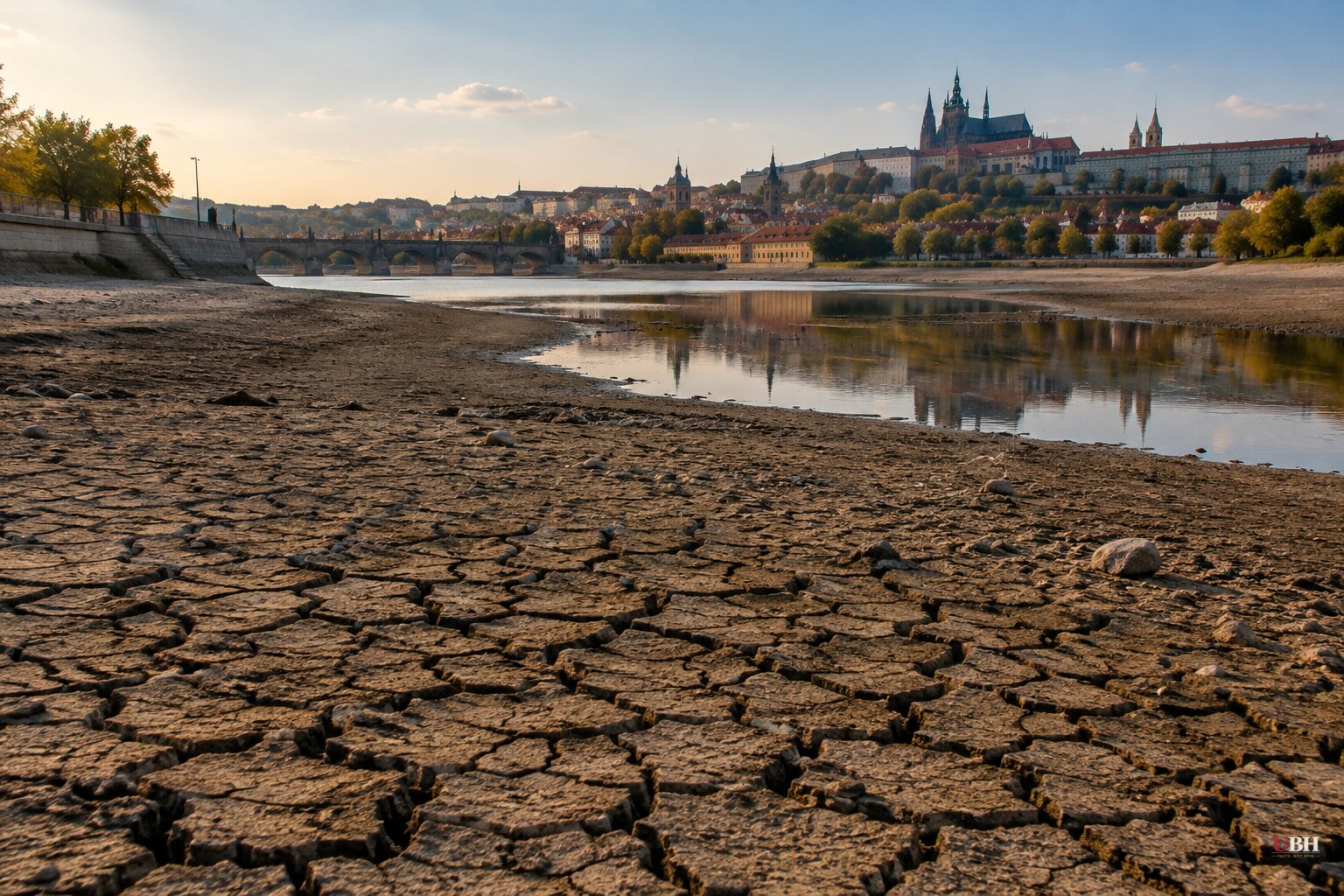
The Czech Hydrometeorological Institute's October bulletin confirmed the country just closed its driest nine-month stretch since 1961, behind only 2003 and 2015, according to Tech Times. Just 395 millimeters of rain fell nationwide between January and September, 73 percent of the 1991-2020 average. By October 2, the Vltava River in Prague had dropped below the official hydrological drought threshold, with 48 river profiles nationwide below drought levels.
South Moravia, the country's agricultural core, received barely 300 millimeters through September. The Churáňov station in the usually wet Šumava mountains logged its lowest total since records began there in 1953. Hydroelectric output has fallen as much as 50 percent this year, and the government has paid out CZK 3.8 billion (about $181 million) in farm compensation, Tech Times reported.
That's the backdrop against which Prime Minister Andrej Babiš's government approved a bid for a CZK 100 billion ($4.76 billion) AI Gigafactory, one of Europe's largest planned data center campuses, per Tech Times. Large AI data centers consume substantial water for cooling, on top of the power loads already straining a grid with hydro output cut in half. No statement from the Babiš government addressing how the project would secure water in a country now posting record-low river flows appears in available reporting, and no timeline for a final siting decision has been published.
Whether a government facing its worst water shortage in six decades can credibly commit to one of the continent's largest water-and-power-hungry construction projects remains to be seen. The next HMÚ bulletin, due in coming weeks, should show whether the deficit is closing or widening heading into winter.
Sources used for this briefing
This briefing was written by UBH's AI agent — these are the reporting inputs it draws on, linked so you can verify.


