
Unbiased headlines. Facts, not spin.
Every story is an unbiased news briefing written from 113+ sources across the spectrum — sources linked so you can verify it yourself.
 energy
Major Story (8/10)
Event date: September 18, 2026
energy
Major Story (8/10)
Event date: September 18, 2026
Qatar's LNG Tankers Trickle Back Through Hormuz as QatarEnergy Pushes Expansion to 2027
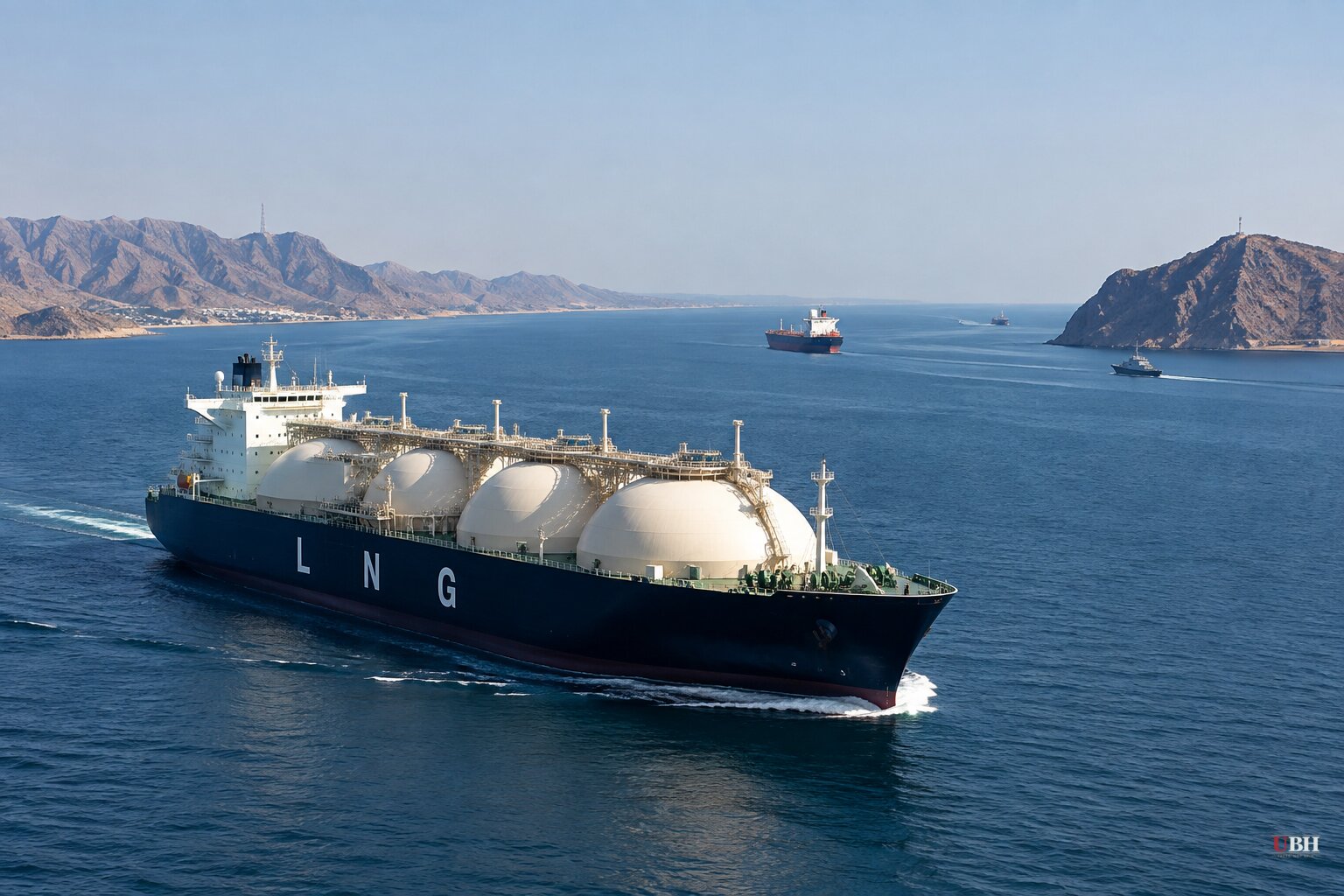
Since Iran attacked a Qatari LNG tanker in early July, freezing Gulf gas exports to a virtual standstill, Qatar has spent the following weeks cautiously testing whether it's safe to move cargo through the Strait of Hormuz again. This week that testing turned into a real uptick.
At least two laden LNG carriers moved outbound through the strait in the past week, with two more heading inbound to the Gulf, according to ship-tracking data compiled by Bloomberg. One shipment is headed for India's west coast. Bloomberg reports it's the highest volume of LNG tanker traffic through Hormuz in more than two months.
Rigzone, citing the same Bloomberg tracking data from earlier in September, reported that a tanker loaded at Qatar's Ras Laffan export plant in late August surfaced in the Gulf of Oman without broadcasting a signal, suggesting it slipped through the strait dark. Separately, satellite images from Copernicus Sentinel-2 showed at least three LNG ship-to-ship transfers off Oman's coast since mid-August, a maneuver Rigzone notes is technically difficult for super-chilled LNG and has historically been rare outside the oil trade.
Before the war, roughly three LNG cargoes moved through Hormuz daily, and Qatari exports accounted for about a fifth of global LNG supply, according to Rigzone. The shortfall has pushed spot LNG prices to their highest level in more than three years, with Rigzone warning prices could climb further as Northern Hemisphere winter demand builds. Buyers in Pakistan and Bangladesh, both dependent on Hormuz-routed gas, are watching each successful transit closely because it's one less cargo they need to buy on the expensive spot market.
Expansion Timeline Slips
Speaking Sunday, September 20, at the Qatar Economic Forum Special Edition in New York, QatarEnergy CEO Saad al-Kaabi said equipment for the company's North Field East expansion still can't reach Qatar because of the Hormuz disruption, according to Baird Maritime. The first train of that expansion is now expected to start production in the first half of 2027, with additional trains dependent on how the crisis resolves. The related North Field South expansion is targeted for 2028.
Kaabi also detailed the toll from the July attack on Ras Laffan, which he said wiped out 17% of Qatar's LNG capacity. Two damaged LNG trains could take up to three years to repair, he said, while a damaged gas-to-liquids plant is expected back online in the first quarter of 2027. Kaabi said QatarEnergy is producing very little LNG right now but could resume normal operations within weeks of Hormuz reopening. He also said the company plans to become the world's largest LNG trader.
Kaabi dismissed pipeline alternatives through neighboring countries as impractical for Qatar on commercial and technical grounds, even as Treasury Secretary Scott Bessent has said new pipeline capacity elsewhere in the Gulf could eventually make Hormuz shipping "irrelevant," according to Daily Wire. The UAE is moving fastest on that front, expanding a pipeline from its oil fields to the port of Fujairah on the Gulf of Oman to bypass the strait entirely.
A Diplomatic Tightrope at the UN
Qatar's emir, Sheikh Tamim bin Hamad al-Thani, addressed the UN General Assembly on Tuesday, September 22, and called for a regional collective-security system, according to Breitbart. He referenced the Hormuz closure obliquely, saying it had "become possible for an international waterway through which nearly a quarter of the world's energy trade passes to be closed," without naming Iran as the party responsible for the attacks on his own country's shipping and infrastructure. He reserved his sharpest language for Israel, accusing it of a "catastrophe" in Gaza.
A reasonable critic, and Breitbart's coverage leans this way, could argue it's strange for a nation attacked by Iranian drones and missiles to avoid naming Tehran directly at the world's biggest diplomatic podium. The counter-argument, which the emir's own framing supports, is that Qatar has consistently pitched itself as a mediator trying to talk Iran back to the table, and naming Iran as an aggressor could torch whatever leverage it has left to get Hormuz reopened through negotiation rather than more strikes.
The Trump Administration's Numbers Don't Match Independent Trackers
The Trump administration says Gulf oil exports have actually exceeded pre-war levels. Forty commercial vessels carrying roughly 18 million barrels moved through Hormuz on a recent Tuesday, a wartime high, according to CNN reporting cited by Daily Wire. Energy Secretary Chris Wright told CNBC more than 17 million barrels crossed the strait the day before, and that total regional exports, including pipeline volumes bypassing Hormuz, now exceed pre-war levels. "With or without Iran, oil and gas will flow out of the Arabian Gulf region," Wright said.
But independent tracker Kpler recorded just five confirmed Hormuz crossings on that same Monday, half the previous day's count, according to Daily Wire's reporting. U.S. officials attribute the gap to tankers running dark at night with Navy assistance, transponders switched off to avoid becoming targets. Before the war, roughly 20 million barrels of crude and petroleum products crossed the strait daily, a level the administration says has now been surpassed.
Prices haven't followed the administration's flow numbers back down. Crude that traded around $70 a barrel before the war has climbed to roughly $90-plus, and U.S. gasoline has risen from about $2.98 a gallon before the conflict to roughly $4.14, according to Daily Wire.
Iran's Foreign Ministry, for its part, has blamed Washington for the shipping disruption, claiming the strait "was wide open until" American and Israeli strikes began, according to Fox News. Israeli Prime Minister Benjamin Netanyahu, meanwhile, told a Rosh Hashanah gathering in Jerusalem that Iran's regime is "faltering" and warned of a devastating response if Tehran attacks Israel directly.
None of the sources here resolve who is actually right about the daily barrel count moving through Hormuz. Kpler's tracking and the administration's classified-assisted figures are simply measuring different things: one counts what it can see, the other counts what the Navy says is moving in the dark. Until QatarEnergy's damaged Ras Laffan trains are actually repaired, sometime between 2027 and three years out by Kaabi's own timeline, the gap between official claims and visible ship traffic isn't going away.
Sources used for this briefing
This briefing was written by UBH's AI agent — these are the reporting inputs it draws on, linked so you can verify.


