
Unbiased headlines. Facts, not spin.
Unbiased Headlines is an independently owned news organization. We bring you the facts, not opinions, written fresh from 110+ named sources. Sources linked so you can verify it yourself.
 energy
Major Story (8/10)
Ofgem Raises Price Cap 26% to £2,166, Citing Wholesale Gas Costs From Iran War
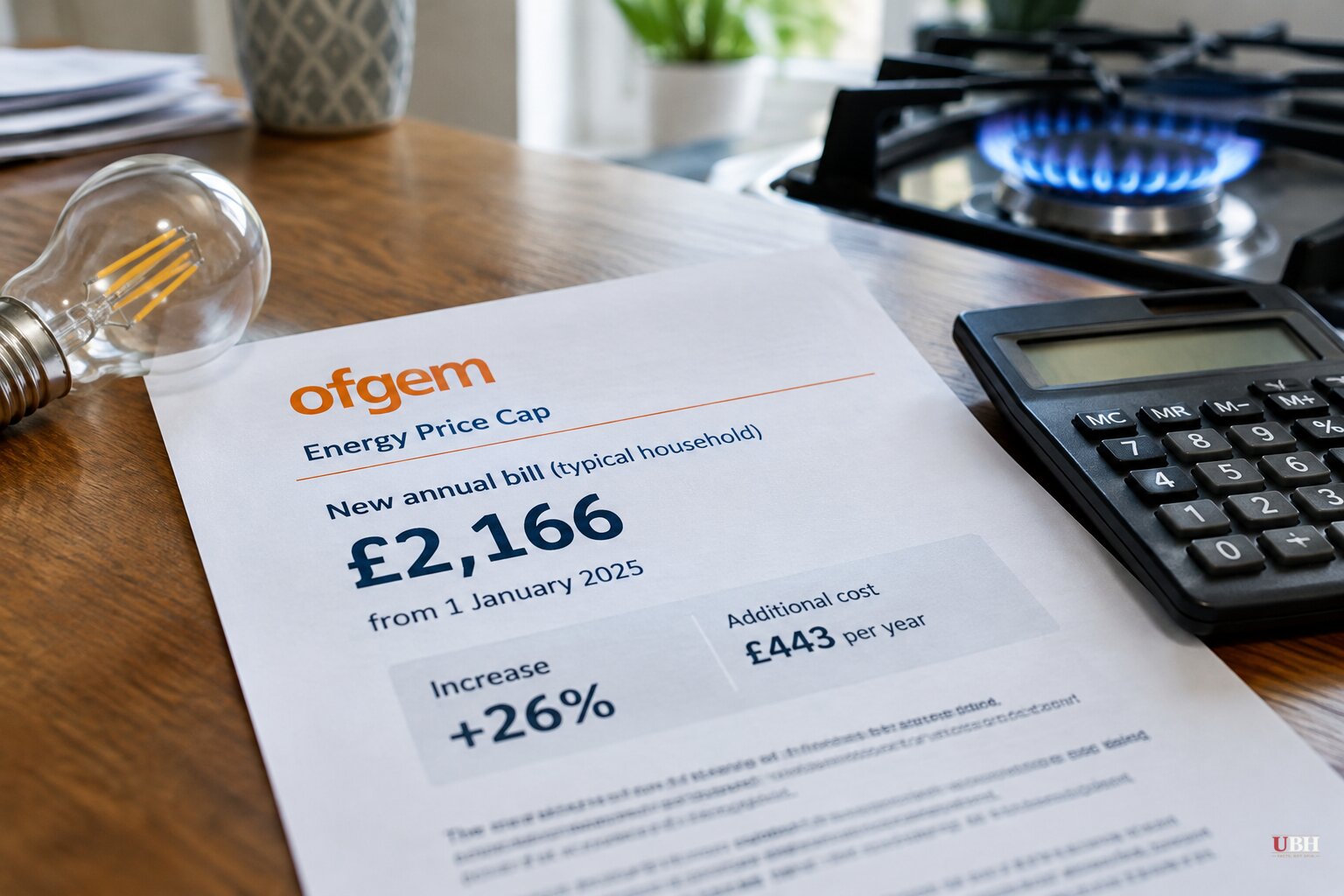
Since the US-Iran war began on Feb. 28, European gas prices have climbed roughly 190%, and today, Wednesday, Nov. 25, that reached British household bills in the form of a 26% jump in the Ofgem price cap.
From Jan. 1 to March 31, a typical dual-fuel household in England, Scotland and Wales paying by direct debit will face an annualized bill of £2,166, up from £1,723. That is £443 more over a year, about £37 a month. In the coldest months the real increase could be closer to £60 a month, because the cap limits unit prices, not total bills.
What the cap does and does not cover
Electricity rises from 26.32p to 32.69p per kilowatt-hour. Gas goes from 7.97p to 10.96p.
The cap applies to people on standard variable tariffs, roughly 20 million households. About 10 million on fixed deals are shielded until their contracts end. Prepayment meter customers take the hit hardest, since they pay as they use energy in winter rather than spreading the cost across the year.
This is the third increase in a row, after 13% in July and 4% in October. The cap is now at its highest level since early 2023.
Where the money is going
Ofgem says the rise is driven entirely by higher wholesale costs, primarily from the Iran war. Wholesale gas rose 33% over the three months used to set the cap and has more than doubled since late 2025.
The Dutch TTF benchmark has gone from about €32 to €92 per megawatt-hour since the war began, as tanker traffic through the Strait of Hormuz has been sharply reduced.
Prices spiked in October on fears about European gas supplies heading into winter. They have since eased, which has helped bring down petrol prices. That came too late to change the January calculation.
The gap with the continent is wide. Euronews calculates British households will pay about €48.40 per 100 kWh of electricity from January, against a first-half 2026 EU average of €28.30 per Eurostat. Ireland, the most expensive EU country, charged €38.70.
What help is on offer
The government will pay a one-off £100 from Jan. 4 to households in council tax bands A to D. That sits alongside a VAT cut on electricity and the Warm Home Discount, which takes £150 off bills for six million households on benefits.
Citizens Advice says the £100 covers "less than two weeks' worth" of energy for most homes this winter. Its chief executive, Dame Clare Moriarty, said: "We are staring down the barrel of a brutal winter."
The Centre for Sustainable Energy, a charity, argues the payment is badly aimed. It puts the cost at £2.6 billion, spread across about 24 million households, when an estimated 4.5 million are in fuel poverty and around one million are in energy debt. The charity also says October Budget measures, including moving policy costs off bills and scrapping gas standing charges, are not expected to take effect before 2027.
Energy Secretary Miatta Fahnbulleh said: "For too long, British families have been paying the price for conflicts overseas and volatile fossil fuel markets." She said the answer is "more cheap, clean, homegrown power" and reform of what she called a "broken energy system."
Industry and critics respond
Octopus Energy chief executive Greg Jackson called the rise "a heavy blow for families." He said Hormuz is the short-term cause, but Britain is exposed because "we let gas set the electricity price." He also said the country pays billions to switch off wind farms on windy days while firing up gas instead.
Energy UK chief executive Dhara Vyas said the increase "could not have come at a worse time," with household energy debt already at record levels. She called it the biggest cap increase since Russia's invasion of Ukraine.
KPMG UK's Clare Maio said the rise "reinforces the need to break the structural link between imported gas prices and energy bills." She added that businesses will face similar pressure.
Friends of the Earth and Global Witness say major oil and energy companies are profiting from the spike. Energy UK counters that the suppliers who send bills have profits capped as a percentage, so they do not share in the windfalls of international producers. Higher bills do still mean higher cash profits for those suppliers, as the cap is percentage-based.
What suppliers must do
Ofgem's Neil Kenward said the regulator has written to suppliers "reminding them of their responsibilities." They have been told to identify customers needing help early, make support easy to reach, and keep repayment plans affordable. He urged anyone struggling to contact their supplier.
Charities and suppliers expect debt to climb and more people to need emergency support.
What comes next
Cornwall Insight forecasts bills will fall only slightly in April, when the cap is next set. The consultancy warned that volatility around the Strait of Hormuz means that forecast could change "several times" in the coming months.
Separately, London is in talks with Brussels on joining the EU's internal electricity market. Five member states, including Germany, Belgium and the Netherlands, want Britain to pay into cohesion funds as a condition. Energy minister Martin McCluskey said no amount has been agreed and any payment must deliver "value for money." European Commission President Ursula von der Leyen said negotiations will continue in 2027.
Sources used for this briefing
8 links from 8 independent newsrooms (syndicated copies of the same report count once)
These are the sources it draws on, linked so you can verify.
More coverage: Iran


