
Unbiased headlines. Facts, not spin.
Unbiased Headlines is an independently owned news organization. We bring you the facts, not opinions, written fresh from 110+ named sources. Sources linked so you can verify it yourself.
 energy
Notable (6/10)
Event date: November 18, 2026 ·
Thacker Pass Cost Estimate Jumps 31% to $3.83 Billion as Lithium Americas Cites Labor and Tariffs
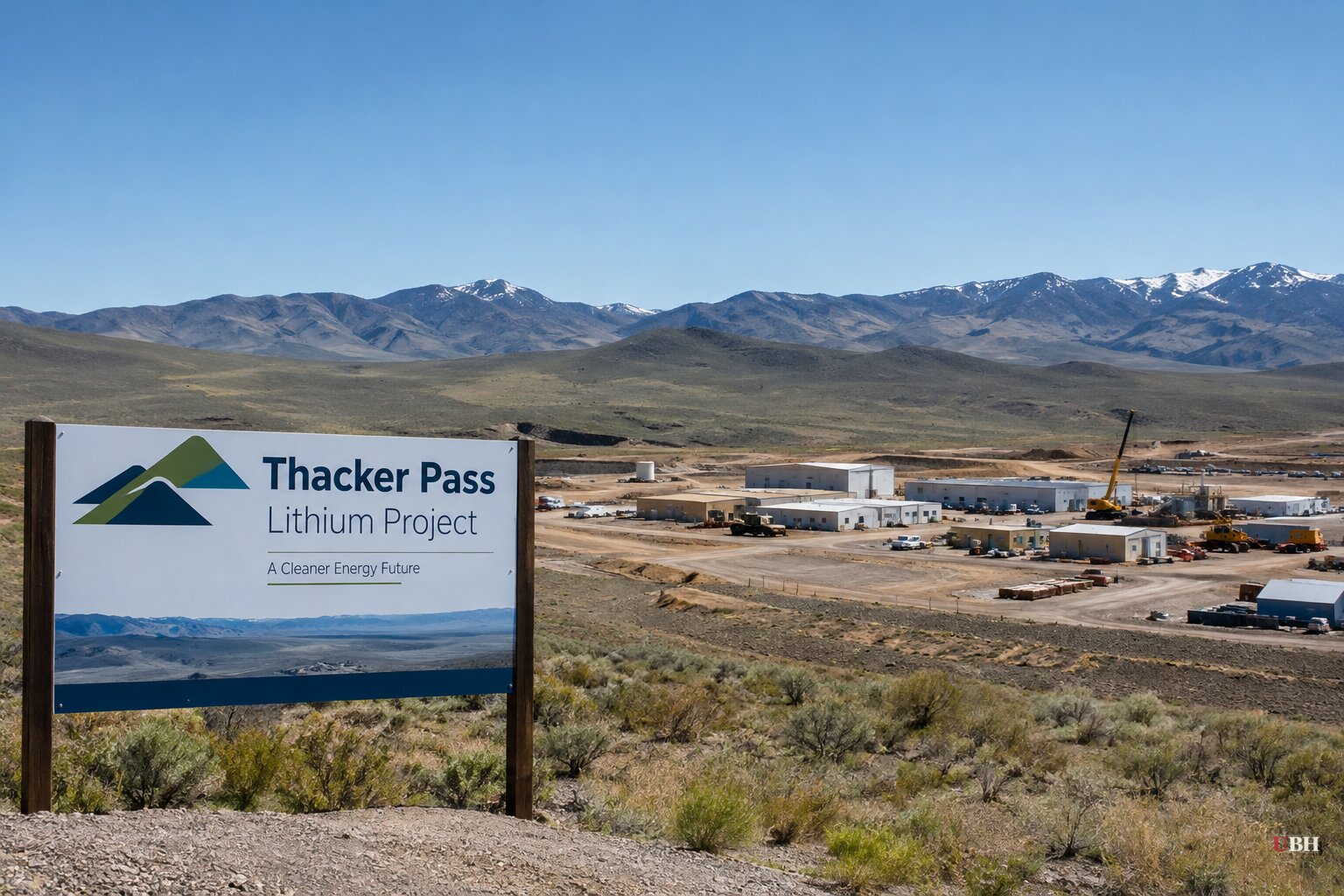
Since Nov. 11, the flagship of Washington's push to build a domestic lithium industry has been carrying a much bigger price tag. Lithium Americas raised its Phase 1 capital cost estimate for Thacker Pass in Humboldt County, Nevada, from $2.93 billion to $3.83 billion. That is an increase of about 30.7%.
The company said the revision adds roughly $895 million in capital costs and lifts funding requirements by about $995 million. It expects to cover the gap with company contributions and available loan reserves from the U.S. Energy Department.
Shares fell to a record low after the announcement, dropping more than 12% in a single session.
Where the extra $900 million goes
The company itemized the increase. Labor drives most of it.
- Higher labor installation rates for piping, structural steel and equipment: about $245 million.
- Craft labor wage inflation: about $150 million.
- Contractor staff wage inflation: about $150 million.
- Additional engineering, procurement and construction management staffing: about $100 million.
- Tariffs and logistics: about $100 million.
- Added contingency: about $150 million.
The company said logistics costs were hit by rising fuel prices, shipping disruptions and a reduction in U.S. fabrication capacity.
The mine is designed to produce 40,000 tonnes of battery-quality lithium carbonate each year at full capacity.
The CEO blames labor, tariffs and immigration limits
Chief Executive Jon Evans told Bloomberg the pressure goes beyond one mine. "For the companies behind us right now, it's going to be tough — very tough," he said. "We're just a barometer for what happens if you want to build power lines, or new power plants, or even a hospital."
Evans also pointed at federal immigration policy. "We're in a situation where you already have a stressed shortage of craft labor in the US, now compounded by the fact that, for folks who want to come work in the US, that route isn't readily available to them," he said.
That is a notable thing for the head of a company with a federal equity stake to say about the administration that holds it.
Evans struck a firmer tone in the company's statement. "Despite external and internal factors impacting the project's capital cost estimate, the anticipated capital cost for Thacker Pass is expected to remain funded," he said. "Thacker Pass is essential to America's economic and national security, and we are committed to delivering it."
The phrase "internal factors" is the company's own. It did not detail what those are beyond the line items above.
Taxpayer exposure
The Biden administration committed a $2.3 billion Energy Department loan to Thacker Pass. In September 2025, the Energy Department took a 5% equity stake in Lithium Americas and another 5% in the form of warrants in the Thacker Pass joint venture, which includes General Motors, restructuring the loan.
So the loan came from one administration and the equity stake from the next. The overrun is a bipartisan problem.
Under the revised loan terms, the government could require a further $127 million contribution if a future budget review identifies a shortfall. Evans says the company has enough funding to cover the added costs.
Timeline and customers
Lithium Americas says Phase 1 mechanical completion is still targeted for late 2027, with commercial production ramping up during 2028. The project had earlier been projected to begin lithium production in the second half of 2026.
Evans said the company is in supply-agreement discussions with about 10 prospective customers, and that it plans to announce some of those deals next year.
Why it matters beyond one mine
The stakes are strategic. About 65% of global lithium processing is done in China, according to analysis cited by The National. Australia, Chile and China together account for about 90% of mining, per analysis from Columbia's Center on Global Energy Policy. The only active commercial lithium mine in the U.S., Silver Peak, produces about 1% of global output.
The administration is trying to change that across lithium, copper, graphite and rare earths. It has taken equity stakes in other miners, including roughly 10% of Trilogy Metals and a stake in MP Materials.
Other large U.S. projects are in the pipeline. South32 is building a roughly $2 billion project in Arizona. Rio Tinto and BHP are advancing Resolution Copper in Arizona, which could eventually supply as much as a quarter of U.S. copper demand.
The pressures Evans describes are not unique to mining. Tariffs raise the price of imported equipment, and a tight craft labor market raises wages. Evans argues immigration limits shrink the pool of skilled workers further. Fuel costs have also climbed amid the war in Iran.
No one has yet shown that Thacker Pass will fail. The company says it is funded, and the schedule has held at late 2027. The open questions are concrete. Will a future budget review find a shortfall and trigger the $127 million contribution? Will those 10 customer conversations turn into signed supply contracts? And will the next project in line clear the same cost hurdles?
Sources used for this briefing
7 links from 7 independent newsrooms (syndicated copies of the same report count once)
These are the sources it draws on, linked so you can verify.


