
Unbiased headlines. Facts, not spin.
Unbiased Headlines is an independently owned news organization. We bring you the facts, not opinions, written fresh from 110+ named sources. Sources linked so you can verify it yourself.
 energy
Notable (5/10)
Event date: November 19, 2026 ·
NOAA Closes 2026 Hurricane Season Early: 10 Atlantic Storms, One Hurricane, Record Pacific Activity
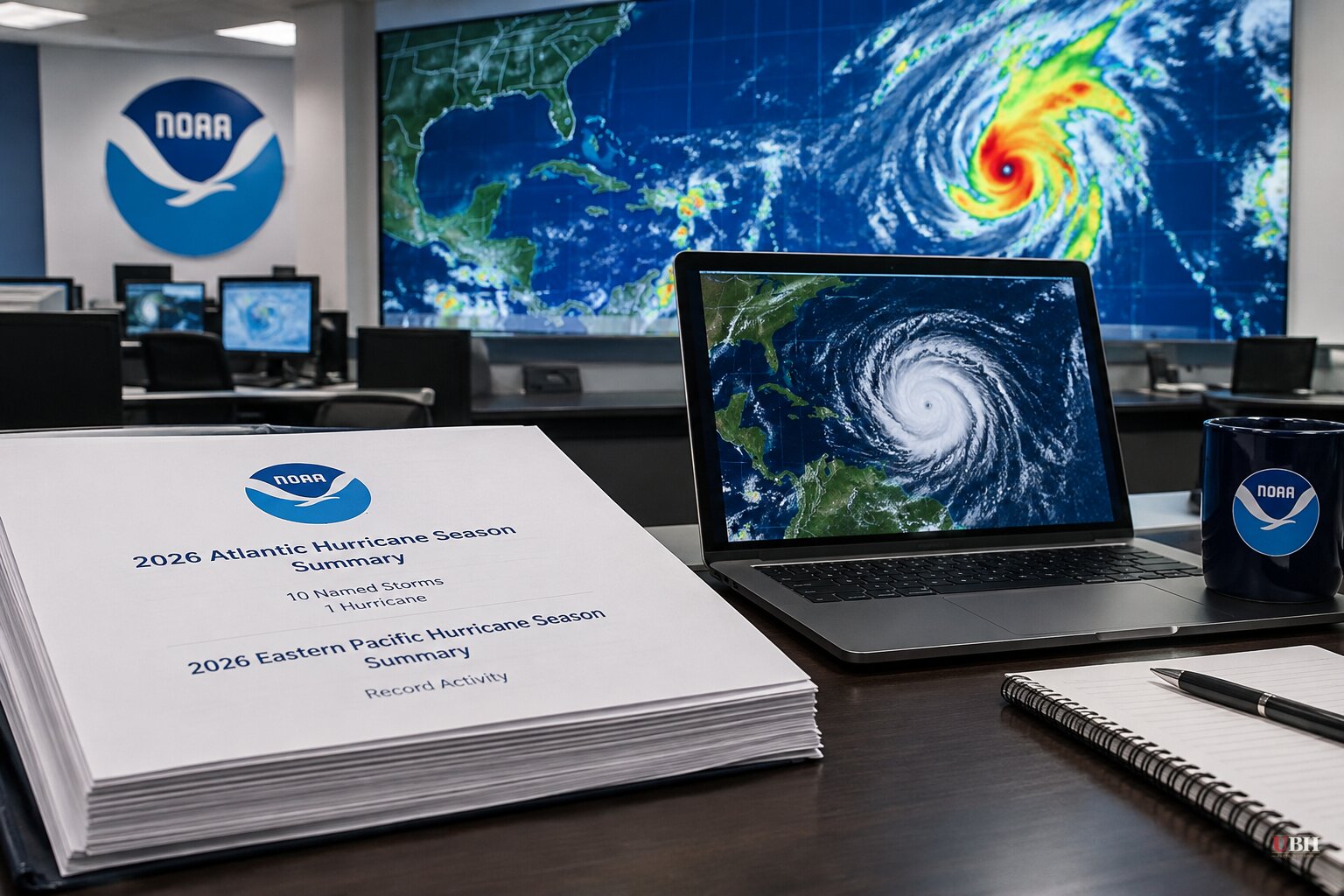
NOAA declared the 2026 hurricane season finished today, Nov. 24, with a post on X. The official end date is Nov. 30.
"JUST IN: The 2026 #HurricaneSeason comes to an end," the agency wrote. Its post said the Atlantic saw 10 named storms, with one, Isaias, becoming a major hurricane.
Several meteorologists poked fun at the timing. Florida meteorologist Matt Devitt wrote that NOAA's social media director "clearly will be on vacation for the rest of the month." WFLA's Jeff Berardelli joked that NOAA "employed the mercy rule." FOX 35's Brooks Garner replied, "If only El Niño would end a week early."
A quiet Atlantic
NOAA's season wrap-up puts the Atlantic well under average. An average year has 14 named storms, seven hurricanes and three major hurricanes. This year produced 10 named storms and one hurricane, and that hurricane was the only major one.
Tropical Storm Arthur formed near the Texas coast on June 17, close to the average first-storm date. Its remnants still fed heavy rain, flooding and numerous tornadoes across the Southeast, NOAA said.
More than a month passed before Tropical Storm Bertha formed on July 20 along the northern Gulf Coast. NOAA described it as highly sheared, with gusty winds, rough surf and minor-to-moderate coastal flooding from Florida to Louisiana.
Then came Isaias, which reached top sustained winds of 120 mph. It made landfall Oct. 9 as a Category 2 hurricane near Destin, Florida. It was the first hurricane to hit the mainland U.S. since Milton in October 2024. NOAA said it brought significant storm surge to Panama City Beach and damaging gusts across much of the Southeast.
"It only takes one storm for it to be a bad season," said Ken Graham, director of the National Weather Service.
CNN reported that the last Atlantic season with a single hurricane was 1925, 101 years ago.
The Pacific made up for it
The Eastern Pacific ran the other direction. It produced 20 named storms, 10 hurricanes and eight major hurricanes. An average season brings 15 named storms, eight hurricanes and four majors.
Hurricane Polo was the most intense of the year. It formed Sept. 20 and hit Baja California as a Category 2 on the evening of Sept. 28. It made a second landfall near Guaymas, Mexico, on Sept. 29 as a Category 1. NOAA also cited two disasters in Hawaii during the season.
El Niño did the work
NOAA attributes the split to one of the strongest El Niño events on record. Phil Klotzbach, a hurricane researcher at Colorado State University, told CNN: "It was an extremely powerful El Niño doing what extremely powerful El Niños do."
CNN's account of the mechanism is that El Niño generates storm-killing wind shear over the Atlantic. The Atlantic's waters warmed enough to fuel strong storms, but aside from Isaias, the systems that formed were short-lived and weak.
NOAA Administrator Neil Jacobs credited his agency's forecasting. "NOAA's unparalleled forecasting skill and scientific expertise provided the early warnings needed to protect lives and property," he said, adding that NOAA predicted the very strong El Niño months in advance.
That is the agency's own assessment of its performance. NOAA plans to publish detailed Tropical Cyclone Reports for each named storm in the coming months.
Winter first, then 2027
El Niño is not finished. NOAA said in an update last Thursday that it was strengthening and likely to stay strong to very strong through March 2027. The agency cautioned that a very strong El Niño does not guarantee every region gets the weather usually tied to it.
AccuWeather forecaster Paul Pastelok told Newsweek the atmosphere lags behind the ocean signal. "It takes time for the atmosphere to unwind," he said. "We could be in for a rough period here for a while." Newsweek identified Florida, Oregon, Washington, California, Arizona, Nevada, Virginia, North Carolina and Massachusetts as states that have had weather events associated with the pattern.
The bigger question is next summer. Nat Johnson, a meteorologist at NOAA's Geophysical Fluid Dynamics Laboratory, said strong El Niños tend to weaken rapidly after peaking. "They often crash hard," he said.
NOAA's current forecast has El Niño giving way to neutral conditions by late spring or early summer. It gives La Niña about a 1 in 3 chance of emerging this coming summer. La Niña typically reduces the wind shear that suppressed this year's Atlantic, and CNN reported that forecasters are more confident than usual in La Niña's arrival because it is the typical progression after a strong El Niño.
NOAA's next El Niño update will show whether that 1 in 3 figure moves. The agency's Atlantic storm reports for 2026 are due in the coming months.
Sources used for this briefing
8 links from 7 independent newsrooms (syndicated copies of the same report count once)
These are the sources it draws on, linked so you can verify.


